
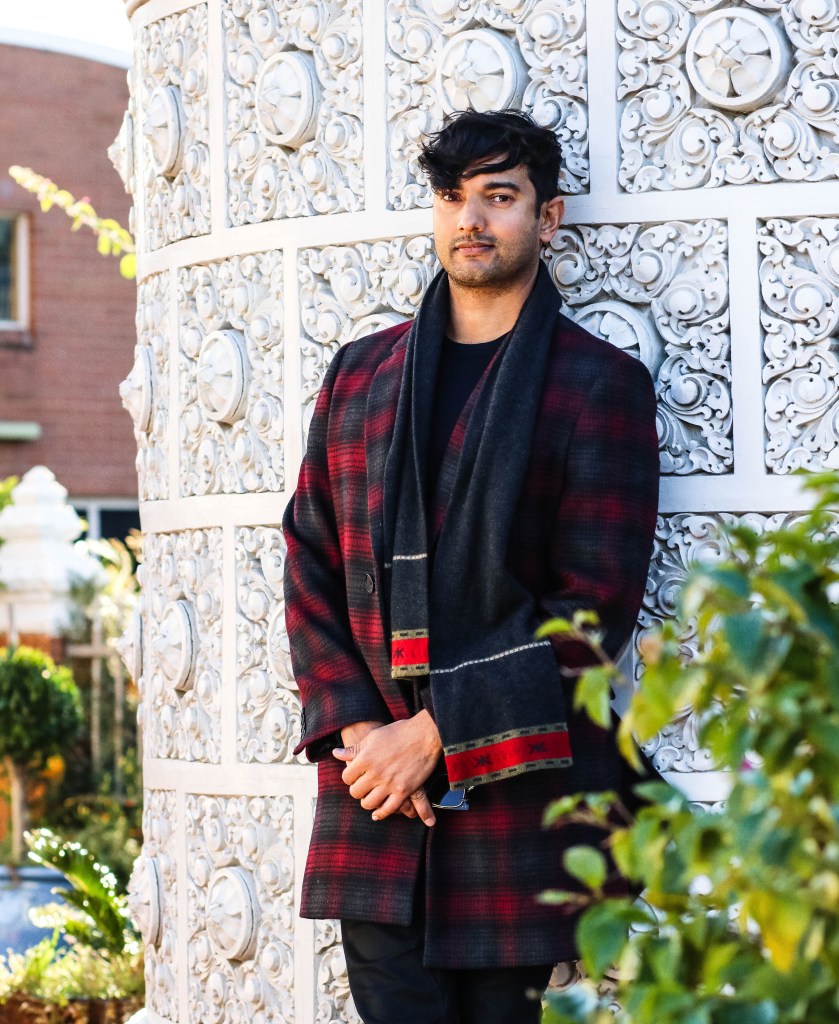
DAM: Welcome to our second issue and interview for Diversity Australia Mag! We have here with us, Yatish aka Dub Vader, the owner, operator and selector of Tuff Tone Sound System. Welcome Yatish and thank you for joining us, that’s an awesome name you have there, what’s the origin of it?
YDV: It means the leader of the disciples, it’s Indian. My grandparents are from India, but my parents were born and raised in Kenya and moved to the UK when they were eighteen.

DAM: What would you say are three things which define you?
YDV: Passionate, ambitious and I care about people in terms of equality.
DAM: So, when you say that you’re passionate, what are you passionate about?
YDV: I love music, I love all sorts of music, it’s a hobby that I’m quite serious about. I’ve been collecting records for twenty-five years.
DAM: Do you remember the first record that you ever collected?
YDV: It was probably an RnB record like LL cool J or something like that (laughs) [it was] when I didn’t know anything about collecting music.
DAM: So what was it that drew you to collecting records?
YDV: I was introduced to this Roots Reggae music, which I’ve been passionate about since I was a kid. Cassette tapes were passed down to me by people who I knew, by kids who were older than us. We used to listen to those, these were live recordings of sound system events that had happened decades before we were born. Can you imagine going to a club, taking a recorder with you, and recording the DJ spin records? That’s literally what we were listening to. These are historical artefacts, without them, I wouldn’t be doing what I’m doing now because it’s quite a foreign concept, isn’t it?
To record a night out essentially, but these are the recordings of passionate people who dedicated their lives to this movement: building huge mobile discotheques, taking it to venues and playing music, regardless of how many people turned up and some of these people recorded these things. That was what I listened to, that was my introduction.
DAM: That’s pretty awesome. What was your first thought when you listened to it?
YDV: I just loved it, I just loved the distortion, the terrible recordings and I loved that someone had gone through the lengths of recording these dances. And I’m listening to it twenty years later, I love that. That was my education and then I was getting more interested in roots music. I wanted to seek that music out, identify it, because this isn’t music you can Google, or that people know, it’s not on the radio or in the pop charts, it’s very, very underground. The music is underground but the scene itself is even more underground. In those times you didn’t have the internet, all you had was people and their stories (of the dances). And then technology comes along and things change, now you can Google information and for probably fifteen years now I’ve been buying records over the internet, especially in Australia because no one in Australia really sells this music.
DAM: So, what’s the scene like, here in Australia?
YDV: Oh, it’s a small scene and I want to bring that UK sound system culture here, to present music in that style. We want to build it up here and show people how we do it in the UK and what I grew up with, and help educate people on the scene –showcasing the depth of the music.
DAM: What is it about Sound System culture that makes it unique?
YDV: Part of the culture is very DIY; most sound systems will build their own speaker boxes which are complex in itself. It’s a very high-fidelity system if you think about it, it’s a big stack of speakers and we have five different types of speakers and each speaker performs a specialised function, it just plays narrow frequency band and that’s it. The bass speaker is a huge speaker, but it’s only doing a very narrow frequency band or bass line. Add that all and you get a high-fidelity system. But we also have custom equipment which is again very DIY, like our preamps. If you look at this machine, it has no labels or writing and sixty knobs, but I know how to use it, and I play it like an instrument of sorts. I’m playing music from the 60’s till today so you can imagine how different those productions sound compared to modern day perfect sounding productions.

YDV: So in order to tease out the best in that music, I have to fine tune every record, which I love doing and that’s the best part for me. It’s a challenge for me as I’m always thinking, ‘How can I make it sound as good as possible?’. All the sirens and the effects units that I use, they’re all DIY – this isn’t stuff you just buy off the shelf. We painted the system gumball red with zebra stripes, to make our speaker’s less boring. I don’t want to just make them sound good; I want to make them look good as well, so people associate those speakers with this particular sound. The people who make this custom equipment are hobbyists. I’m not doing this to pay my bills, I’m doing it because I’m passionate about it, that’s why we invest heavily into the system and everything that goes with it.


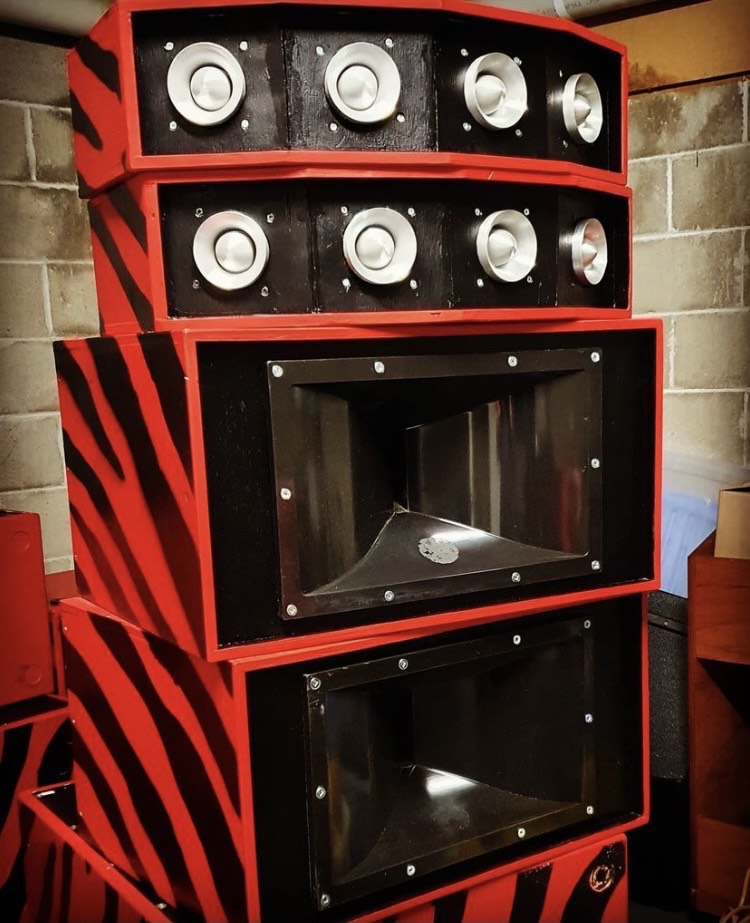
Images courtesy of tufftones_soundsystem (Instagram)
DAM: What draws you in about the experience?
YDV: When we play sound system it’s a physical experience. That’s why you can’t just show up to a venue with a USB stick or a record collection. We take the amplifiers, the handmade speakers, which are all custom built. We want to present the music in the way we want to, and venues don’t understand why we have to bring our own equipment. We’re bringing the whole experience and the house PA system simply won’t do the job right! Throughout the night we’re playing like six different types of roots reggae and that’s just one sub-genre of reggae. There’s a lot of depth there (Sound System) and I want to showcase that to people, rather than playing hours and hours of just ‘bangerz’. In this way, we can educate people through the breadth of the selection being played.
” There’s a lot of depth there (Sound System) and I want to showcase that to people, rather than playing hours and hours of just ‘bangerz’. In this way, we can educate people through the breadth of the selection being played. “
DAM: What’s it like at one of these dances?
YDV: The team picks up all the equipment, loads up a big truck, drives to the venue, unloads, string it all up, play the dance and then do it all again in reverse. At the event there’s essentially a selector, an operator, and an MC or DJ who keeps the energy going … Who might sing a song or educate the crowd on what’s being played. You have to be co-ordinated with the team behind the scenes. Everyone wants to play on the sound system but not everyone wants to put in the work to make a dance happen. I also have a vision of how to play the sound, so it’s important for me to stick to that vision rather than just having a DJ come and play records on the system. It’s really a family thing as well, we’re not just going to get anybody to come and do a set because we put in the hard work, so that we can reap the fruits of that labor.

DAM: How important is the bass aspect of the music?
YDV: When you play through the sound system, bass is king. The origins of this music spawned a lot of the bass music you hear today like drum n bass and dubstep. People who love bass can really connect to it because it doesn’t deafen you or hurt you. It physically goes through your body because that’s what bass does – the low frequency consumes you entirely. You just can’t take the bass away, it’s part of the melody, it’s integral to the foundation of the music. So, it’s a special connection you have with the music which is why when we play people are like, ‘Oh I get it now’ because they’ve never heard music presented to them in this way. When people hear it, they’ll know the difference between listening to music in a club and having this system played to them. We go through extreme lengths to present music in this way and we’re fanatical about it.
” When people hear it, they’ll know the difference between listening to music in a club and having this system played to them. We go through extreme lengths to present music in this way and we’re fanatical about it. “
DAM: Have you had to forge your own community here or have you managed to find people?
YDV: A bit of both, I had to make a few connections anyways because you know when you come to a new place you try to get involved in a scene. That was good because I met people who were also like minded but in the end, I’m doing what I’m doing because no one else was really doing it the way I grew up with and I missed it having emigrated some years back. A lot of people who come to our dances, have travelled overseas and experienced sound system on a bigger scale, because now it is a lot more mainstream than compared to a couple of decades ago. South Americans, for example, they love it, there is a huge sound system culture there. A lot of people who come along recognize what it is and say, ‘I’m so glad that you guys are doing this because I don’t know anyone else here who is doing it like that‘ you know? So, it’s hard for me to reach people who don’t know what we’re doing and convince them to come because I don’t know if they’re going to like it or not. I’d just like them to experience what we’re doing and then decide whether they want to come back or not, but you can’t explain this type of thing. It’s just something you need to experience in the flesh.
DAM: Absolutely, we’re very excited to get to come along to one of your events once covid has settled down more! So finally Yatish, what would be the best way for newcomers to get into what you do?
YDV: They would have to follow us on socials, but you can also look up ‘Reggae Sound System’ and ‘Reggae Roots Culture’. It really depends, it’s kind of a niche thing, so if people come then it might spark more interest. You have to come to really experience it.
.
.
.
You can stay up to date on Yatish’s work and upcoming events (next one scheduled for 22/Jan/2022 ) with Tuff Tone Sound System here:
Website: https://www.tufftonesoundsystem.com.au/
Facebook: https://www.facebook.com/TuffToneSoundSystem
IG: https://www.instagram.com/tufftone_soundsystem/


~ Published by Marshall-Weishuai Yuan
~ Sub-Edited by Farzeen Imtiaz
 Diversity Australia Magazine
Hello there! This is my 1st comment here so I just wanted to give a quick shout out and say I really enjoy reading through your blog posts. Can you recommend any other blogs/websites/forums that cover the same topics? Thank you so much!
LikeLike
Thanks for reading! We love Humans of New York, 60 Second Docs & New York Nico personally, but I’m sure there’s more out there too!
LikeLike