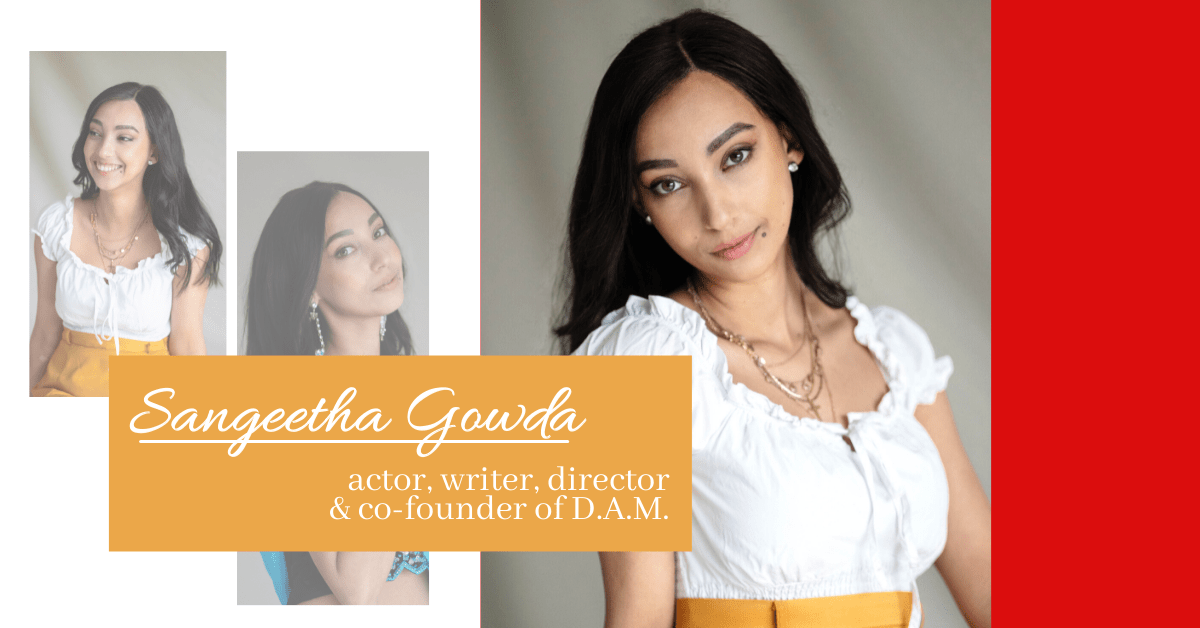
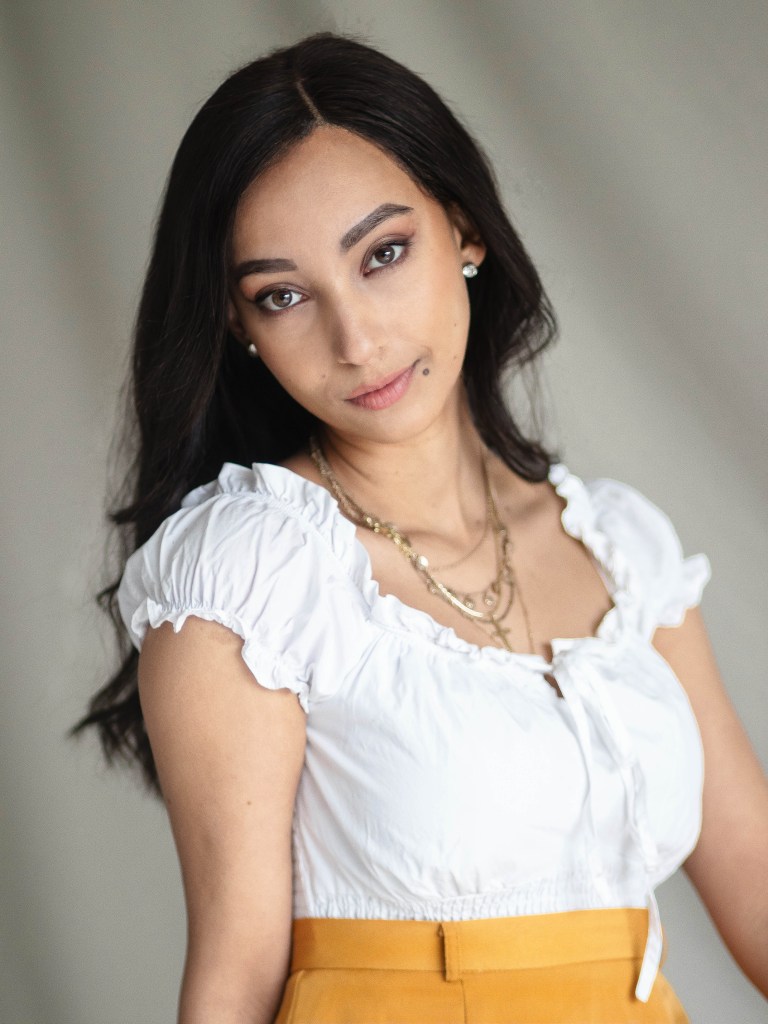
D.A.M: Today we interview one of our very own co-founders, Actor/Writer/Director and Producer – Sangeetha Gowda.
SG: I’m very grateful – and a tad nervous, to be sharing an important part of my story and my life here today. Besides running D.A.M., I’m also an Actress, Writer and Director/Producer through N.O.A.H. Films – an Independent film company which I co-founded with my partner Marshall.
D.A.M: It’s very brave of you to share your story with us today, but I think it’s also a beautiful first issue for 2022.
SG: Thank you. Well, I think it’s been a long time coming, and if anything I really want to come into this year being as open and honest and free as I possibly can be. It feels like I’ve been keeping this huge secret from everyone I know (laughs). But I’m happy to finally say, I have been living for a long time with an auto-immune condition called Alopecia.

D.A.M: What is Alopecia for those who may not be aware?
SG: So, Alopecia is an auto-immune disease that causes major hair loss. Basically, it causes your immune system to unnaturally attack your hair follicles, leading to random bald spots on your scalp, and in extreme cases (such as my own) it can cause all the hair on your body to fall out. There is no real cure for Alopecia to this day and many believe it can even be caused as a result of severe stress. Personally, I think having the auto-immune gene in my body along with stress, were the main factors for it appearing.
D.A.M: How old were you when you had it?
SG: I was diagnosed with the rare form of Alopecia (Universalis) when I was eight years old. I remember one night finding a circular, smooth, bald patch on my scalp amongst my long, dark hair. From then on, I would wake up to a pillow covered in my hair and clumps of it falling out in the shower. I lost all my hair including my eyebrows, eyelashes, arm and leg hair by the time I was nine.
“I was diagnosed with the rare form of Alopecia (Universalis) when I was eight years old. I remember one night finding a circular, smooth, bald patch on my scalp amongst my long, dark hair. From then on, I would wake up to a pillow covered in my hair and clumps of it falling out in the shower. I lost all my hair including my eyebrows, eyelashes, arm and leg hair…”
From then on, I had to wear a headscarf to school, while enduring the constant stares, questions and comments from my classmates and the public, thinking I must have had cancer or asking if I was ‘a boy or a girl?’.
D.A.M: I can only imagine how difficult that must have been at eight years old. How did it affect your life?
SG: Tremendously through childhood. Apart from having Alopecia, I was completely healthy. But of course, I didn’t look ‘normal’ to other people and children are incredibly curious – loving to point things out that are different. Before Alopecia, I was a very popular kid with many friends, outgoing and loved any opportunity to speak at the front of the class. After Alopecia, my confidence plummeted so low I couldn’t even bring myself to say hello to people.
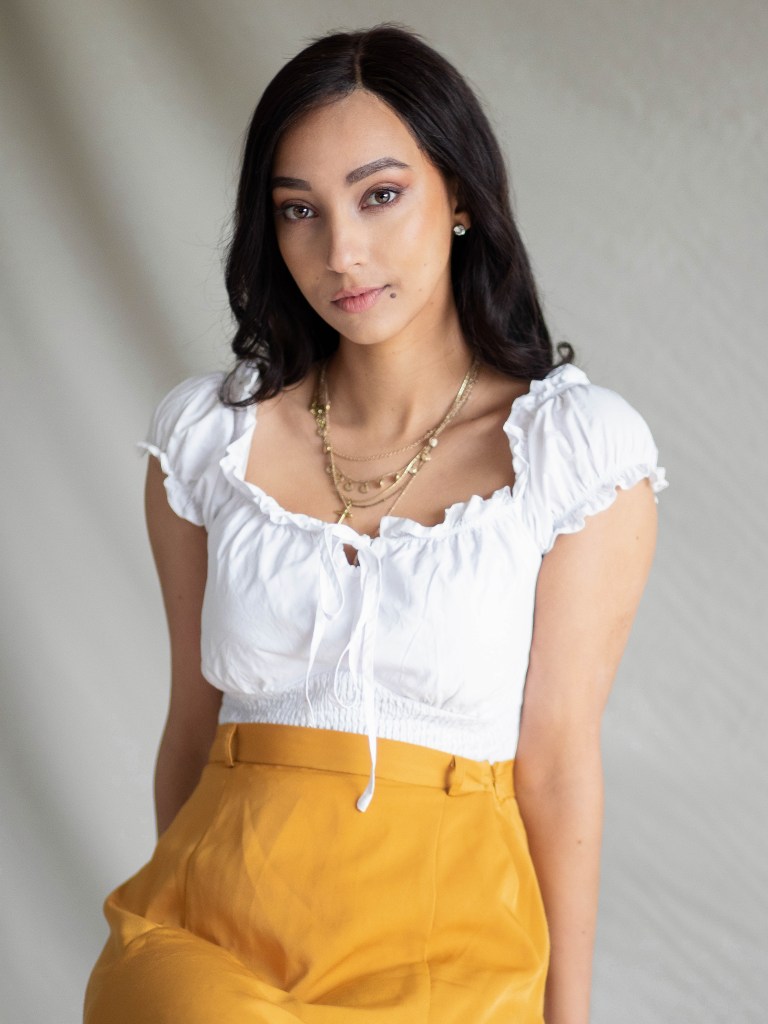
“Before Alopecia, I was a very popular kid with many friends, outgoing and loved any opportunity to speak at the front of the class. After Alopecia, my confidence plummeted so low I couldn’t even bring myself to say hello to people.”
It’s amazing how much it [hair] can change a person’s look and I don’t think you truly realise how important it can be to your confidence until you involuntarily lose it, not knowing if it will ever grow back. It was a huge thing to try to adjust to, and the bullying and intrusive curiosity in my daily life caused me to develop High Functioning Anxiety, and later on Depression.
When I was 10, I went on a family holiday to India for my Auntie’s wedding. That was an experience in itself to adjust to. It was the first time I met my Indian family on my dad’s side and it was very overwhelming. Being Mixed Race, the only family I had been around previously were those on my Caucasian mum’s side. India itself was crowded with so many more people and noise than I was used to, and I now had a huge new family trying to figure out why I had no hair on my body and making me try different remedies to grow it back. I remember feeling embarrassed at my Auntie’s wedding, with heads of thick, long, dark hair around me – that I wasn’t beautiful enough to even be photographed.
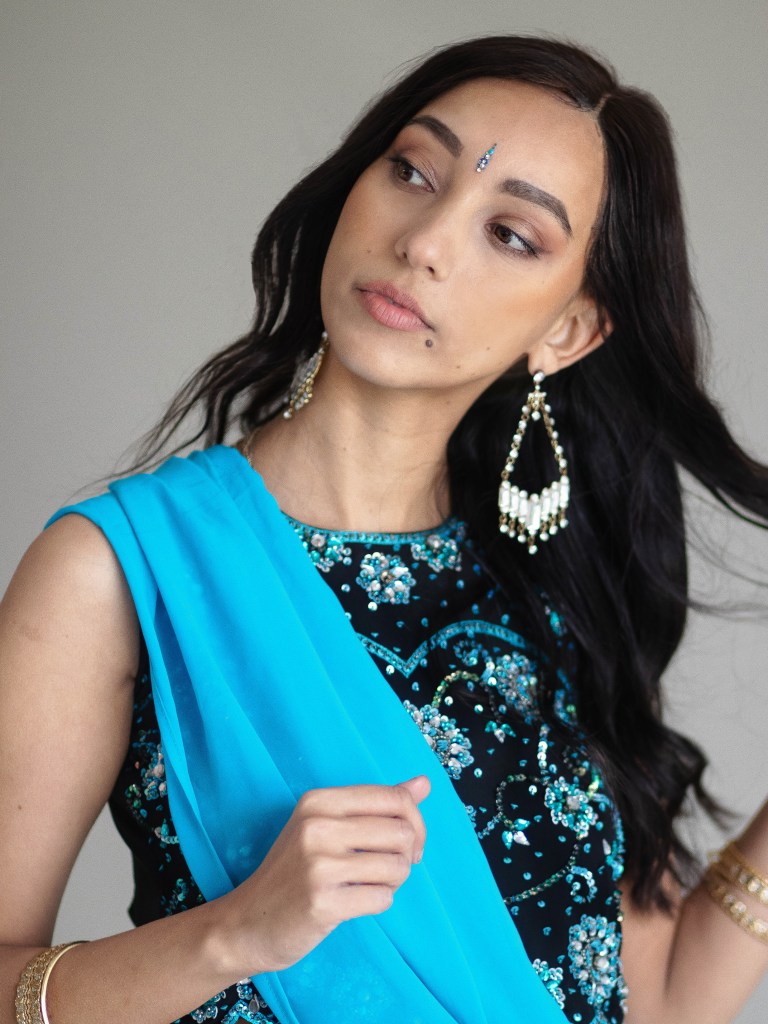
“But what came out of India was hope.”
But what came out of India was hope. One day, my Taata (Indian Grandfather) took me to an Indian doctor to see about my hair. The doctor’s room was small and crowded with people. But unlike all the doctors I had seen in Australia, as soon as this Doctor saw me, he said ‘Yes, we can fix this’. He showed me a newspaper article of a young boy who had the same thing as I did and got cured, then he handed me some tablets, the size of mustard seeds, and told me to take three at each meal, daily. I had been so used to hearing ‘there is no cure’ and ‘your hair will probably never grow back’ that I was overjoyed to have those tablets. I took them religiously while continuing to pray each night and over the course of that month, slowly my eyebrows and my eyelashes grew back. I couldn’t believe it. It was a slow process but gradually, it seemed my hair grew back the same way it fell out – patch by patch.
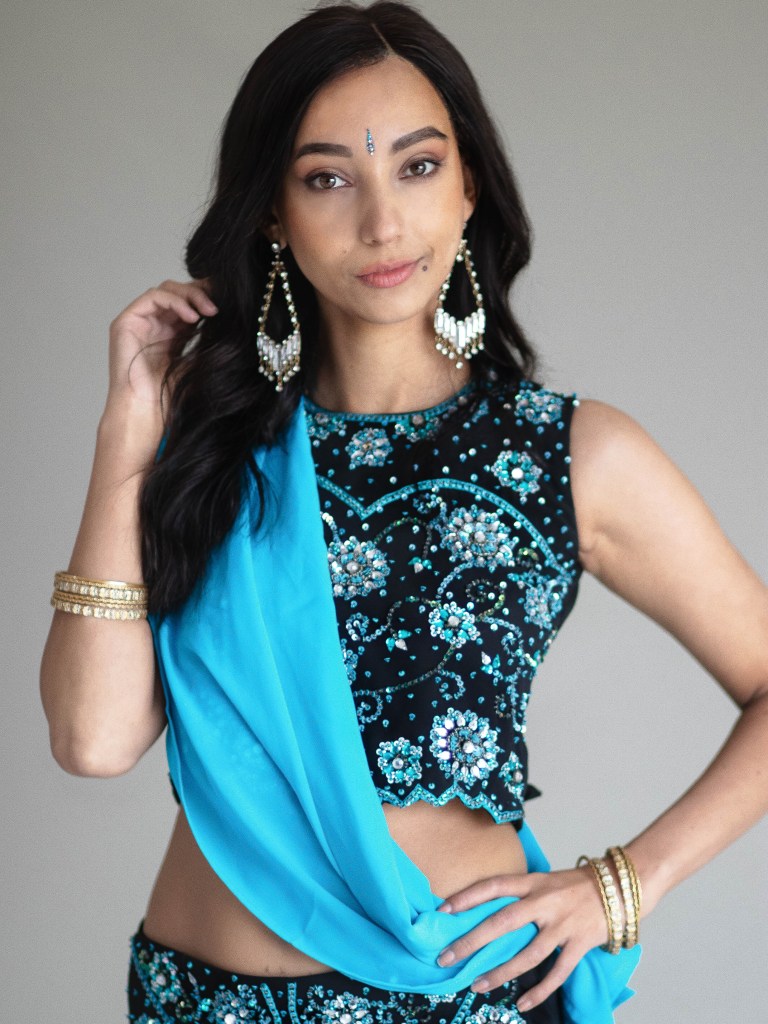
Just before I started high school, I had grown enough hair to finally go out without a full bandana. I remember going into high school, wearing a thick headband to cover up the remaining patches and telling everyone my hair was so short because ‘I’d just decided to cut it that way’. The thing is, I wanted a fresh start in high school, to be in a place where I could feel ‘normal’ again and not have anyone know that I had ever lost my hair. To this day (to this article) my best friend from high school still doesn’t know about my hair. As much as I wanted to tell her after graduating, to tell anyone – it has always been a difficult and in some cases, random, topic to bring up. I think there was also fear there. There was one girl in my friendship group who I guess had stumbled upon a picture of me in primary school wearing a full bandana, and she asked me about it at a party. I briefly told her about it, only for her to ignore it in a way and begin conversing with someone else. We were only thirteen at the time so I guess you can’t blame her, but I was just glad she didn’t tell anyone else.
After it grew back during my college days – minus an odd patch here and there, I think I took my new hair for granted a little and didn’t take care of it – or myself, as well as I probably should have. Enduring a stressful past few years, mistakenly using a bad hair product and not looking after my mental or physical health – my hair, unfortunately, started falling again. Over the past year and a half, since mid 2020, I’ve lost it all over again – including my eyebrows and eyelashes, which was very upsetting to me. Each time I combed through my hair, strands of hair would always come out, no matter how many times I combed it – or how many times I ran my fingers through it. I never expected I would completely lose it ever again, and I hoped I could stop it from falling but sadly I lost it all. I went from having to wear an extra hair extension – to now having to wear a wig, which is a whole new ballpark in itself to get adjusted to.
“I never expected I would completely lose it ever again, and I hoped I could stop it from falling but sadly I lost it all. I went from having to wear an extra hair extension – to now having to wear a wig, which is a whole new ballpark in itself to get adjusted to.”
DAM: What are some bigger challenges that come with it?
SG: I think the little things are really underestimated. For example, in the mornings I have often always had to schedule an extra 30-60 minutes to draw on an eyebrow that’s half fallen out, or both currently, make sure any patches are covered well to avoid stares or questions, or these days – style and put on my wig, making sure it’s safely and realistically in place – and not be at risk of it falling off randomly. I think for the past sixteen years, whenever I’ve been out, and having High Functioning Anxiety, there was never a day I wasn’t thinking about my hair – ‘I hope my wig doesn’t come off’, ‘Did they notice a patch?’, ‘Is it windy – make sure you hold your hair down’. Let’s just say it’s definitely caused me to forever hate the wind! It’s definitely not easy, rather something I’ve learned to live with.
DAM: Does it affect your career?
SG: Definitely. After signing with my current agent, I had to make sure I sent ‘the email’. Aka, the one where I explain my hair condition and think about how it might affect my ability for any acting roles – anything involving water/swimming in particular. I always mentally prepare myself to have the conversation with any hair and makeup artists on set. I’m really thankful though that every hair and makeup artist I’ve met on shoots so far have been super lovely, helpful and have given me more insight into just how common Alopecia actually is. One of the last hair and makeup artists I met actually had Alopecia herself and it was so beautiful to get to talk to her about it and share experiences. After having to start to wear a wig recently, it did worry me about acting but it’s been amazing to know and see how commonly wigs are actually used in Film and TV these days. Most recently, Anya Taylor Joy in The Queen’s Gambit wore a wig for her role of Beth instead of dying or colouring her hair. I think it’s becoming more normal, especially with the number of wigs coming out these days made of human hair with super realistic scalp and part lines.
It actually surprised me when I looked into it again, how things have changed from now since when I was a kid. I remember reading that Alopecia Univesalis affected 1 in 100,000 people when I first got it at eight in 2005. But when I looked up the stats this year it now says 1 in 4000 which is crazy and kind of sad. I wanted to feel less alone in my career, so I googled ‘Celebrities with Alopecia’ and I was surprised to find out Viola Davis herself has Alopecia and had to wear wigs during her career for a while.
” I wanted to feel less alone in my career, so I googled ‘Celebrities with Alopecia’ and I was surprised to find out Viola Davis herself has Alopecia and had to wear wigs during her career for a while. “
And Keira Knightly also lost her hair and had to wear wigs for five years. That definitely gave me more encouragement to keep going with my dreams and not let absolutely anything hold me back. It’s actually funny nowadays too, I can always point out when an actor is wearing a wig and it seems more and more common and normal as time goes by. So hey, maybe having this will actually make hair and makeup’s job easier when I’m on set.

DAM: How has it shaped you as a person?
SG: It can often feel like a constant struggle and stress, there have definitely been times I’ve felt less of a woman because of it – especially when femininity is so often associated with having long beautiful locks. But I truly believe everything happens for a reason and I know it’s because of this experience that I am the actor, and the person I am today.
“I know it’s because of this experience that I am the actor, and the person I am today. It’s taught me so much and it’s given me so much more depth in my acting.”
It’s taught me so much and it’s given me so much more depth in my acting. I think above all, it’s taught me not to judge people – especially on outward appearances, because you never know what someone has gone through, or what they might be struggling with on their own. Taking note from my own experience and how I ‘hid’ it to so many people, I think it’s true that a lot of people actually hide what they’re going through – not just for fear of reaching out but perhaps because they just want to feel ‘normal’ or not be a ‘burden’ to others.
It’s also through this experience, that I truly connected to and found God, which has changed my life. I learned the importance of patience, persistence in faith and not giving up. No one thought my hair would ever grow back but I believed and prayed it would – and it did, which is super rare. When I think back to those sugar-tasting tablets that doctor in India gave me, I can’t help but feel they weren’t a cure but rather a placebo. To give my child-self hope and belief, that it was a guarantee my hair would grow back.

Although I’m going through a rough patch right now, I still believe it’s going to come back once again, no matter how long it takes! If anything, I choose to look at my current experience with it as a positive. It’s forced me to take better care of my mental and physical health and it’s restrengthened my spiritual relationship with God, centering myself to remain grateful and focus on what’s important. Also, being able to see others like myself on social media across the world and see communities who struggle with it sharing tips with each other, reminds me that I’m not alone in this journey and if anything, it’s important for me to speak up. I think whenever you are feeling alone or struggling with something, it’s helpful to remember that there is definitely going to be someone out there feeling the exact same way as you. You just need to find them – even on Youtube! Connect, reach out – as hard as it may be and just know you’re not alone.

DAM: Any final words for our readers?
SG: I think what I’m beginning to realise through this, is how important and freeing it is to just own it and be honest with what you might be feeling or going through. Hiding what I’ve been dealing with in order to seem normal, has only really caused me more pain and sadness – especially when the ‘secret’ ends up coming out by accident, when you weren’t expecting it. It also makes you become more ashamed and embarrassed of the very thing you’re hiding.
Personally, I don’t think Alopecia defines me, but I don’t want it to be this thing I’m afraid to talk about or open up to people with anymore. It’s taught me a lot and has really shaped me into the person I am today. More than ever I just think it’s really important to remember that every single person you meet is dealing with something or going through something and you may feel alone in what you’re going through, but once you open up and be honest with what that is, you never know who you might inspire or who you might connect to who is going through the exact same thing.
I think it’s through our struggles that we can really connect to each other as humans in a more authentic way.
“I think it’s through our struggles that we can really connect to each other as humans in a more authentic way.”
Obviously, it’s not easy to be open with difficult things, it’s definitely not something that’s gonna happen overnight and I know it’s been a long journey for me. But in time I think, little by little, step by step – the more you try, your confidence will grow and it will honestly set you free.

.
.
.
.
Find more on Sangeetha & her work here:
Sangeetha’s IG: https://www.instagram.com/sangeethagowda_/
NOAH FILMS IG: https://www.instagram.com/noah__films/
NOAH FILMS Facebook: https://www.facebook.com/NewOrderArtHouseFilms/
NOAH FILMS Website: noahfilms.com.au
.
~ Published by Sangeetha & Marshall
~ Sub Edited by Farzeen Imtiaz
 Diversity Australia Magazine
You’re beautiful inside and out Sangeetha and amazingly brave to share this story. I knew you had a beautiful soul and depth just by knowing you and this has confirmed it. You are an inspiration to many. Love you! Corinne!
LikeLike
Thanks Corinne, really appreciate your words! Love you xx
LikeLike