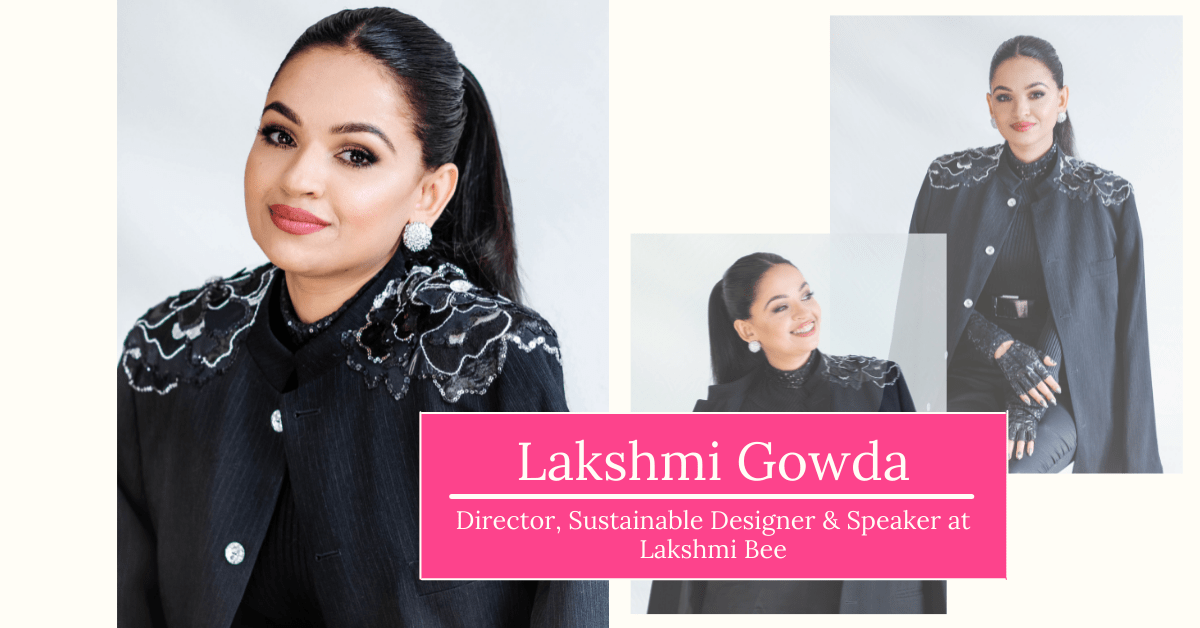
D.A.M: Welcome Lakshmi, thank you for joining us today.
LG: Thank you, it’s awesome to be here. For those of you who don’t know me, I am the director and owner of a sustainable company called Lakshmi Bee, alongside my mother Susan. I have a very long and extensive background, not just in the fashion industry but also in corporate, events and real estate sectors.
D.A.M: So fashion was one of the first industries you were involved in, right?
LG: Well fashion design has always been consistent. It’s something that I have been going in and out of most of my life, and it was only a couple of years ago, I was really able to go full time with it. It has been a very challenging journey but having so much love and passion for the field, it’s something that I’ll never give up on and I’ll keep doing – probably for the rest of my life.
“It has been a very challenging journey but having so much love and passion for the field, it’s something that I’ll never give up on and I’ll keep doing – probably for the rest of my life.”
D.A.M: Then can you take us back to the start? What made you really want to get into it?
LG: It’s an interesting story. If I go all the way back to the beginning, obviously my mum – she made all my clothes from scratch. And it was very exciting being a little girl and wearing a new outfit, all the other kids would get excited and I’d get lots of compliments. I always felt special standing out and having something unique and different. The really cool thing is a lot of those outfits were upcycled, sometimes from her [mum’s] clothes or my grandma’s clothes, or bits and pieces that we had. I just really loved that feeling of being different and expressing who I am through the clothes, rather than being a general carbon copy. So that kind of kicked off the passion for it, and as I got a bit older, the first proper dress I ever made was for my year seven formal. I had this beautiful design that just came to my mind and my mum helped me make it. It was a very special and significant moment wearing it. And another thing we always did growing up – you know at school they always have a fancy-dress competition…
My mum was always very passionate about helping me make something and entering any competition that came up. So, we would spend a week making a costume and we would enter it in school competitions. This started from when I was about five or six, my whole schooling, we entered every competition and we won every competition without a miss. Even with all the changes in school, I went to school in London, Western Australia, Brisbane – no matter what school it was, we won and that was very exciting. We’d often use old junk, bits of plastic, newspaper, bags, all these different items and make these amazing costumes.
“We’d often use old junk, bits of plastic, newspaper, bags, all these different items and make these amazing costumes.”
One of the costumes that really stands out in my mind was the annual wearable art competition at my high school in Redcliffe, Queensland. I had this vision for a tiger crossed with a peacock, so we ended up making that, and my mum assisted me with the design. I ended up taking out the entire award for our grade and I was then asked to display my artwork at the Redcliffe Art Gallery, which was a huge honour. That was when I was about fifteen years old. So yeah, I’ve always been in and out of fashion and art and it’s always been a part of my life.
D.A.M: Wow that’s amazing, well I can see that you’re passionate about it. Even what you’re wearing right now seems like you designed it, right?
LG: Yes! That’s correct.
D.A.M: Tell us about it.
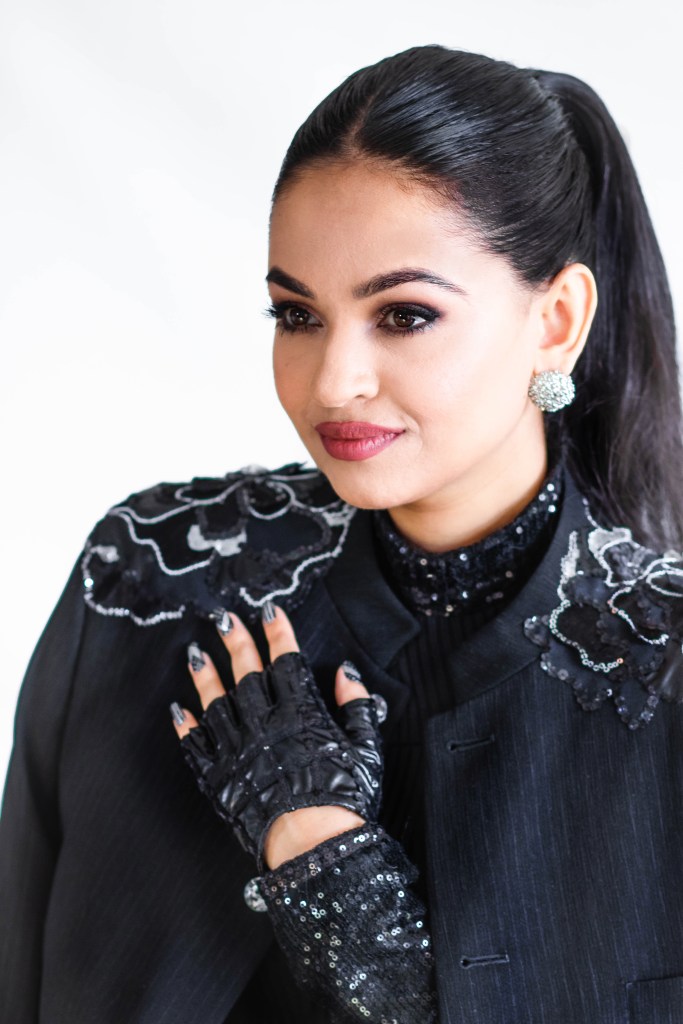
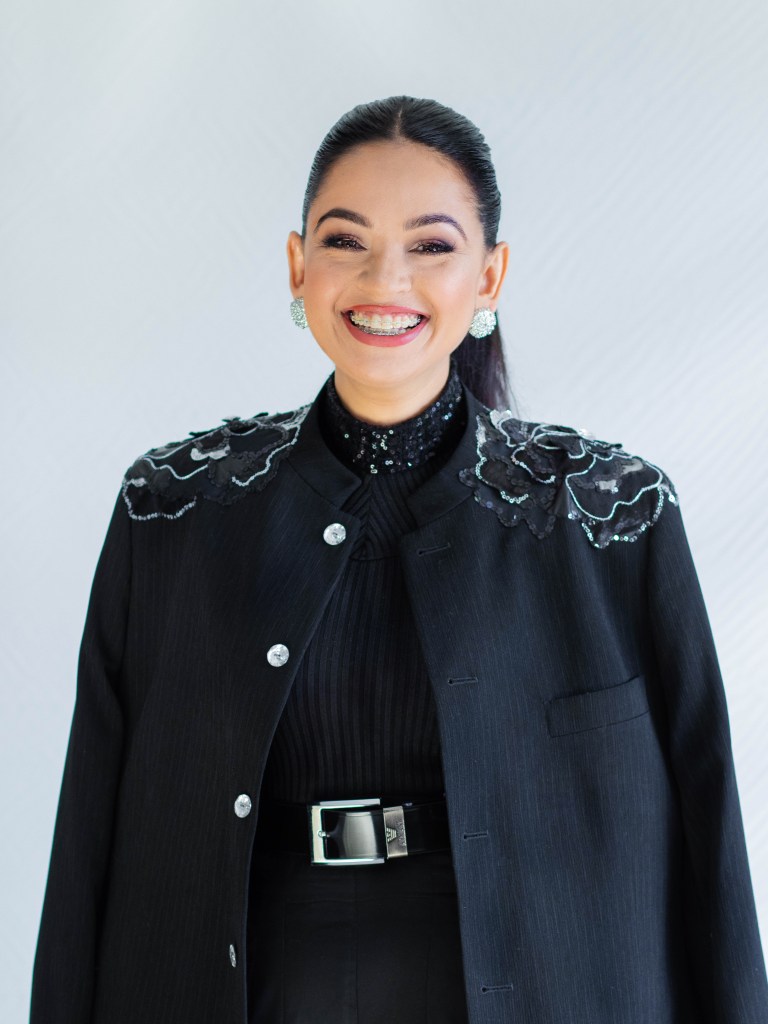
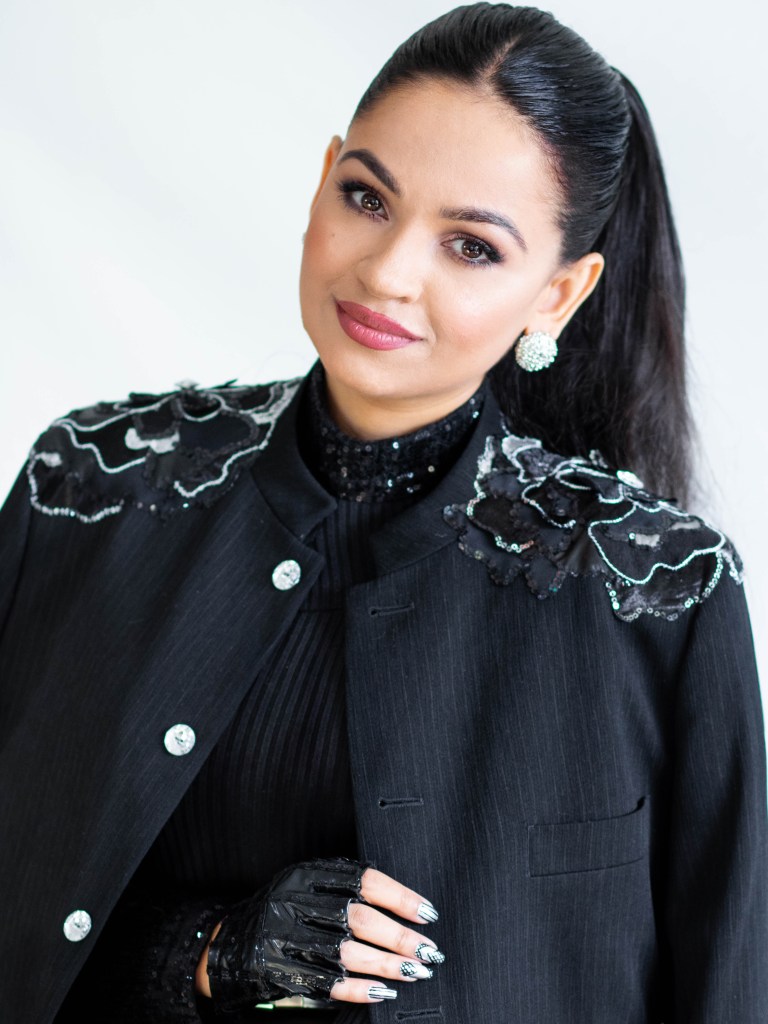
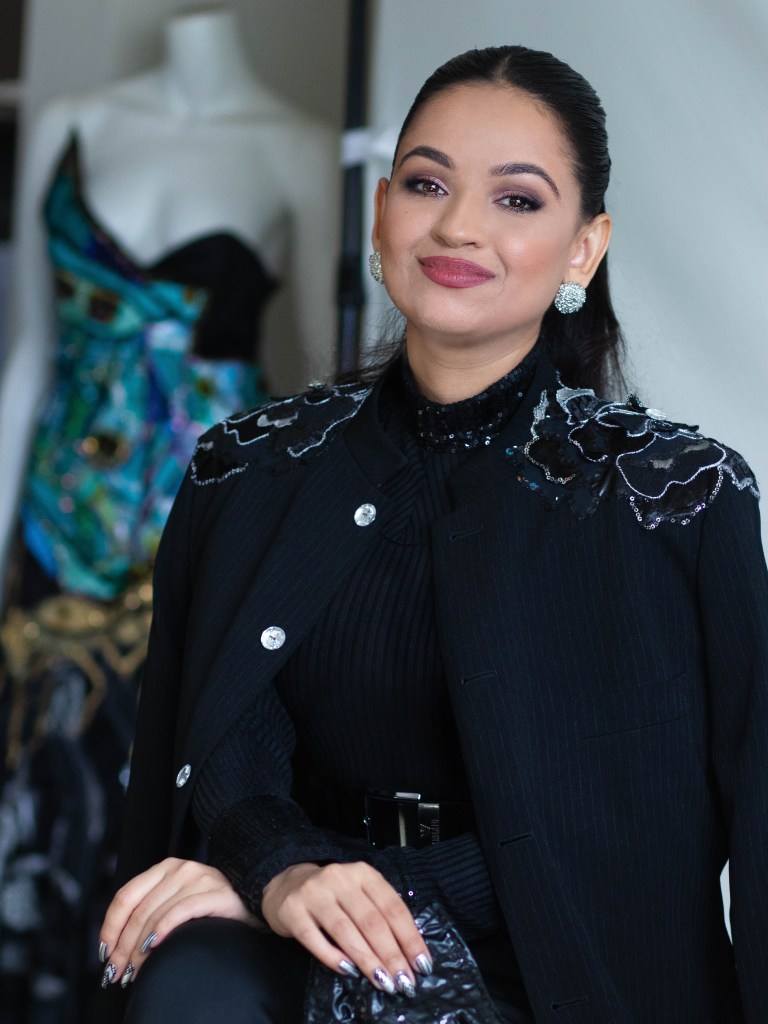
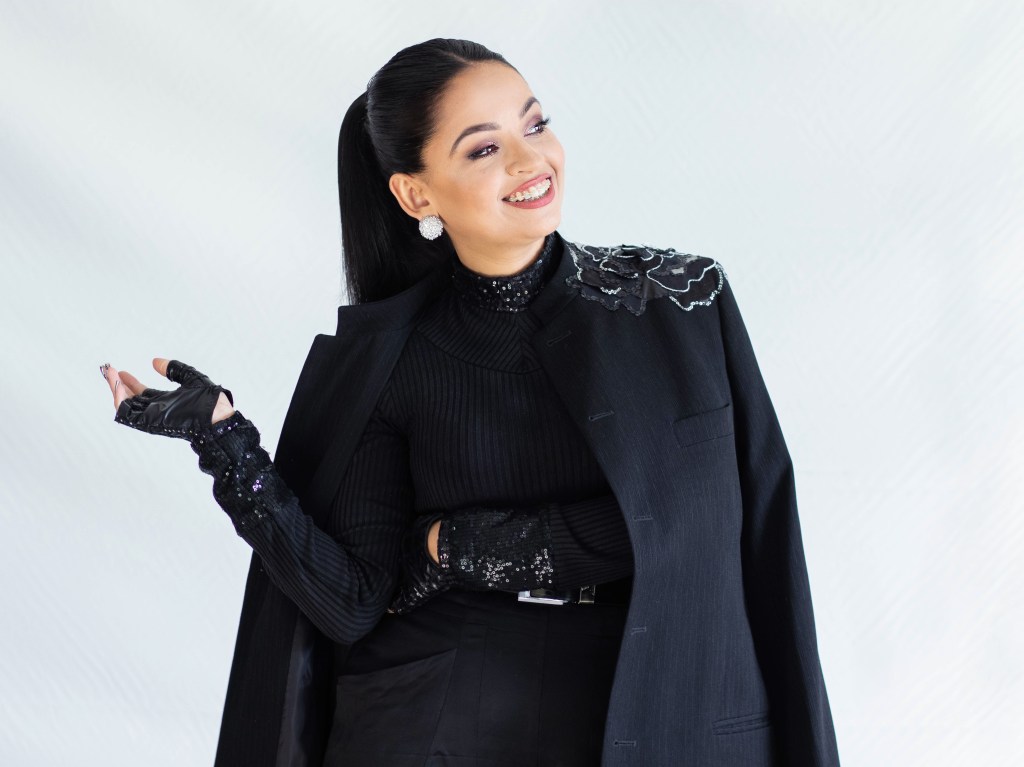
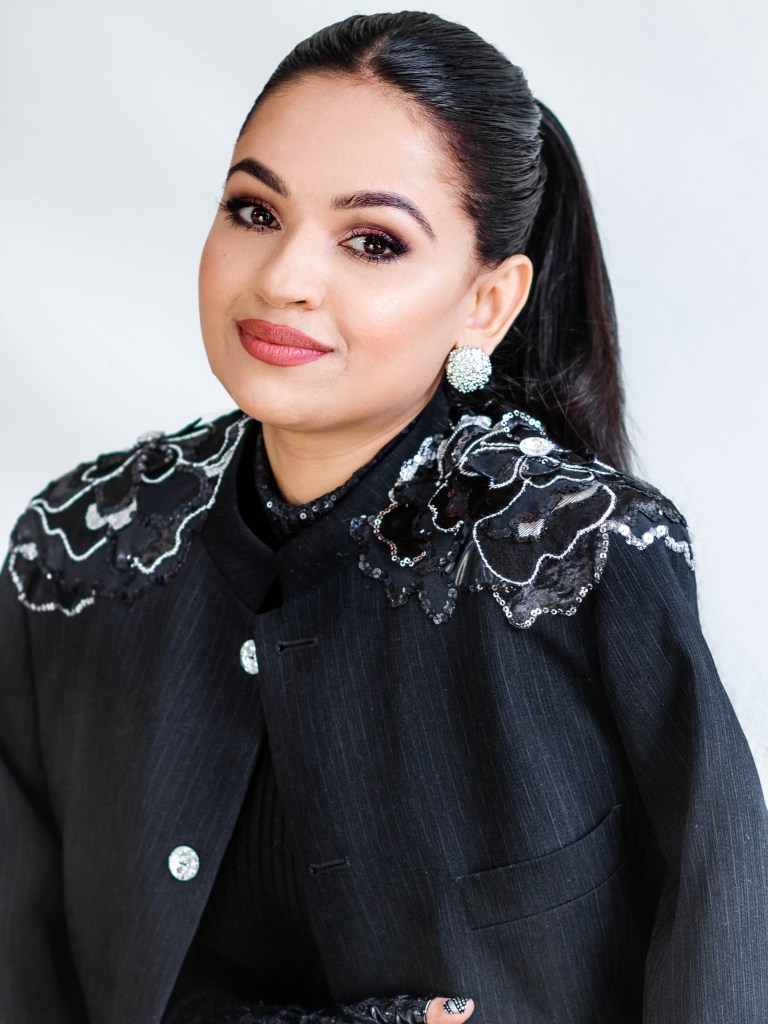
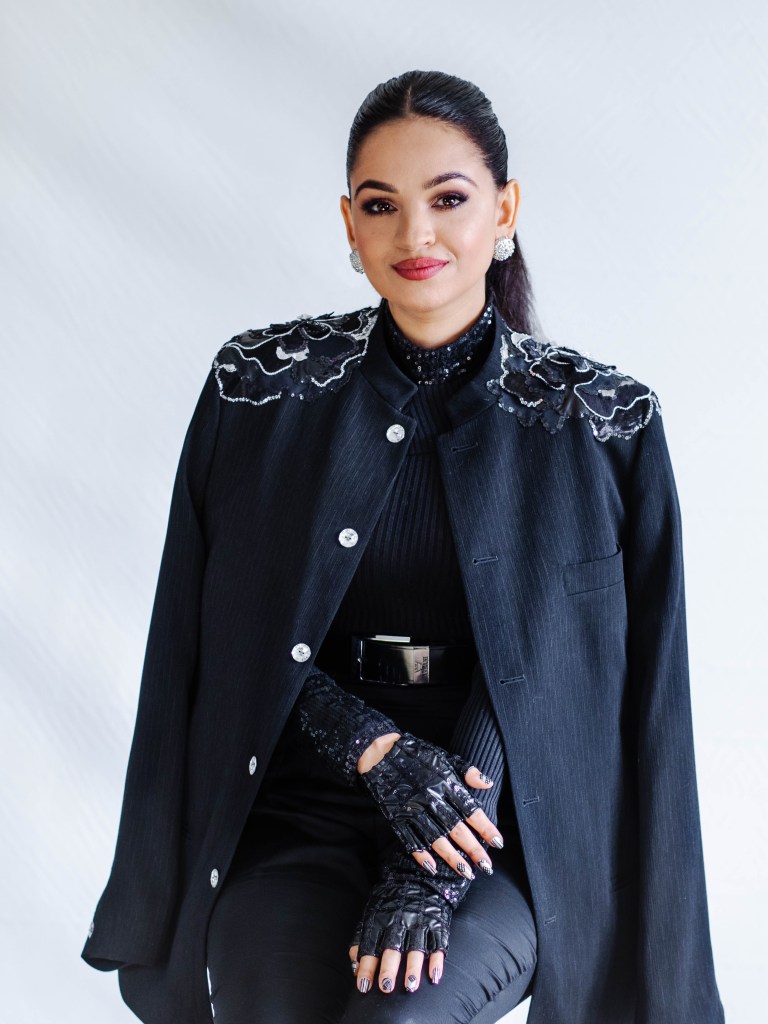
LG: So everything that you see me wear, I have made and crafted myself from upcycled materials, sometimes old outfits – I’ll chop up and turn them into something.
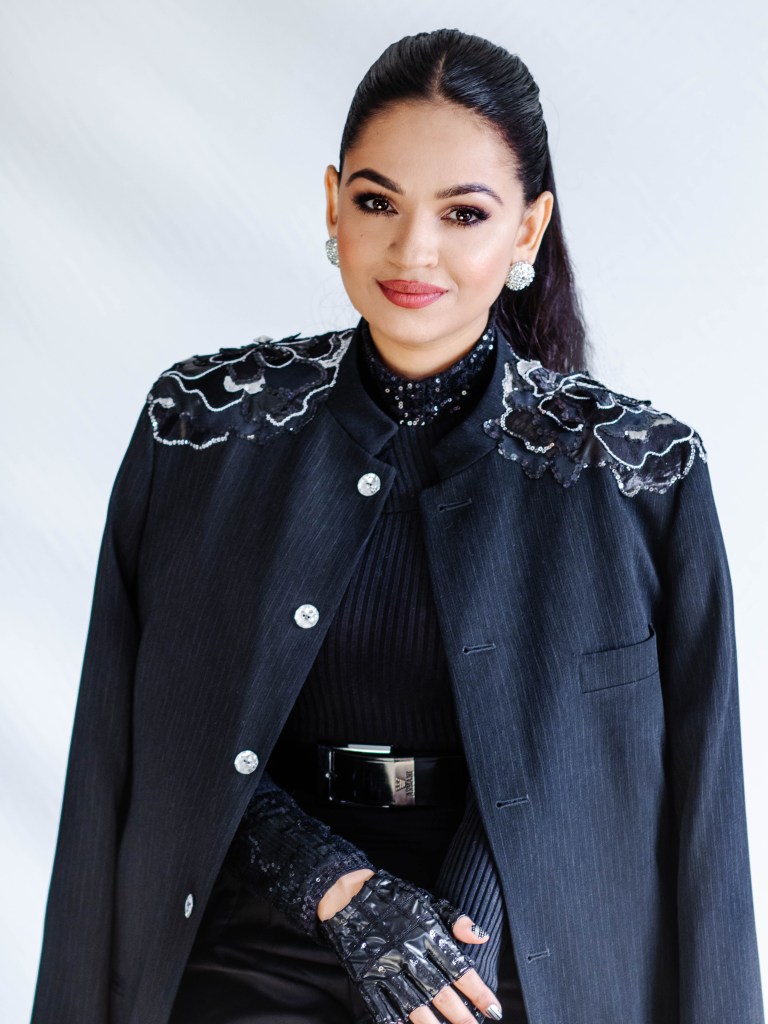
LG: My gloves, this was actually part of an old vegan leather skirt that I picked up at a vintage store, back in Brisbane. I must have been about fourteen of fifteen. All the sequins are remnants that came from a dress, the coat was actually my brother’s from India – he didn’t want it anymore and it was so beautiful, so I took it and I embroidered these beautiful roses made of fabric remnants. The buttons were left over from an art project. The pants… I think these are your mum’s! (laughs)
D.A.M: Wowww.
LG: You brought over a bag of clothes, and this was in them and they fit me perfectly so I tailored them!
DAM: That’s awesome.
LG: The belt is upcycled from two different belts. This was part of an old Armani belt that my brother had and the leather had become quite brittle, so I removed it. The top is upcycled from an old dress and fabric remnants. So everything is completely upcycled, even the earrings!
DAM: So mentioning upcycling, why is this in particular so important to you? What makes you really want to do this?
LG: So, when we were upcycling clothing, it was out of passion, we just really love being arty and creative and sometimes it was also out of necessity. At the time, I couldn’t afford the latest designer clothes, so I loved seeing all the awesome clothes out there and being able to make it myself and change it into something even more spectacular. So that was what kicked it off. But obviously today, it’s something that people are starting to become more aware of.
Fast fashion is one of the biggest polluters in our globe today and it’s had disastrous effects on the planet and the people involved, and one thing that really touched my heart is the hands, the human hands that are behind these clothes. Who is making these clothes? I watched a few documentaries of journalists that went undercover into some of these factories, and a lot of them are in Bangladesh and India. Being half Indian, this is very close to my heart and it’s something I really want to help with, to make an impact and change.
“I watched a few documentaries of journalists that went undercover into some of these [fast fashion] factories, a lot are in Bangladesh and India. Being half Indian, this is very close to my heart and it’s something I really want to help with, to make an impact and change.
In these documentaries they actually showed kidnapped children who were underneath these fallen, rotten houses and they were made to sew and weave consistently, with literally no breaks and maybe only a couple hours sleep. There were kids and then there were these mothers, maybe their husband had died or were alcoholic, so they were left to look after themselves and their kids. There was a mother sewing, and her baby having nowhere to take it, was literally under the sewing machine breathing all the lint in. Then of course, the Rana Plaza incident, the big crash, health and safety measures weren’t taken seriously. The workers aren’t even getting paid properly and the craziest part is that the labour is so cheap and the workers are so underpaid and not taken care of, yet the companies are still charging a premium price for some of these garments in our western civilisation. Then you have the other side, places like your everyday department store selling T-shirts for three dollars. It’s impossible to sell a T-shirt for three dollars when it’s made by human hands. I always say if you’re getting something cheap, someone else is probably paying for it. So I figured, instead of buying into this crazy mess, we’ll keep doing what we’re doing.
I try very hard not to buy anything from stores, unless it’s a vintage item or pre-made. I go hunting for things that have been worn before, I go through my own things, looking for remnants or factories that are getting rid of old stock. The other day I had a lady who brought over twenty rolls of really massive fabric and all of this would have just gone into the dump. I had another friend who worked at a major shopping centre and one of their main formal dress shops had shut down and they were about to throw these beautiful gowns in the bin. And she called and said do you want them, I’m like yeah absolutely. So I try to collect whatever I can and I transform it into new items. I’ve even transformed things sometimes three or four times.
D.A.M: Can you tell us, what would happen if we did continue to just buy into fast fashion, what is the world gonna look like?
LG: I feel like it’s a really tough question because I feel like life is like a domino effect, whatever we do, it affects someone on the other side of the globe and we would never know. I feel like for me, I always think about the other people. When you’re purchasing something, whether it’s a piece of furniture or a dress, whatever it is, I always think about the hands that have made that piece. If we don’t think enough about our fellow brothers and sisters and realise that as a human race, we are all interconnected, if we really don’t start thinking about that, people are gonna be stuck in these horrible, painful situations that they don’t have to be in. And I always feel that in the western culture, we have so much abundance. I feel like when you have more, you really are expected to do more, you know? You have more – not to stuff your own face, but to share and to help others. I think we have a moral responsibility to take care of our fellow humans, wherever they are, using whatever we have.
“I think we have a moral responsibility to take care of our fellow humans, wherever they are, using whatever we have. “
I always say it doesn’t have to be crazy, not some massive thing but it can be as simple as just rethinking the way you buy clothes. Rethinking your own wardrobe and researching behind the brands you’re buying, who’s making these things. Just simple steps like that can make a massive difference and in doing that I believe we can save a lot of lives and take away a lot of pain.
D.A.M: To build up on that, as well as the human element, I know that you also know a lot about the environmental impacts of fast fashion. How is fast fashion affecting the environment?
LG: Well, I’m sure you’ve all seen the documentaries, the massive landfill waste that’s out there. I mean these things are huge. It’s just funny, I throw things in the bin sometimes and I think ‘Oh, I’m just gonna throw this in the bin and get rid of it from my house’ but you have to think about where is it going? It’s not just gonna disappear, and that has devastating effects on the planet. It’s a horrible thing, but the good news is we really can do something about that and change it just by the ways we live in our homes and thinking consciously about what we’re doing.
D.A.M: So for any new, emerging fashion designers, who want to get into sustainable fashion that might think it’s a bit difficult because the resources are hard to find or they don’t know where to start, is there any advice you can give them on how to start, even something small?
LG: I can relate to this because I was that person. Growing up, I didn’t have a lot compared to other people and we had very humble beginning so I’ve always been taught how to look for different bargains or discounts, how to find really beautiful things that are low cost and that’s what’s so good about vintage stores because that is where you can find things like that. So, I would say for any upcoming designer, who is full of passion and ideas and really wants to start somewhere, go look at the vintage stores first and even ask your friends. I have many friends and family who’ve donated me things, in fact most of the things I have are from family and friends. You’d be surprised about how much stuff people wanna get rid of, I get literal bucket loads of stuff. I think it’s definitely networking, networking will change your life. If you put yourself out there and meet as many people as you can, you will make so many connections and when people hear about your mission and your passion, they will help you.
“…networking will change your life. If you put yourself out there and meet as many people as you can, you will make so many connections and when people hear about your mission and your passion, they will help you.”
So, if you’re starting from scratch and you don’t have a lot, go to these networking events, some of them are free that you can find online. You can find so many resources through networking and you don’t need much to kick it off. You just need passion, a bit of creative thinking, and a bit of boldness and confidence to go out there and meet people and be seen.
D.A.M: Definitely, I love that, I think networking is key in a lot of industries. So besides fashion, I know you’ve also started your own decor and it’s a similar thing where you’re upcycling pieces. Tell us about that.
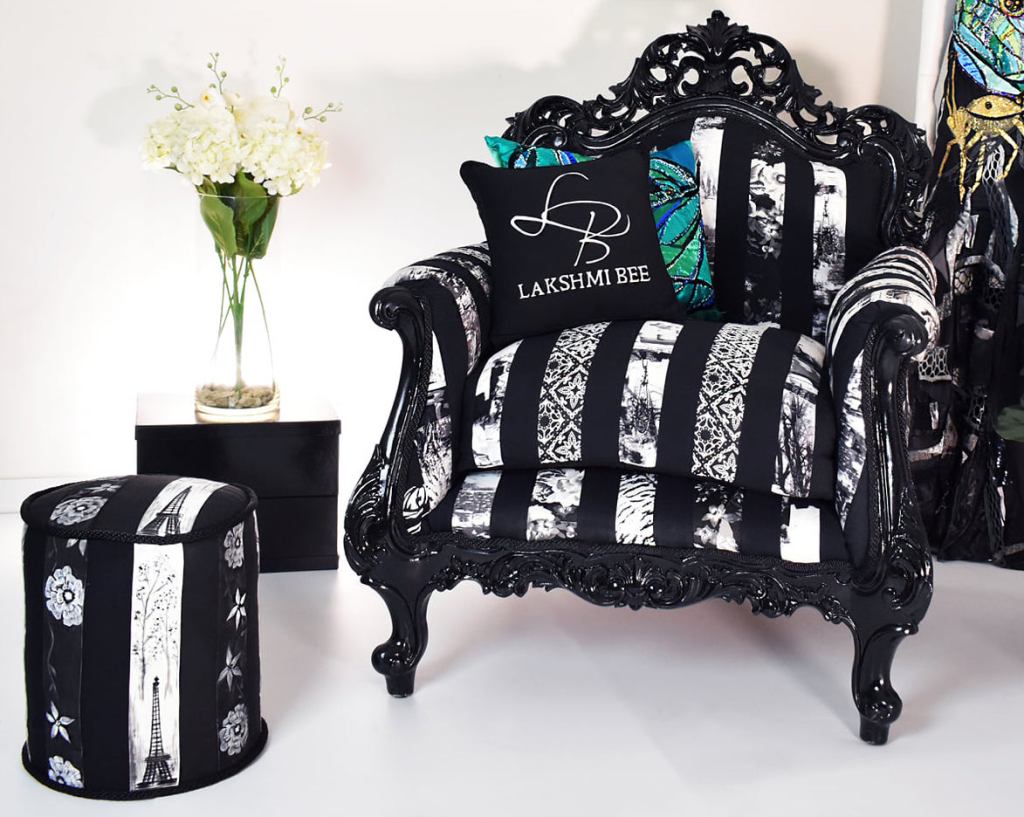
LG: So the decor project is our new project. It’s something we’ve just kicked off, but something we’ve always wanted to do for a really long time. I would always look at furniture and think, surely you can upcycle something cool with that. You would have seen the latest chairs we did, the black and white striped chairs. Those were a vintage find that have actually passed through a couple of hands. They’ve got a very long history and they’re so stunning, I mean the quality back then was so much better than it is now. They’re beautiful wood, oak chairs, hand carved and the fabric, I actually got a couple of pairs of pants, some skirts and fabric remnants we had and I incorporated all of that into the chairs that you see here.
D.A.M: That’s amazing. Do you have a particular style when it comes to your fashion and furniture?
LG: Well me and my mum, we have very similar styles which is why we work together really well. We very much love the classic styles. When I say classic, I’m talking from lots of different eras. Furniture wise I love the Baroque style, French provincial – Queen Anne, so all those really regal type styles. I also love things from the 1920s, sometimes 1900s, certain collar cuts and things so very vintage and very old school. We like to tweak that with a clean, modern classic edge. So, reviving history which is very much in our mission, taking something pre-existing with a beautiful story behind it and bringing it into today.
D.A.M: Amazing. Do you have any final words that you’d like to share?
LG: I feel like today there’s a big emphasis on mental health, which is something I’m really passionate about. It’s something I like helping people with, when I do youth mentoring and things like that. And I’m passionate about it because I was that kid who really struggled with my mind and staying positive.
“I was that kid who really struggled with my mind and staying positive.”
Growing up around a lot of adversity, particular groups and people, facing a lot of challenging times, it’s very difficult when you start from what they call ‘the bottom’, but you have your eyes on something greater for your life. And I think every human being secretly desires more for their life, but maybe they don’t know the right people, or don’t have all the resources like you mentioned before and me having been that person, having achieved what I have today and still achieving, I really wanna share with people that whatever dream you have in your heart and mind, it is yours. Whatever you see is a reality waiting to come into fruition. All you have to do is dream, have faith and take action, and it will always equal success. Keep those things alive in your life and you will live the life that you’ve always dreamed about and never ever give up. Using whatever you have, you will get there and something that my mum always says is take one step at a time. You don’t have to be overwhelmed and think, I have to do this and that, just one small step each day is enough to get you to where you need to be.
“I really wanna share with people that whatever dream you have in your heart and mind, it is yours… just one small step each day is enough to get you to where you need to be.”
.
.
.
.
.
Find more on Lakshmi & Lakshmi Bee here:
Lakshmi Bee TV & PODCAST (Spotify): https://open.spotify.com/show/6hdTGi7dlX4FWZpLO0zMHw
Lakshmi Bee Youtube Channel: https://www.youtube.com/c/LakshmiBee
Lakshmi Bee Facebook: https://www.facebook.com/LakshmiBee/
Lakshmi Bee IG: https://www.instagram.com/lakshmibee/?hl=en
Lakshmi Bee Website: https://lakshmibee.com
.
~ Published by Sangeetha & Marshall
~ Sub Edited by Farzeen Imtiaz
 Diversity Australia Magazine