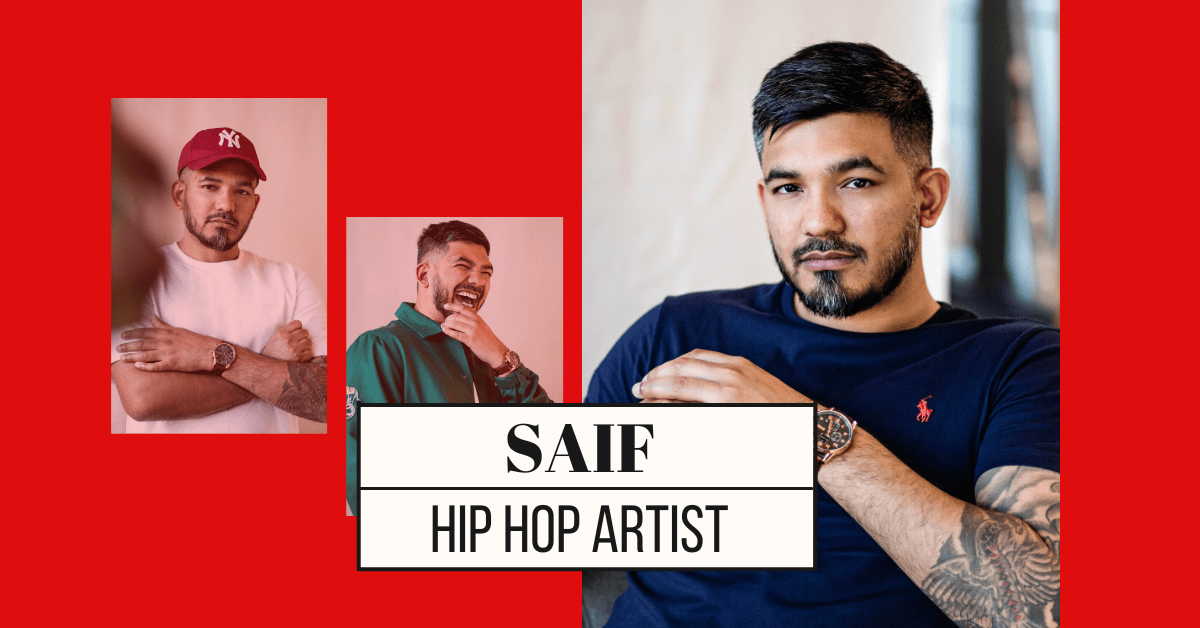
DAM: Welcome back to DAM, today we have an exciting musical guest here to chat.
SAIF: My name’s Saif, I’m based in Western Sydney. I was born in Dhaka, Bangladesh. I immigrated to Auckland, New Zealand when I was six years old and then I came to Sydney when I was 11, so yeah a bit of traveling around.
DAM: I did not know that – and I completely said your name wrong! [laughs] How do you pronounce it?
SAIF: Well you can pronounce it both ways, it’s an Arabic name so some people of Arab background pronounce it as Saif (sayf) – I say it as Saif (saif) because my full Bengali name is Saifi and for my music name I just dropped the last I. But yeah I’m easy, you can pronounce it whichever way.
DAM: And what’s its meaning?
SAIF: It means ‘sword’ in Arabic.

DAM: Wowww. Strong name, good for the music!
SAIF: Yeah!
DAM: So growing up, how did you get your start in the music scene? What inspired you?
SAIF: So I didn’t get into the art of music until later, but when I was growing up I used to love music, I knew I had an ear for it because any time music would come up on the radio or my parents would play old vinyl records, I was tuned to it. None of my parents were actually musicians or played instruments and stuff but I’ve always had music and film within the house, so I think it was something in my background. I got into music later on in my early twenties. I always loved Hip-Hop, loved Rock, Reggae as well. It was around this time that I found myself in a place where I had a lot of negative things in my environment and my life and it [music] was basically a way to articulate that and gave me a channel to express it.

“It was around this time that I found myself in a place where I had a lot of negative things in my environment and my life and it [music] was basically a way to articulate that and gave me a channel to express it.”
And because I grew up listening to so much Hip-Hop, I wanted to kind of do my own thing as well.
DAM: Do you remember the first album that made you go – woah this is next level?
SAIF: Yeah for sure, two of my favourite albums growing up around thirteen, fourteen would have been 2Pac, ‘Better Days’ album and also Eminem, ‘Marshall Mathers LP’. I think that was the first instance I got into Hip-Hop, Eminem definitely, but the music that really got me to pursue the art was by Blue & Exile. So Blue is an MC from LA, Exile is a Producer, and the album was called ‘Below the Heavens’. There was a particular song in the album called ‘Dancing in the Rain’. At that time in my life it just really connected with me and made me wanna take the jump and try and do it. I didn’t have any musical background or network so it was just a wild jump.
DAM: What was it about that music that made you relate to it?
SAIF: I think at the time there was so many negative things going on in my life and the music was about embracing your situation and embracing the hardships that you’re facing, being aware of what’s happening but still taking the steps to make it positive – and I think that’s why it’s called ‘Dancing in the Rain’. Like yeah, it’s raining and it’s gray and all these bad things are happening. Obviously you can channel it out through music but you know, I can still ‘dance’ in it and maybe tell my story.
“I think that’s why it’s called ‘Dancing in the Rain’. Like yeah, it’s raining and it’s gray and all these bad things are happening. But I can still ‘dance’ in it and maybe tell my story.”
And I think at that time when I started, it wasn’t really to relate or be a musician but more like – I just need to get this stuff out of my chest.
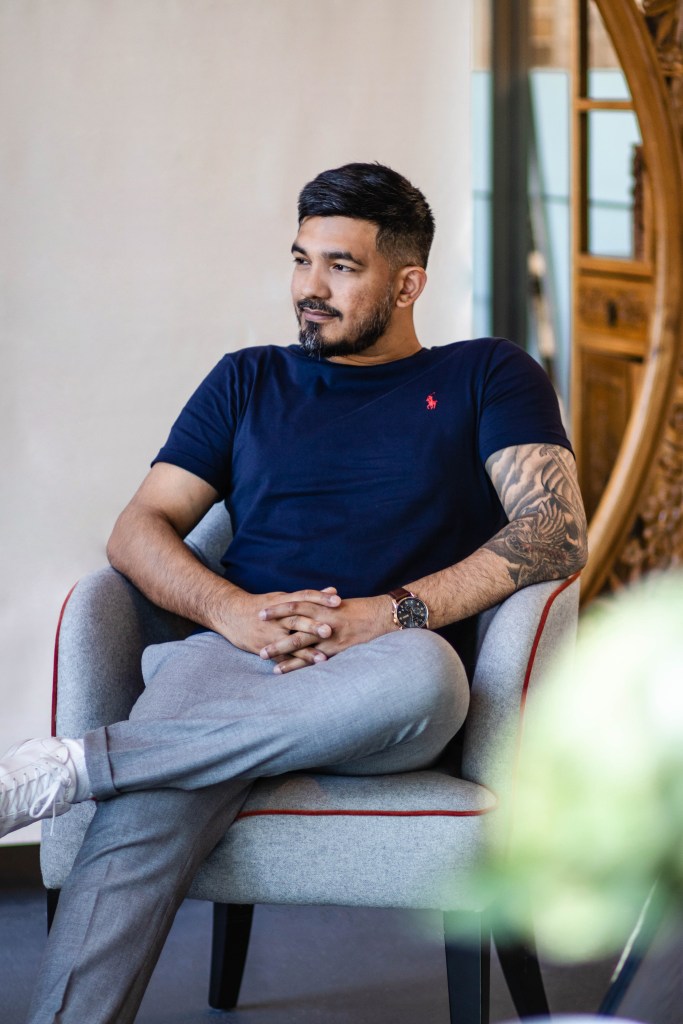
DAM: Yeah that’s really awesome. I used to listen to a lot of Hip-Hop back then because it was really big – 2Pac was always my favourite, not just his music but what he stood for. Because back when it was popular, I don’t know if you were the same age, but for us it was also 50 Cent.
SAIF: Oh yeah yeah –
DAM: ‘Candy Shop’ –
SAIF: ‘Twenty-One Questions’ –
DAM: Yes!
SAIF: I loved that track.
DAM: I mean if you compare it, I feel like 50 Cent is the ‘Blockbuster’ and 2Pac is like the ‘Indie Film’. [laughs]
SAIF: Yeah! I feel that [laughs]

DAM: So when you first started trying to make it in the industry, was it what you thought it would be?
SAIF: When I first started, there wasn’t really much of a scene in Sydney. It was very minute and there were probably about thirty or forty people that I knew of, everyone was at that early stage of introducing Hip-Hop to Western Sydney or Sydney in general. I didn’t know what to expect because I didn’t come from that creative background or know much about the industry itself.
“I didn’t know what to expect because I didn’t come from that creative background or know much about the industry itself. “
I also didn’t have this vision at the time that I wanted this to be a career, I was more getting used to a different part of myself and meeting all these new people. It was more of an outlet, I was in a shitty place in my life and that was the thing that was weighing me down – I was just trying to get away from that. So to understand the industry itself isn’t something that came to me – that’s something over the years as I’ve been putting in the work and developing as a person, the vision started getting clearer.
DAM: So you made your first few projects, and what did you think of them?
SAIF: Yeah… [laughs]
DAM: We all have our first projects! [laughs] Looking back at it now, can you look back and say – it was very rough but I’m proud of it?
SAIF: For sure! The first project I released was called ‘Voyage X’ in 2012 or 2013, and it was basically jacked beats off Youtube. So we’d get Youtube and we’d download the beats and just rap over it. There were like twenty-one songs in it and I recorded all of them in a studio in like an eight hour session.
DAM: Wow yeah.
SAIF: So it was more like – I’m gonna let this out. And since I didn’t have people behind me or I wasn’t part of a group that could help, it was more like trial and error. But as I jumped from ‘Voyage X’ to my next album called ‘Blue City’ in 2016, I basically tried to learn everything I could from ‘Voyage X’ and take it onto ‘Blue City’. But my idea was very much that trial and error because I had so much to write – I’d be writing five, six songs a week – like I just wanna get this out. So my process of learning was very self taught. Through it all I met people and they showed me a few things. I’ve always been open to criticism so I think that really helped as well, especially if it’s a good critique. But yeah when I look back now, ten years later, it’s basically development and stage blocks and you can’t be here without going through all that.

“When I look back now, ten years later, it’s basically development and stage blocks and you can’t be here without going through all that. “
So I’m definitely grateful for all the projects, it might be hard for me to listen to them now cause I’m like – wow that’s very rough! [laughs] But I’m grateful because I feel like the message is still the same. I haven’t driven away from my core message and who I am as a person, what’s changed is the quality, the music and what I’m rapping about – because that’s the growth.
DAM: So I know a lot of musicians often create art from their pain and their own experiences. In doing that however, do you ever get burnt out – or start thinking well I’ve let so much out in that album, what’s gonna be next?
SAIF: Yeah some people call it writer’s block or it could even be just an idea block, because sometimes I feel like I’ve written so much, sometimes for me to create something new it’s like…
DAM: Yeah what do you do?
SAIF: Right, so there – I just kind of sit back a bit and live. I read, I talk to people, I look for inspiration because sometimes it doesn’t come to you. If I think about where I am now, I don’t write music as much or I’ll be writing but I won’t use everything – where before I would just have things come out because I had so much inside, I was really attacking it where now it’s more grounded. It’s like, do I have an idea? Is there something that’s bothering me that I want to write about? Or is there something I wanna reflect on that’s going on in the world? I think also, it’s not just the writing, it’s the sound as well in terms of the beat choices. You know, I think drill music is going really heavy right now and it’s a faze – I try to incorporate what’s going on with the modern times and sound but still have my own nuance with it. So the beats I use like the drums would still be the same but I still give my jazz type of sound [with it] because I love saxophone and deep keys, melodic guitars – so I try to incorporate those. But yeah it’s really just sitting back, reading, speaking to people, taking in the environment and letting it come to you.
DAM: Speaking of the struggle of writer’s block, what would you say have been some other struggles you’ve encountered in the industry?
SAIF: Well I feel like the Hip-Hop industry in Australia has definitely picked up a lot in the last maybe five, six years. Prior to that we wouldn’t have the support programs that we have now – for example ‘Conscious’. And I think getting your music across the right people has been difficult, also maybe coming from an Ethnic background, since there isn’t much representation for us – that could be a challenge, it could also be something good because there’s obviously a niche but you just gotta wait for the opportunity. So it might be hard for people to relate to the things we’re talking about as well which was a difficult challenge. But I guess for me personally, it was having that self confidence and belief that – yeah, I can do it. Because if you’re making music or you’re doing something for five, six years and you feel like you’re at the same spot, you’re getting a hundred plays, you’re not getting picked up, you can question things – like ‘okay what am I really doing, is it really worth it?’
“For me, it was having that self confidence and belief that – yeah, I can do it. Because if you’re making music or you’re doing something for five, six years and you feel like you’re at the same spot… You can question things.
And I’ve had times where I’m like – ‘I’m just not gonna do it anymore’, but I know that when I’m doing it, acknowledgement feels great but I realised there’s something deeper than me. I wanted to make a change. And at the time I was going through all that negative shit, I wanted to give back to someone who might be in the same place. So it became more about that moving forward. But I think it’s just that self belief and having that motivation and inspiration in yourself to keep going through the setbacks and the failures and still trying to pursue what you’re doing and sticking with it.
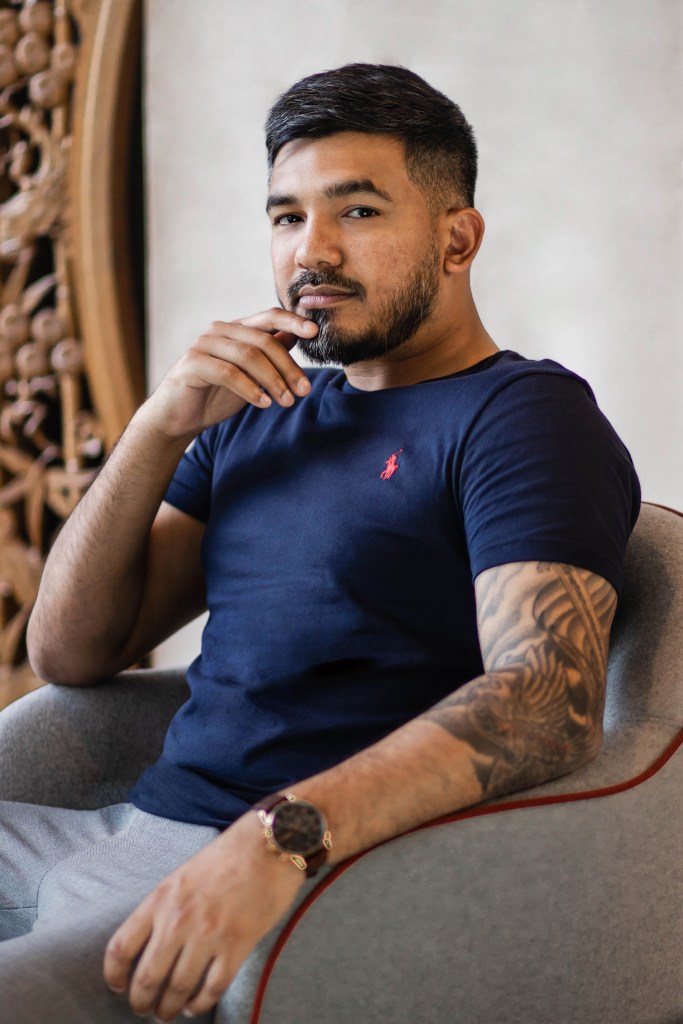
“Acknowledgement feels great but I realised there’s something deeper than me… I wanted to give back to someone who might be in the same place. So it became more about that moving forward.”
DAM: How important do you think it is to represent the community?
SAIF: It’s so important because it makes people feel valued and heard and makes people feel like there’s support systems and there’s people in place to take care of a certain ambition you might have. For example, without programs or the right people you feel like the roads you wanna get through, coming from Western Sydney, might be blocked. And you might feel out of place when it comes to the bigger things you wanna accomplish. So these pathways really help you develop as a person, giving you the confidence to say ‘hey, there is still an opportunity here if I keep trying’. Before programs such as this [Conscious] I felt very like – it’s just me doing it and there was no greater awareness that there’s all these other people here in the industry and it’s a career, they’re getting paid to do what they love. There’s so much depth in the arts industry, which I wasn’t aware of before because I was just following a process, almost like a hamster on a wheel you know? So it gives you an idea of doing things from a different approach and broadens your perspective, you start understanding more about your craft. Instead of quantity you focus on quality. So yeah programs like these are so important to give back to the community so the next generation has someone to look up to and be like – hey they’ve done it so we can follow that, and have someone to fall back on if they need some advice.
DAM: Have you had people and youth reach out who are inspired by you? What’s that like?
SAIF: Yeah! I have, it’s honestly so fulfilling. I’ve had a lot of kids be like ‘hey this has really helped me during a hard time’ and even people in Bangladesh listening and sending me messages like ‘I love you music, love what you’re doing and what you stand for’. And that’s very meaningful to me. I’m glad that I’m leaving a positive impact on these people and I wanna take that to a greater magnitude and give back to the community. It definitely feels good connecting with people from different generations or landscapes, feeling the things that you’re saying.
“It definitely feels good connecting with people from different generations or landscapes, feeling the things that you’re saying.”
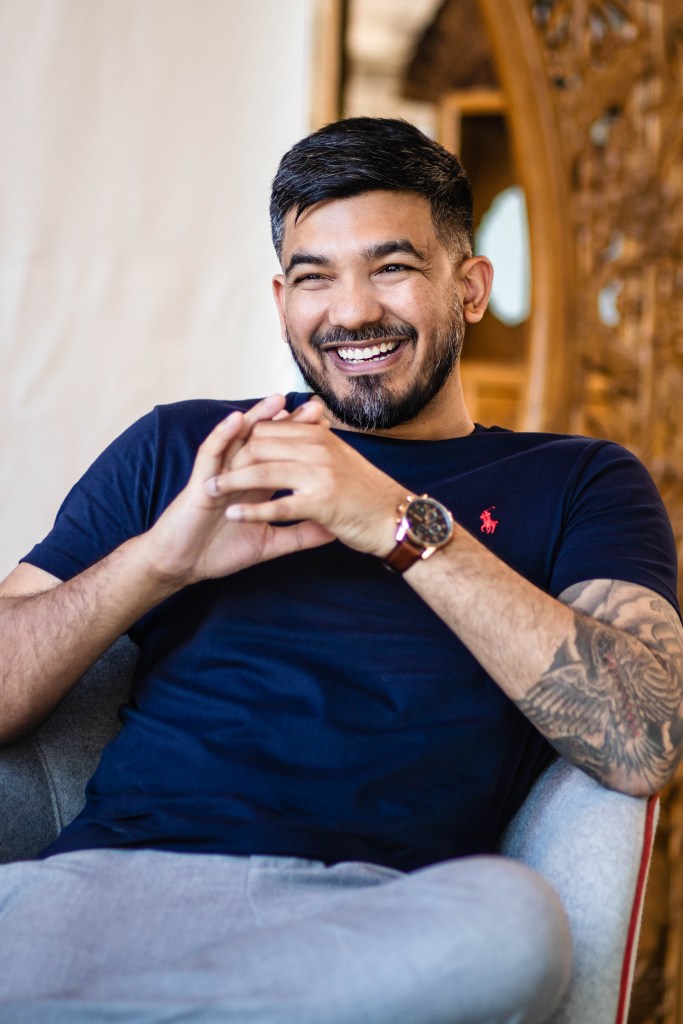
DAM: Absolutely that’s amazing. Well, we’d love to hear about your recent performance at the Women’s Basketball World Cup – which congratulations by the way!
SAIF: Thank you so much. It was honestly a dream. Prior to that performance, the most people I’ve performed to would be about thirty or forty and this one was like fifteen thousand people packed at the Qudos Bank Arena. There were two games that day, the second was Australia and China.
DAM: That was a big one.
SAIF: Yeah that was amazing. And when I first got to the Bank Arena, in the first game – there was only like about thirty people [laughs] not many – and I was like ‘oh okay, shouldn’t be too hard I’ve done this before’. Anyway I go into the green room and I’m just chilling. In the room it’s pretty quiet – but I went out to get some water and I just hear ‘BOOM BOOM BOOM’, like crazy ass noise I haven’t heard in my life – and I’m starting to sweat now, like woah this is not forty people as I imagined.

And I go back into the green room, nervous, there’s so many people – how am I going to do this? I just remember circling the room, spitting my rhymes, getting the body language right and then the time came. And I’m walking out, I got backstage, it’s completely dark and one person from the women’s basketball courts takes me out. I walked out and it was completely packed out, the Mcs, the cheerleaders coming in, then they call my name and I go out in the middle. It’s completely dark, I can’t see anything and the spotlight is on me. It felt like a warm glow. And I swear – it felt like an out of body experience. Like everything I’ve been working on for the last ten years has put me there, and now I’m here just to enjoy my time.
“It felt like an out of body experience. Like everything I’ve been working on for the last ten years has put me there, and now I’m here just to enjoy my time.”

It wasn’t even about proving that I can do something, it was just like a dream sequence and when I was doing my thing I didn’t feel like it was me, almost like seeing myself from a different vision and the words just came out. It was just crazy.
DAM: That’s gotta be one of your greatest moments.
SAIF: For sure.
DAM: And I’m so glad, hearing how you just seized it. It’s just incredible. With all you’ve been through and achieved, do you have any words of wisdom for the younger generation or anyone just trying to get into the industry?
SAIF: I’d say if you definitely have a goal or a vision, something that you’re striving for – it’s gonna be a long road and there’s gonna be highs and there’s gonna be lows, at the start there might be more lows than highs, so you just have to ride the wave. If you really believe in the work you’re doing and you have something to work for, I’d say just take the hits and then come back stronger. Because once you get through that initial period, what you leave behind for other people and what you see in yourself is just gonna be so much greater than all the losses and the hardships. Follow through with your passion and take the lows with the highs they all come as one package.

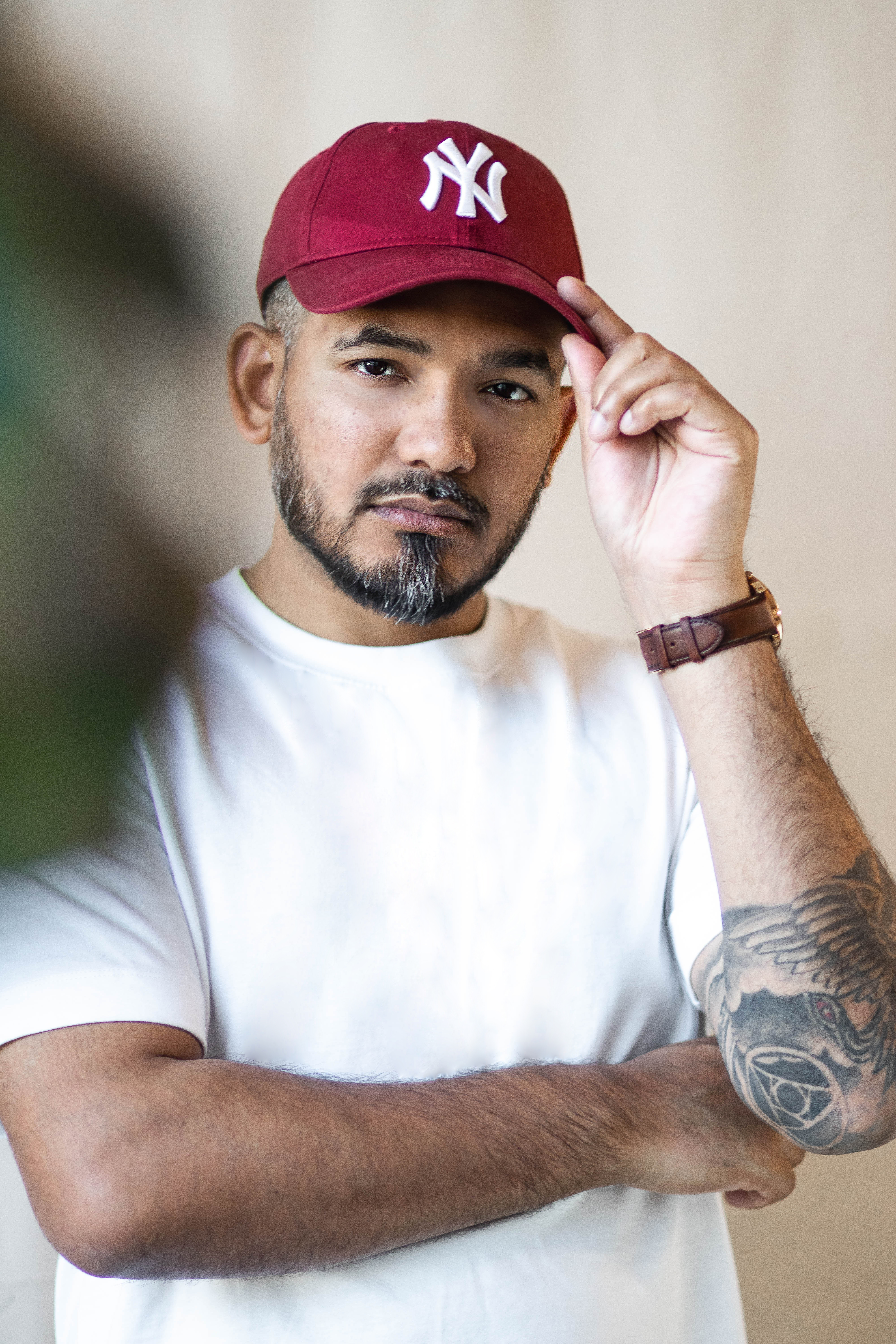
“What you leave behind for other people and what you see in yourself is just gonna be so much greater than all the losses and the hardships.
DAM: Thank you so much Saif for speaking today it’s been so great hearing about your journey behind the work and the music.
SAIF: I’m grateful, thank you for having me and giving me the opportunity to speak with you two, it’s been great.
.
.
Find more on SAIF and listen to his music here:
Instagram: https://www.instagram.com/saif.musiq/
Youtube: https://www.youtube.com/saifmc1
.
.
Interview by Sangeetha Gowda & Marshall-Weishuai Yuan ~
Published by Sangeetha Gowda ~
Photography by @noah__creative
 Diversity Australia Magazine