
DAM: Today we’re sitting down with Stuntman Thomas Italiano. Hello and welcome Thomas!
TI: It’s a pleasure guys, thanks for having me.
DAM/Marshall: We’ve known each other for quite a few years now. I’m so proud of how far you’ve come in life, especially in terms of your career. To start, I do have one question that I wanted to ask and it’s regarding your interesting surname. Could you tell us a bit about that?
TI: Of course. My last name is Italiano, don’t trust it because I’m only 48% Italian [laughs]. The surname comes from my Italian grandfather’s side. When he and his family (my great grandparents) came to Australia, they unfortunately didn’t know English very well so when they were asking for their surnames they said – ‘Italiano’ which basically translates to ‘motherland’ in Italian. So it was actually a mistranslation but it kinda just stuck. [And] On mum’s side, they stole some bread and came to Australia from England. We also found out that we come from Scandinavia so we got a little bit of that.
DAM: So you’re part viking??
TI: Yeah a little bit! I’m a big fan of their culture. I love their culture, their spirituality, their mythology and just the way they live.
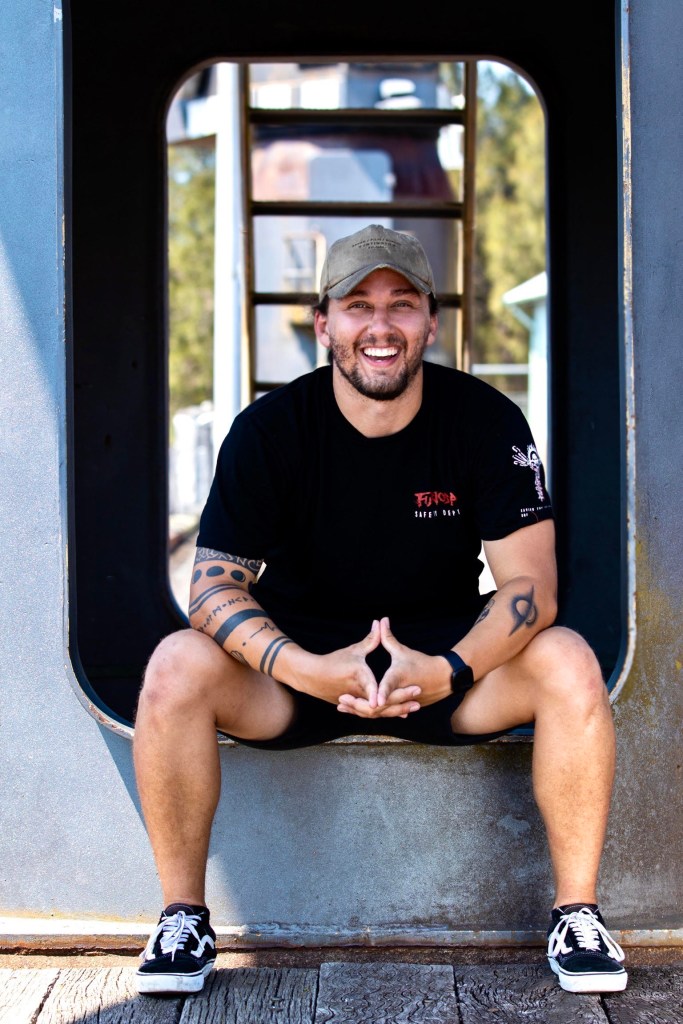
DAM: So then, how would you say you identified growing up?
TI: This is a really interesting thing because no one really asked me this before. I’m a ‘halfie’ just like anyone else who identifies as Mixed-Race and I’ve met a lot of people who are Mixed too and I’ve kinda experienced similar things. I was too Aussie for the Italians and too Italian for the Aussies, in Winter I’m white and in Summer I’m brown – like a chameleon. In saying that, the areas which I grew up in didn’t have as many White kids, so I actually got along with Filipinos more than anything else. My first primary school friend was Filipino and I got to learn a lot about his culture and his family which was something that translated into high school. There weren’t as many Italians growing up in the Inner West [Sydney]. I went to Marist Brothers and I think there were a total of two other Italians at school apart from myself and then a handful of White kids. That’s the great thing about Australia, it’s such a Multicultural country that I’m meeting more cultures than my own.
“That’s the great thing about Australia, it’s such a Multicultural country that I’m meeting more cultures than my own.”
What I have noticed though is when it comes to my Italian side, I find it very hard to connect with because they have very different belief systems. They tend to be very hard workers but sometimes like to kind of flaunt what they have, such as money. In saying that, Italians are massive on family so I’ve kept that aspect. I look after all my friends like family and I treat them that way, always finding ways to take care of them.
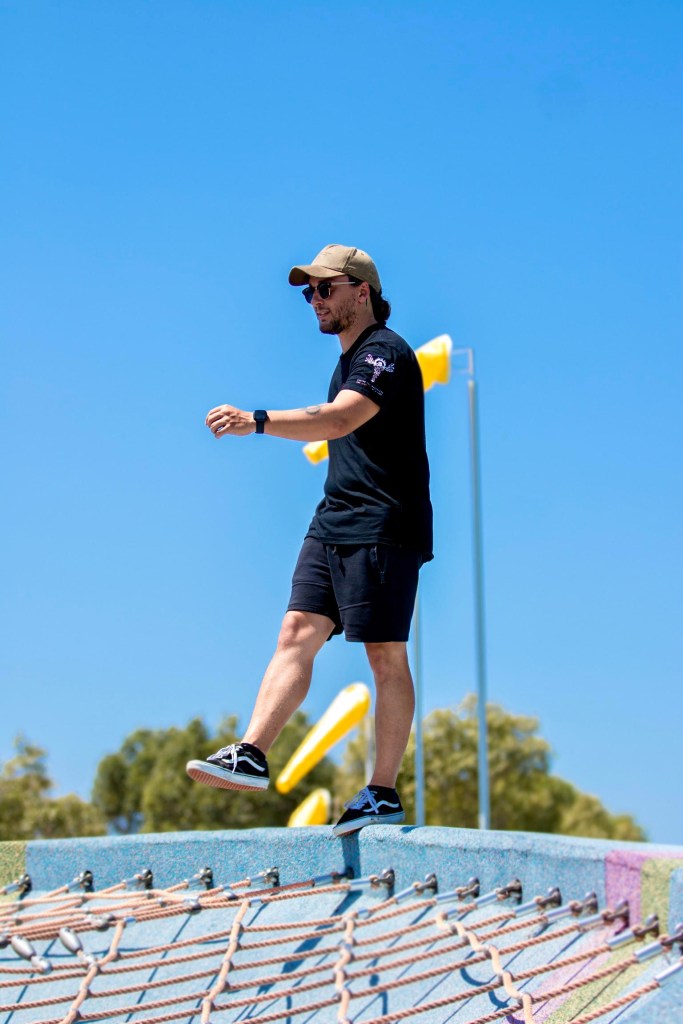
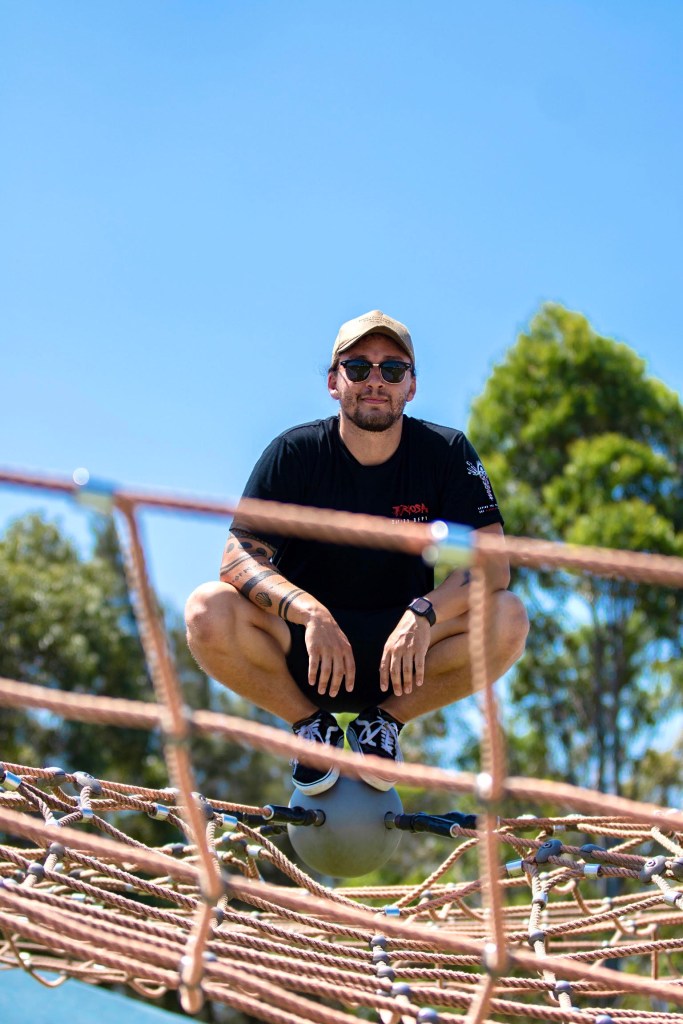
DAM: Speaking of family, I know your dad has a family business which you used to work at. What was that like?
TI: My dad is a very traditional Italian. He grew up in very hard times and it wasn’t until his thirties that he started his business. When he was younger he was changing back and forth from a lot of jobs and trying to start different businesses. He was a chef for around fifteen to twenty years and we used to run the Smithfield RSL club, so I was always around hospitality. He saw that there was a gap in the market and created a Sous Vide company. Basically he buys meat products and then they’ll [the company] slow cook it, chill it, package it and then send it off to restaurants and bistros. For example, If you were to go to Criniti’s [Italian restaurant franchise] and order a rack of ribs – it would come from our company. The idea is to reduce time for cooking for the restaurants and retain the meat… See this is all the business side coming out, I’m endorsing him right now! [laughs]
How I got involved started when I was a teenager. I told my dad that I didn’t want to work at KFC or Mcdonalds because I can’t see myself doing that and thought my time was worth more. He very quickly humbled me and said, “Well if you think like that, then you need to work with me.” So from the age of fifteen, every school holiday, while everyone else was going to the beach or overseas – I would be slaving away. A typical shift would start at 4-5am and finish at 1-2 o’clock in the afternoon. I remember continuously packaging meat in bags for hours on end while listening to TRIPLE M, it just felt like groundhog day. The part that would really toughen you up, would be the temperature changes. People don’t realise that whenever you’re dealing with meat products, you’re working in an industrial warehouse that is constantly cold. Because we’re always dealing with cooking and freezing, I would work in an 8 degree room and then go to the cook room, which would start off at 20 but then reach almost 50 degrees. After sweating for hours putting stuff into tanks, you would go from an almost 50 degree room to a minus 13 – 23 degree room straight after. I worked with him part time all the way up until twenty-one and then I started working for him full time. Eventually I decided that I needed to go out and experience what’s out there beyond the family business.
DAM: Is that how you got into your field now as a Stuntman?
TI: I never really knew what stunts were until I was in my teens. When I was five, I watched Sam Raimi’s Spiderman and I fell in love with it. I always wanted to be Spiderman, the whole superhero thing appealed to me, sticking up for justice, fighting against crime and evil.
“When I was five, I watched Sam Raimi’s Spiderman and I fell in love with it. I always wanted to be Spiderman, the whole superhero thing appealed to me, sticking up for justice, fighting against crime and evil.”
As a kid I had a very strong sense of justice and that’s what I wanted to do, I wanted to be like Spiderman. As I got older I had that stuck in my head even though there were other things I wanted to do. I’ve always wanted to help people as my personality trait is very open and agreeable. Unfortunately, I also have Dyslexia, which meant that I didn’t get the best ATAR after high school. When I was about to graduate my dad asked me what I wanted to do and I told him maybe I could be a paramedic. Linking it back to the whole Spiderman thing, it’s the same thing, it’s a masculine person coming to rescue people and save those in need. However seeing as I didn’t have the best ATAR – going to uni to study wasn’t an option for me. So I went to work with my dad full time but as previously stated, I eventually told him that I wanted to go out on my own. Even though we were both very stubborn, he agreed and told me that if it doesn’t work out then coming back was always a back up. If you’re reading this dad I’m really sorry but I really hated working there, it’s nothing to do with him, it just wasn’t for me. I thought to myself, ‘I’m young, I’m relatively fit so I’ll give stunts a go and dedicate the next five to six years towards it’. I went and worked terrible jobs in trampoline parks earning minimum wage just so I could train for free and practice hours on end to get physically fit, learn about the body and get good at acrobatics. I did that for seven years and left, then I found a school (for stunts) and started training there. A year later I got graded as a stuntman so that was my entry into the film industry.
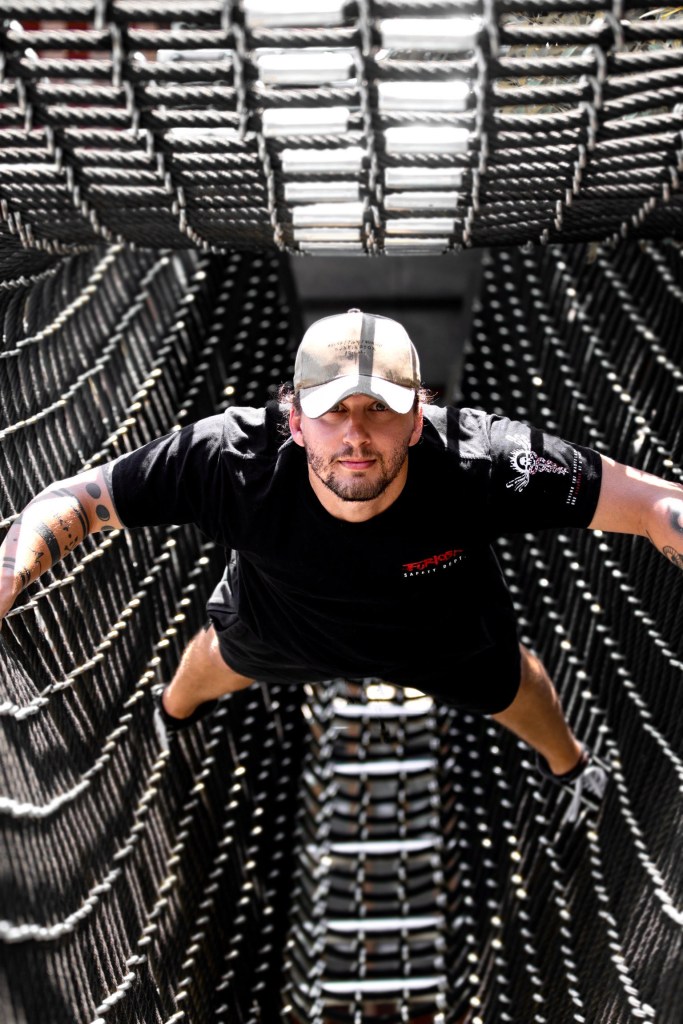
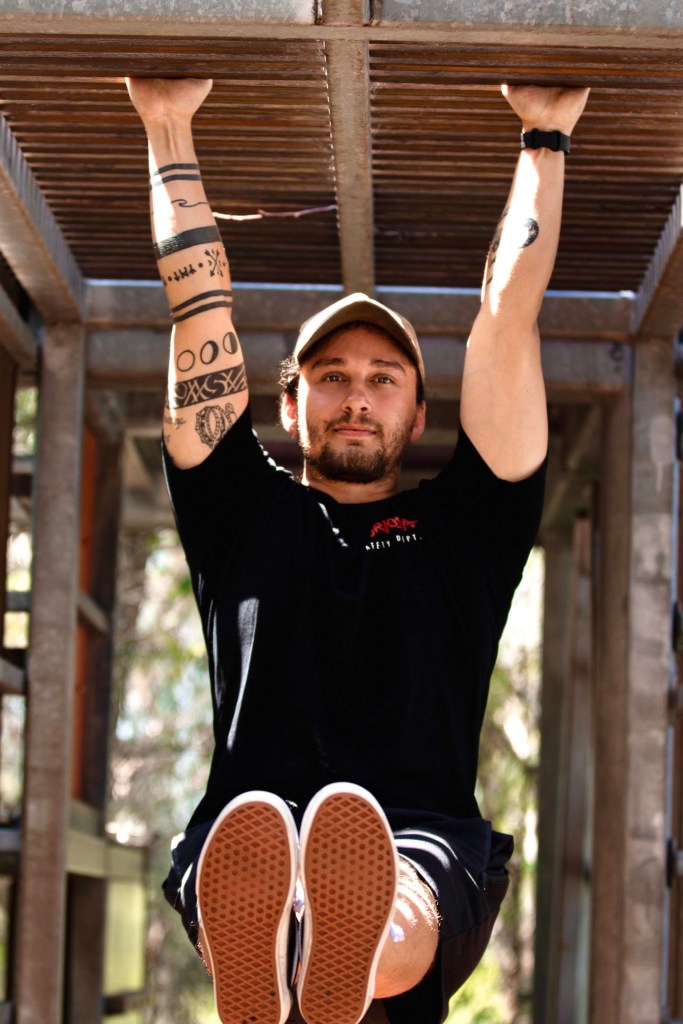
DAM: That’s quite a journey and very well earned too. How was the experience at the start, doing stunts on sets?
TI: Very surreal because to become a stuntman there’s a list of criteria that you need and that list can break a lot of people. There’s a lot of fear that needs to be overcome and I wouldn’t by any means say that I’m fearless but I had to be very comfortable being under pressure and not showing it. I’m quite comfortable with heights, I can stand on a ten metre ledge no problem, but when you’re looking down and you know you have to fall off it, I mean, I’m still human. There’s always a little voice of doubt in my head but I don’t listen to it and I think that’s what separates me from others. I enjoy being uncomfortable and putting myself in those positions where I thrive. When I finally got my stunt licence, it was an entry level apprentice but even to become that was very difficult. I set a very high standard for myself with reasonable goals and I ended up getting there. To walk onto a feature film set, even as an apprentice, was very surreal and emotional. After doing the stunts for my first day on a feature film, I checked that no one was around and put both my hands in the air while listening to some motivational videos. In that moment I learned to trust myself and appreciate how far I’ve come, so it allowed me to develop the confidence to continue pursuing my craft. Being a stuntman has definitely made me a stronger and a more humble person.
“After doing the stunts for my first day on a feature film, I checked that no one was around and put both my hands in the air while listening to some motivational videos. In that moment I learned to trust myself and appreciate how far I’ve come.”
DAM: Congratulations on that! On the topic, I feel like a lot of people don’t appreciate the lengths that Stunt men and women go through, so can you give us a rundown on that?
TI: The film industry is one big illusion. One of the questions I get asked all the time is: ‘Who would I look like and who would I double?’ Here’s the thing, in the film industry you don’t need to look like anyone. If you happen to look like a lead actor and you’re a perfect fit then you’re pretty much set for life. However they tend to look for body shape. A lot of the time stunt people tend to play a lot of the background, we call it ‘colour in film’ so whenever you have an actor in front of the screen, all the people in the background are either extras or a stunt person. A stunt double will do anything from a basic fall to setting themselves on fire, we do everything. Brad Pitt recently put up a quote saying, “I can win an Oscar for playing a Stuntman but I can’t win an Oscar for being a Stuntman”, just to raise awareness which I strongly agree on. A lot of people don’t realise that stunts are just as hard as acting. Despite being one big family we’re also always competing against one another, so you’re hoping you get that big role and you’re always striving for it.
Unfortunately a lot of stunt actors will put their lives on the line for a lot of things. We’ve had some very unfortunate accidents in the industry that go unnoticed but it’s a job that if you’re at the top of your game, you are doing those life threatening stunts. Injuries can be things like broken bones, scoliosis, dislocated shoulders to third degree burns or unfortunate deaths. Gun safety is another big thing. Australia is a lot safer than America but we also struggle with awareness. As we have banned all guns from the public, a lot of actors don’t know basic etiquette. Say an actor has a pistol with no ammunition – what’s the first thing they tend to do? Point it at people. We use blanks on set however they can definitely still harm people through the PSI so we never point weapons at people. For fight scenes we have a rule of thumb, which is keeping a fist and a thumb distance from our faces. However sometimes you’re doing multiple takes over a long period of time and you’re getting into the heat of the moment – that’s where accidents start to happen. Stunt actors will put their body on the line for many things.
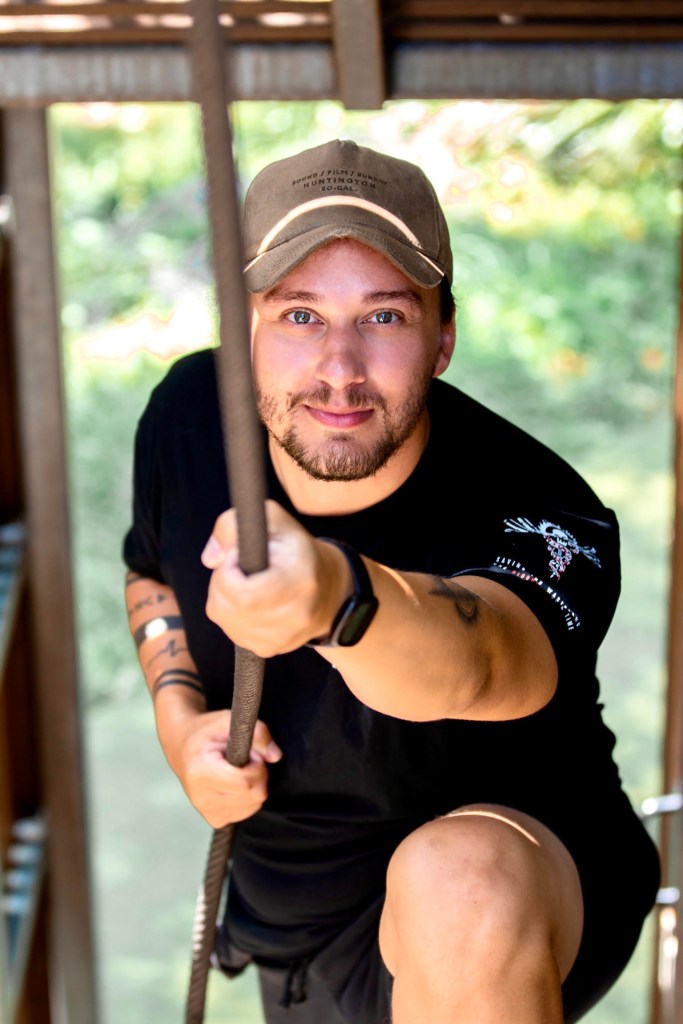
DAM: Have you ever been injured?
TI: I’m very, very fortunate that I haven’t broken anything [knocks on wood]. You’re always going to be sore first of all but the most I’ve done is I tore the ligaments in one of my toes. I made some silly mistake in which I was pretending to get hit which resulted in me spinning in the air and landing on the ground. I twisted my upper body correctly but my lower body didn’t respond the same way, so I landed on my knee and after that I was limping for two weeks. What people don’t realise is how much we drill safety precautions over and over again to the point that it’s second nature. There is a famous stunt performer, Gui Dasilva, who use to play the stunt double for Black Panther, who has some great advice which is: ‘“You should be able to throw yourself on the ground 30 times in a row and walk away with no injuries, that’s how good your break fall technique should be”. Just as a warm up we practise all types of falls – on to floors, to walls, to the ground, with thin or thick pads or without pads. The human body adapts well to a lot of stimuli, the more you do it and the more educated you are, the more you’re conditioned – anyone can do it . It’s something which I think we should teach in school, just how much our bodies are capable of. I don’t know how many times I’ve tripped over and used the proper technique and come out with no injuries. It’s a bit fancy to those watching but it’s the right way.
DAM: That pretty solid advice, we might just try that next time. Having all this experience now and learning so much, what’s the end game look like to you in the near or distant future?
TI: The ultimate goal would be to become a stunt coordinator but that goal is about twenty to twenty-five years away, minimum. I would like to make some of the best action scenes in Australia. As a person I would just like to live a happy carefree life like most people. That’s not to say that I’m always going to be happy everyday but I just want to work hard enough that I can be free to do whatever I want. I don’t want to work for other people, I want to work for myself and provide for my fiancé, my mother and my friends. I truly believe deep down that if I keep working hard I will get there.
I’m also entering a stage in my life where I’m having a lot more responsibilities and it’s no longer just thinking about myself but others like my partner, friends and family and just finding ways to help them and bring them up with me. And at the same time shine a bit of light into the world.
“I’m also entering a stage in my life where I’m having a lot more responsibilities and it’s no longer just thinking about myself but others like my partner, friends and family and just finding ways to help them and bring them up with me. And at the same time shine a bit of light into the world.”
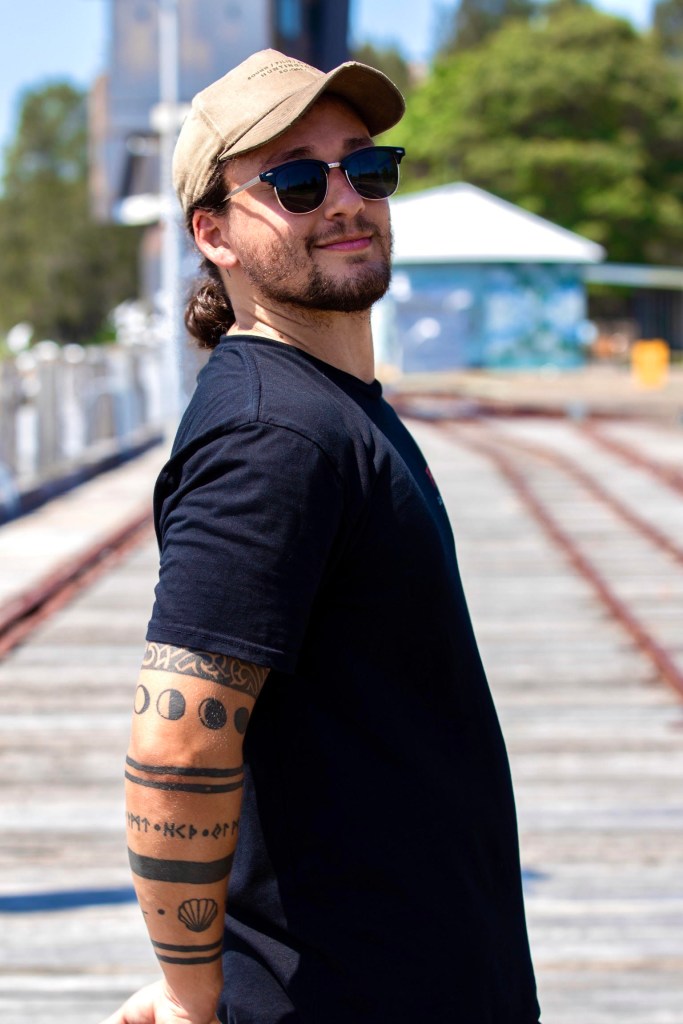
DAM: Those are some great goals and we’re very hopeful that you will accomplish and can’t wait to see your future work. To wrap this up, would you have any final words for our audience?
TI: I have many quotes but there’s a famous quote by Miyamoto Musashi which is, “It’s better to be a warrior in a garden than a gardener in a war”. I think that’s one of the most applicable things to add to today’s society more than anything else, especially towards the social media world we live in. When I was a kid social media just got introduced but now there are all these generations who have had it since birth. I have a fifteen year old half sister who I’ve had to explain to her what a cassette tape is because she had no idea what it was but now they have Spotify, Youtube, laptops at school. Now I have all these young men that I’m teaching and you can just see that it’s a different calibre from my time. The lengthening of teen-hood is what’s happened because you still have twenty to twenty-four year olds who don’t have the ambitions or the responsibilities. You can’t get to my position without having the ambition to improve yourself and I feel like we are entering a very tough time at the moment where we are seeing a whole workforce more determined than when I was at that age. There’s a change in the wind however and I hope that’s what comes through.
.
Find Thomas here:
IG: https://www.instagram.com/tom_italiano_/
.
.
.
Published by Marshall-Weishuai Yuan & Sangeetha Gowda
Photography by @noah__creative
 Diversity Australia Magazine