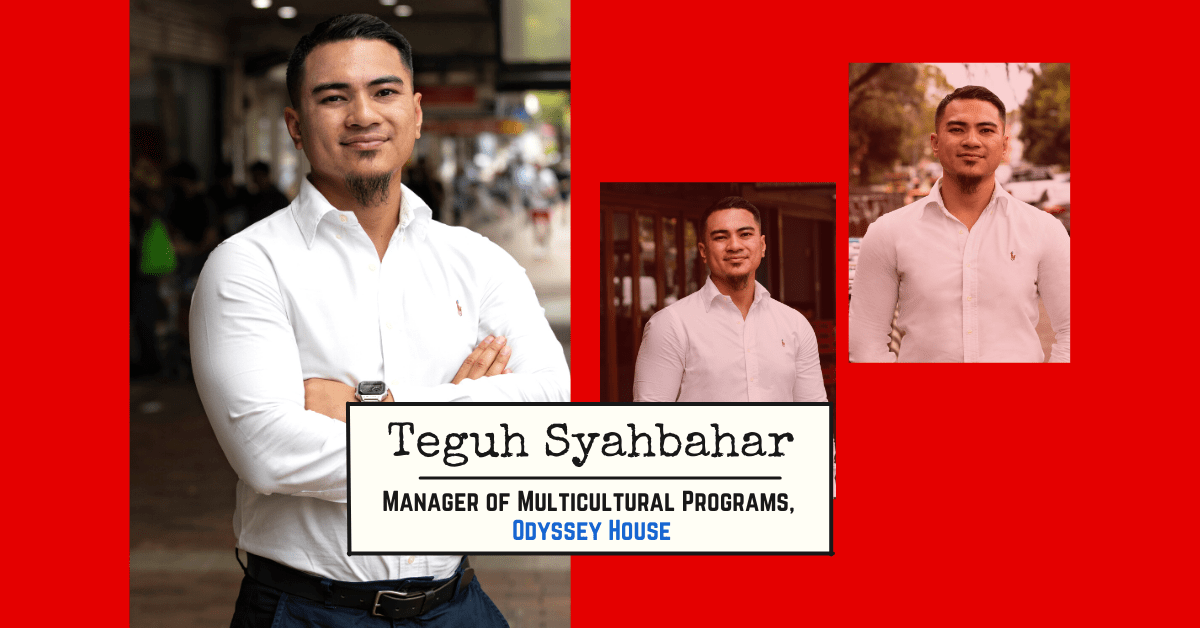
DAM: Today we’re here with Teguh, Manager of Multicultural Programs at Odyssey House, NSW. Thank you for joining us today Teguh.
TS: Thank you, thanks for inviting me to speak.
DAM: It’s a pleasure, Teguh please tell us a bit about yourself and your upbringing.
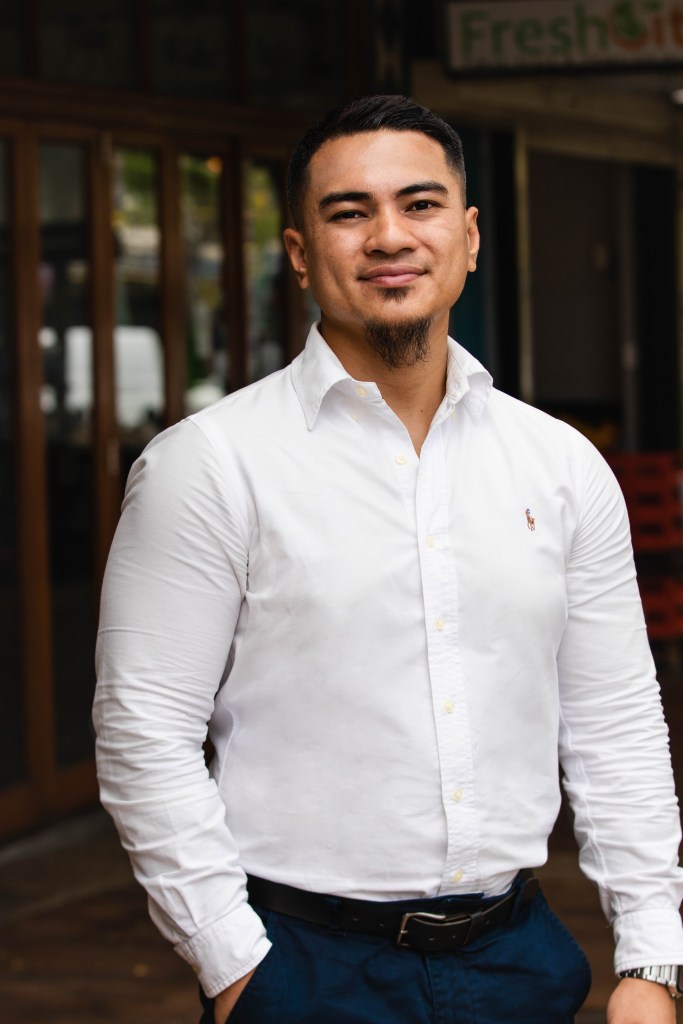
TS: Yeah of course. So, I’m twenty-nine years old, I’m Australian born. I’m born to two migrant parents from Indonesia who came here in the 1980s. I grew up in the St George area which was quite a Multicultural area. You’ll find Arabic speaking communities, Pacific Islander communities, Vietnamese communities, Chinese communities, African communities. I mean, for the most part the friends who I consider very close till now, are those who come from Culturally and Linguistically Diverse [CaLD] backgrounds and I’m very fortunate to have that experience in being able to learn from them and their culture and as always, educate them about my own culture.
DAM: What was it like growing up in such a Multicultural area?
TS: You know, it was quite difficult for the most part. You’ll find there were multiple layers of complexities where there was a mixture of those who came from low, middle and high socioeconomic backgrounds. The St George community was culturally diverse and consisted of Arabic, Greek, Pacific Islander, Chinese and Macedonian backgrounds. It was very supportive, everyone was respectful and encouraging but at times there were differences in cultures and you’d find that it would sort of clash – particularly when it came to certain things like cultural expectations and values. Although we came from CaLD communities, not one CaLD community is the same, they’re all different.
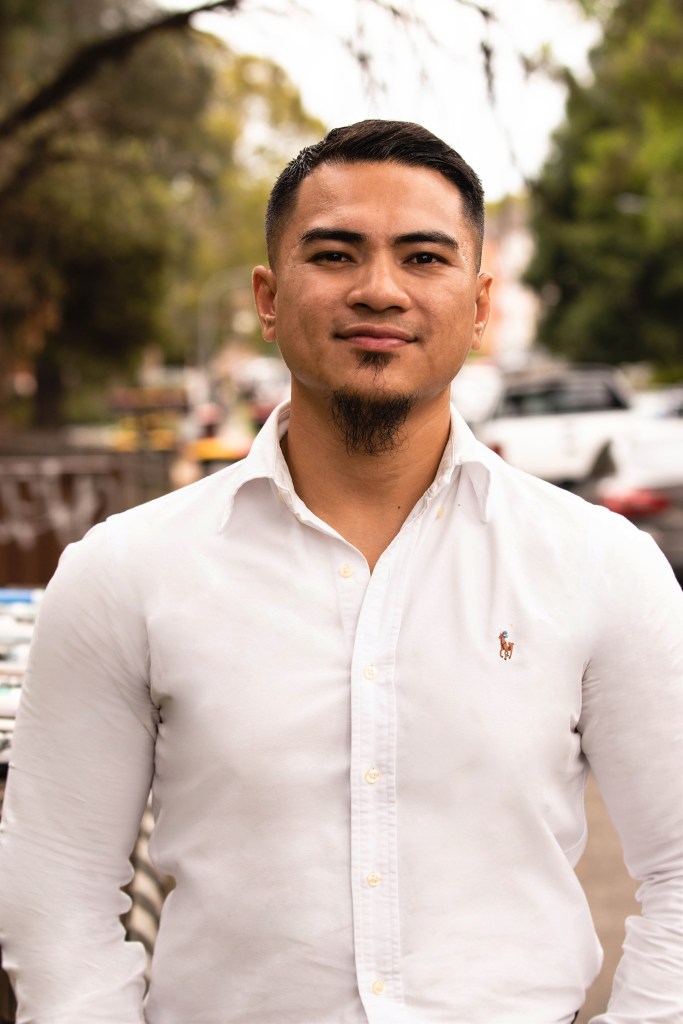
“Although we came from CaLD communities, not one CaLD community is the same, they’re all different.”
DAM: Wow yeah, Sydney we realise is very much like that, there are certain suburbs it’s just predominantly one type of race or culture, it’s very unique like that. Tell us a bit about your profession itself?
TS: I’m a Rehabilitation Counsellor by profession, a senior AOD clinician, and a specialist behavioural support practitioner for individuals that have disabilities. I am currently the Manager of Multicultural Program’s at Odyssey House.
DAM: Can you briefly share some info on Odyssey House, NSW and its mission?
TS: Absolutely, Odyssey House is one of the largest drug and alcohol rehabilitation services in Australia – its mission is to build safe and therapeutic communities that are conducive to healing, to reduce the impact harm related to of substance use with individuals, families, and at large, communities. Today you’ll find Odyssey House offers a wide range of programs, such as AOD counselling and support services, medical withdrawal unit, residential and outreach rehabilitation programs, education, mental health support, Parent’s and Children’s Programs, and magistrates’ early referral into treatment (MERIT) program and is the lead on NSW Community Drug Action Teams (CDAT) and of course Multicultural Programs to name a few.
As Manager of the Multicultural Programs, I lead and contribute to providing specialised Culturally and Linguistic Diverse Drug and Alcohol activities for CALD communities in South-west and Western Sydney. All forms of treatment are tailored to meet client cultural and linguistic needs. The team consists of bilingual counsellors who speak a variety of languages such as Arabic, Cantonese, Farsi, Khmer, Mandarin, Vietnamese, Samoan, Tongan and Italian.
DAM: That’s incredible, how are you finding working here so far?
TS: It’s awesome working at Odyssey House. The culture is so supportive here and everyone is passionate to help change the lives of those struggling with drugs and alcohol.
“The culture is so supportive here [Odyssey House] and everyone is passionate to help change the lives of those struggling with drugs and alcohol.”
For me, I’m passionate about my work and I find that to achieve positive outcome measures, you need to build strong robust ties with local communities and this is what Odyssey House has given me the opportunity to do.
DAM: Was there something growing up that inspired you towards pursuing this path?
TS: For the most part I’ve always been drawn to this type of profession, mainly in helping or supporting people. During my time in school, I found myself being an ‘accidental counsellor’, where people would naturally gravitate towards me when it came to speaking about issues at home, substance use, fights, conflict between certain groups – I’d break it up, whatever it may be. And I was that guy that always actively listened and always created a safe space for people.
“During my time in school, I found myself being an ‘accidental counsellor’… I was that guy that always actively listened and always created a safe space for people.”
It wasn’t until a personal experience where someone who is beloved to me, experienced substance use to the point they fell into – just a disaster in terms of the spiral of addiction and what comes with that – incarceration, relapse, lapse, denial, stigma and shame. It’s actually heartbreaking and for me, I used that as a catalyst to be able to help people at a professional level and I’ve never looked back since.
DAM: That’s very powerful. How do you deal with working through these issues with those seeking help and all the emotions that I’m sure come up with it?
TS: On a personal level I try my best to not personalise the situation, although I am an empath and I can understand what my clients are going through is quite difficult – experiencing certain hardships and calamities that are unique to them. The way that I sort of disconnect is by prioritising my own self-care. I engage in physical activity, read, I spend a lot of time with my family and my wife who is really supportive. It’s important that you look after yourself because you can be helping hundreds if not thousands of people and it can be quite overwhelming at times. But I ground myself because this is what I’m passionate about and I utilise my knowledge in order to benefit the community.
DAM: That’s really great that you have ways to keep yourself grounded and take time for self care like that. We can only imagine the weight that comes with helping people with all different types of issues and in various situations.
TS: Yeah and to add on top of that, for me – part of my own self care is centered around my own spirituality. I’m of a Muslim faith and I do a lot of reading, prayer, supplication, attending mosques, and that’s where I’m at peace. And that also helps me navigate certain situations that are quite difficult. It’s just a safe space for me to wind down and reset.
DAM: Definitely, that’s so important. Teguh, we understand there is a stigma – particularly in Multicultural communities and families to seek help. Do you find people from those communities coming to you on their own accord or do you feel you have to sort of go into the communities and find them to help them out?
TS: There are communities that access services although it is quite limited due to stigma and shame. It is important to have close ties with local communities and meet them where they are at.
“It is important to have close ties with local communities and meet them where they are at.”
Those who come from CaLD backgrounds and communities are more likely to exhibit crisis seeking behaviours, according to research. They are therefore more likely to ask for or seek help when they have reached a point of crisis, and there may have been multiple opportunities for us to reduce the impact through early intervention. Because of this, it is essential to establish a good rapport and earn the trust of communities, community leaders, individuals, and families. If you are unable to do so, these groups will be reluctant to listen to what you have to say.
DAM: What would you say are some of the barriers that prevent people seeking help?
TS: There are many barriers that people from CaLD backgrounds and communities face when trying to access AOD treatment. The main barrier I have seen is related to the stigma associated with addiction. This can also be intersected with religious beliefs or customs such as the substance use being disliked, dishonourable or a forbidden action. So you’ll find an increase in stigma in these communities. It can also be difficult to access mainstream services because of shame and guilt. Another barrier is lack of translation or interpreting services due to low English proficiency or language barriers – that can be quite difficult. You’ll find most culturally appropriate services will have bilingual and multilingual workers there. We have ten to twelve clinicians here who are bilingual. So it’s important we’re meeting the cultural needs of clients, not only just their culture and religion but in terms of their language, their competency of English, but also just how they understand the treatment journey. Completing an assessment or screening tool can be foreign to them and we have a very small window of opportunity to build that trust and relationship with clients who are accessing any types of services and it’s important that we speak at their level, we use translation services if need be and that we acknowledge their experiences – whether it be through migrant experience, trauma, violence or different forms of abuse. They may feel reluctant to speak out from the very beginning but once they feel heard, when they feel safe to speak, they’ll definitely increase that willingness to engage in therapy.
DAM: Would you have any advice for people from those backgrounds who feel like they need help but they’re maybe surrounded by family or people who are culturally against seeking this sort of help?
TS: My advice would be that there are services out there that will cater to your needs and respect or share the same values as you, respect your culture and your religious beliefs.
“There are services out there that will cater to your needs and respect or share the same values as you, respect your culture and your religious beliefs.”
For the most part, those who come from CaLD backgrounds and communities struggle to open up because of breach of their own confidentiality and I can assure you that your confidentiality will remain private and will be respected. And at the same time – you will be acknowledged and validated. It’s a journey. It takes time. There isn’t an overnight treatment, it just requires commitment, collaboration, and consistency.
“It’s a journey. It takes time. There isn’t an overnight treatment, it just requires commitment, collaboration, and consistency.”
DAM: What has the impact been like for you being in this line of work and helping people within these communities?
TS: Well I spent a few years as a senior drug and alcohol clinician on the front line. I was at the forefront seeing the impact drugs and alcohol has on individuals, families and communities at large. It’s important to create a safe space for people to share their vulnerabilities, talk about their feelings and resolve trauma. It often involves unpacking their journey to addiction and when people from CaLD backgrounds feel safe to share their ‘how’ and ‘why’ without shame and stigma, we’re in a better position to help them on their journey of recovery.
“When people from CaLD backgrounds feel safe to share their ‘how’ and ‘why’ without shame and stigma, we’re in a better position to help them on their journey of recovery.”
And everyone’s journey looks different, everyone’s journey with substance abuse looks different, therefore we need to use a person-centered and utilise a holistic approach by considering each client’s physical, psychological, emotional, cultural and spiritual needs – as opposed to just looking at the drug use in isolation.
DAM: Thank you so much Teguh for taking the time to talk about this important subject. We’ve learned a lot ourselves and am sure this incredible information and knowledge will inspire and help others. Thank you for the work you and the team at Odyssey House are doing for our communities.
TS: Thank you.
.
Find more on Odyssey House including information and resources for those seeking help here:
Website: https://www.odysseyhouse.com.au/
Linktree: https://linktr.ee/odysseyhousensw
Facebook: https://www.facebook.com/OHNSW
Instagram: https://www.instagram.com/odysseyhousensw
 Diversity Australia Magazine