
ABC’s latest teen series ‘The Disposables’ inspires change against Australia’s Recycling Crisis and it’s treatment of Refugees, in an entertaining genre-bending drama featuring a Sri Lankan Tamil Lead at the forefront. We spoke to Creator/Director Renny Wijeyamohan & Actor Sumi Gunaratnam who stars as ‘Priya’.
“When Priya’s dad disappears and is blamed for unleashing a terrifying biological monster, it’s a race against time for her and her best mate Obi to find him and save their community.”
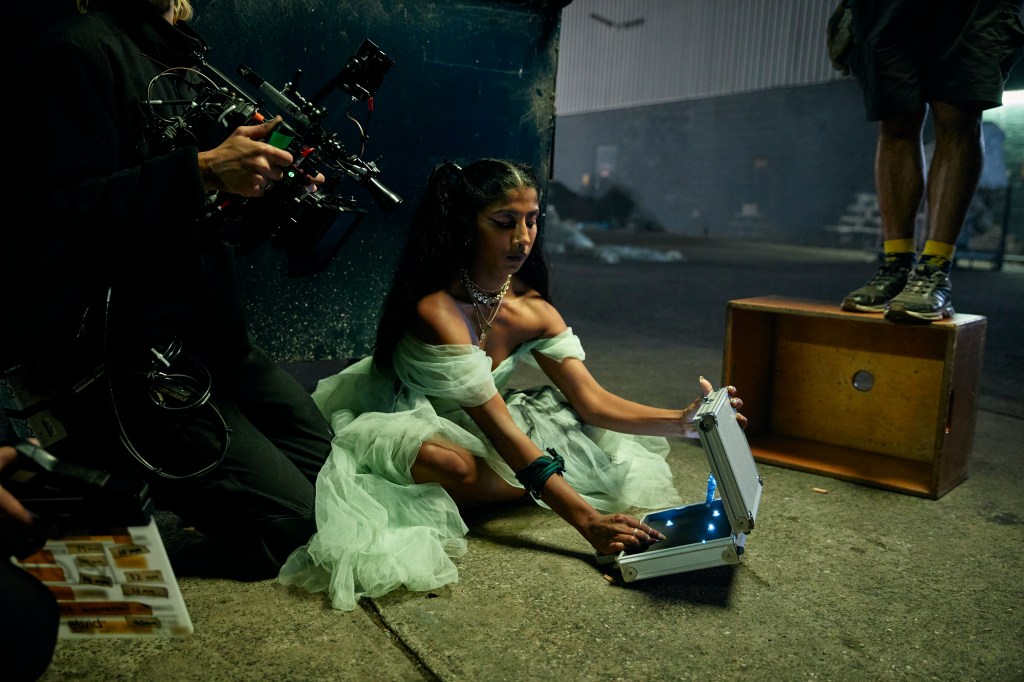
DAM: Renny, you bring to light two important issues through this series – Australia’s mistreatment of Refugee and Immigrant populations, as well as the Recycling Crisis. How did this story idea come together?
RW: It’s crazy to rewind way back to 2019 when we first began developing the project. “We” being my co-producer, Karen Radzyner, my co-director, Sonia Whiteman, and two additional writers, Keir Wilkins and Saman Shad… At that time – two really important movements were unfolding across Australia. First, the Bring Them Home campaign run by locals to save the refugee Tamil Murugappan family from Biloela from impending deportation. Also, the School Strike 4 Climate movement was in full swing, as well as the scandalous exposure of warehouses full of plastic recycling that were secretly being sent to landfill because of a failure in our government’s waste policies. We’re all passionate about these environment and social justice issues and we asked ourselves – how can we tell an exciting story for teens that can help shape these narratives? Any good story has to have depth and we thought a multi-thematic approach would respect the sophistication of our teen audience and also challenge them with a dynamic and fast moving story… And that’s how The Disposables was born!
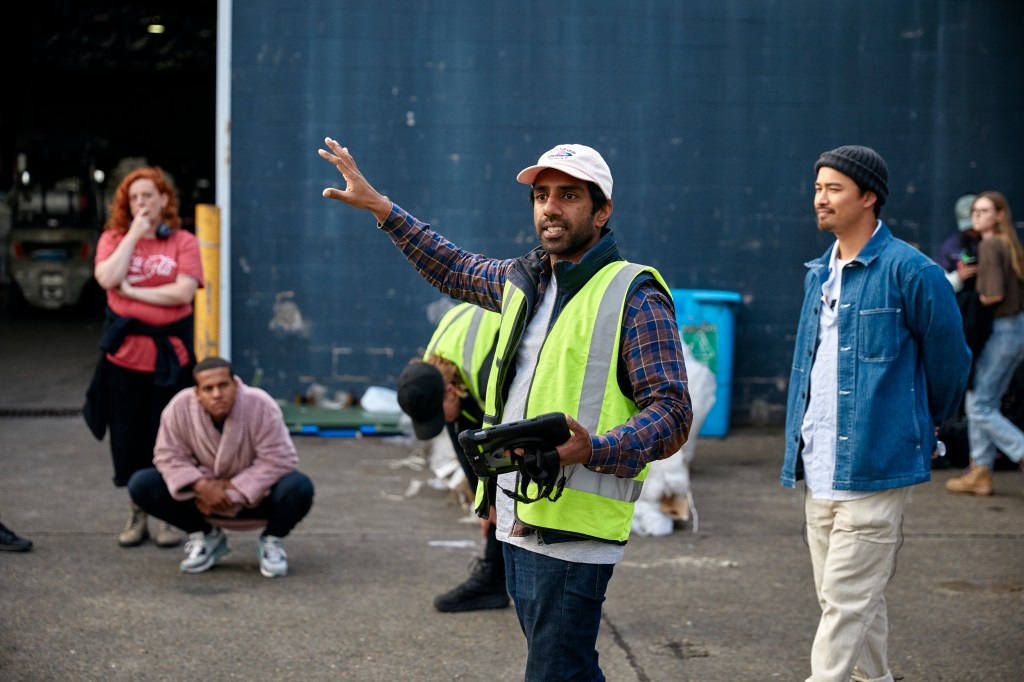
DAM: You cross Genres through this series – with Drama, Thriller and even some Sci/Fi Imaginative Elements – as well as the Social Media aspect. What made you want to tell the story this way?
RW: We were really inspired by Stranger Things – how it managed to bring parents and children together in front of the television to watch together as a family. We wanted The Disposables, to also have the elements of a classic action-adventure that we loved in Stranger Things. Sleuthing, uncovering a mystery and fighting a monster – along with plenty of laughs and emotional moments along the way. TV nowadays is so often sophisticated and cross-genre, so we also wanted to borrow all of these elements and pull them together in an interesting way. It was also important for us to think about how we could make an exciting, fun, rollercoaster of a show that audiences – first and foremost – wanted to watch, while still unpacking key themes around asylum seekers and sustainability – the action-adventure approach told through found footage was the best way to do this as it meant we could draw viewers in quickly to a world where the on-screen action feels direct, immersive and “real”.
DAM: Did you face any challenges along the way?
RW: It was actually difficult for us to cast and find our lead actor to play the role of Priya! The Sri Lankan Tamil diaspora is a small one in Australia and creative industries, like acting, are not the typical pathway for South Asian teens to follow. Luckily, our casting agents pointed us in the direction of Sumi Gunaratnam, who plays Priya, and we knew right away that we had found something special. Sumi is a total star in the making. Her performances were so heartfelt and emotive, and I’m so pleased she’s launching this project as her first major drama role! Go girl!
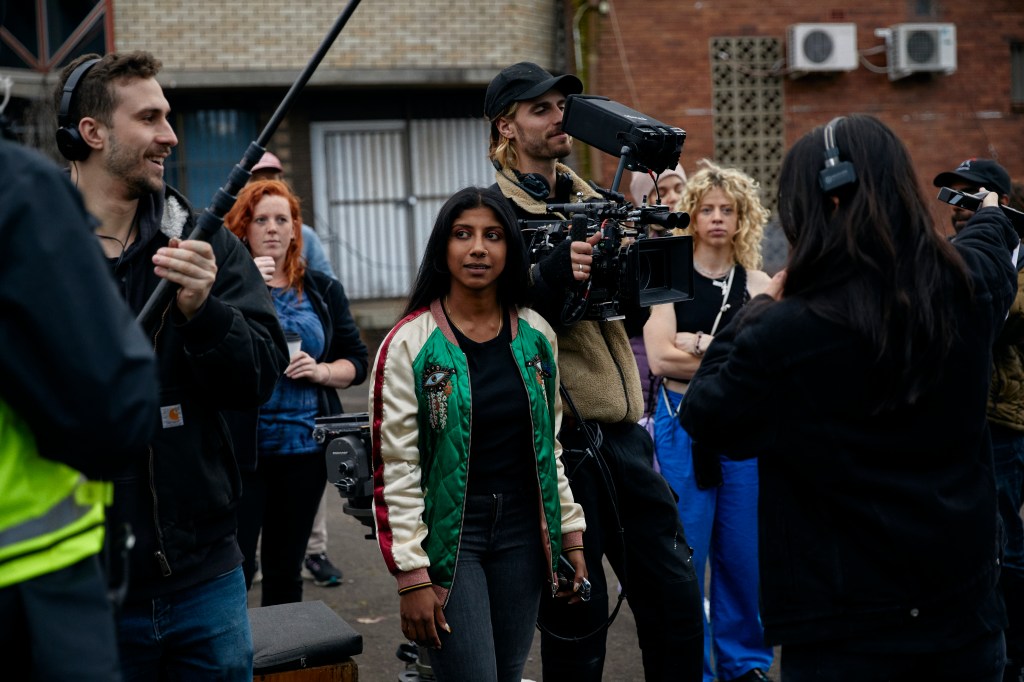
DAM: Sumi, what was your initial reaction upon reading the script?
SG: I was initially so intrigued by the style and pace of the script. I immediately felt intrenched into the world Renny, Sonia, Karen and Keiran and the team had created. It had this really nostalgic feel to it, I loved watching 90’s/early 2000’s shows growing up and something about this script just felt like that Sandalot Kids type of adventure.
When I read that Priya was a Tamil refugee it made me immediately quite emotional. As we know this type of representation was non-existent when I was growing up, so imagining all the young South Asian boys and girls running home to watch TV and seeing themselves on screen gave me so much hope and excitement.
“Imagining all the young South Asian boys and girls running home to watch TV and seeing themselves on screen gave me so much hope and excitement.”
SUMI Gunaratnam
DAM: A lot of Actors can be hard on themselves when it comes to their auditions, how did you feel after you sent off your audition for this?
SG: I never try to think about booking the job when I do my auditions. It makes it too difficult to focus on the work. After sending it off I move on and let whatever is meant to happen, happen. I tell myself not to take anything personally when I audition in this industry, there’s just too many variables. But this script was so special to me, that the moment I got that call from my agent that I booked the role, I turned to my mum and we just jumped around screaming.
You have to believe and understand that there are many reasons you won’t get the job. Most of which aren’t personal. At least that’s what I’ve heard from the people making the decisions themselves. Let’s hope they weren’t just being nice.
But honestly, this mindset freed me as an actor and ironically that’s when I would book more work. It’s a lot better than believing you aren’t good enough. Who cares? Just give it your version and let the rest work itself out.
DAM: How did you get into character – did you draw from any stories? What was your process?
SG: My initial approach to playing Priya was understanding the story holistically. I went through the script a few times to really see all the characters progression and how to best tell this story. This is always my priority with any role. Then we get into each scene. The homework and research is imperative, especially when representing a people who haven’t been represented this way before. I drew from my own families experience with residency in Australia. So once all the homework is done, I needed to be ready to let all that homework go and trust that it’s all there. Because that’s where the story is. In the relationships with each other.
DAM: Would you say you’re similar to your character in real life?
SG: Priya is honestly a lot cooler than I am. I think Priya is who I wished I was as a kid. Confident and bold and willing to do whatever it takes. I feel like we have similar traits which I brought to the role the best I could. I believe I connected with her independence and her deep family values. I think we both believe our family is our source of strength.
“I think Priya is who I wished I was as a kid. Confident and bold and willing to do whatever it takes. [But] I think we both believe our family is our source of strength.
SUMI Gunaratnam
DAM: What was it like working with Renny and the team on set?
SG: You know this was my first lead major project, and I was shocked at how instantly empowered Renny and Sonia and Karen made me feel. They made me feel like this role was meant for me to play. I think the coolest thing about the team is that they were so genuinely open to collaborate. They were so open to ideas and feedback and even let me write some of the raps. The energy on set was so positive and calming although we had an ambitious amount to film in such a short amount of time. It really felt like we all became a family.
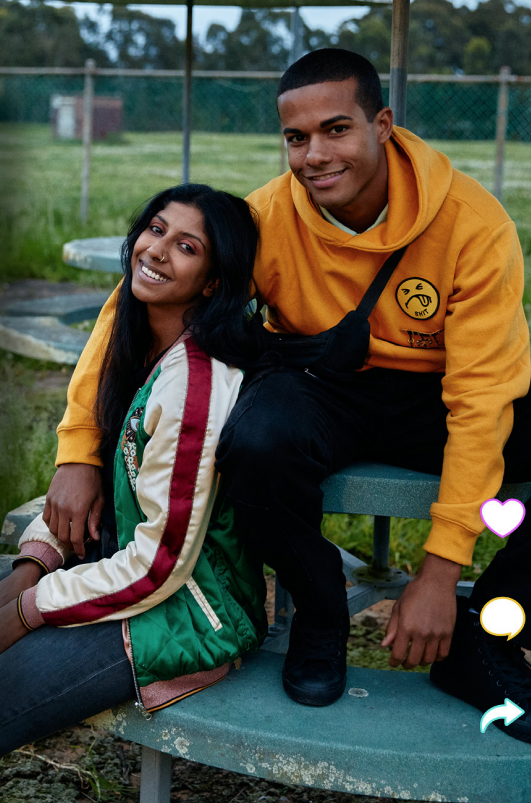
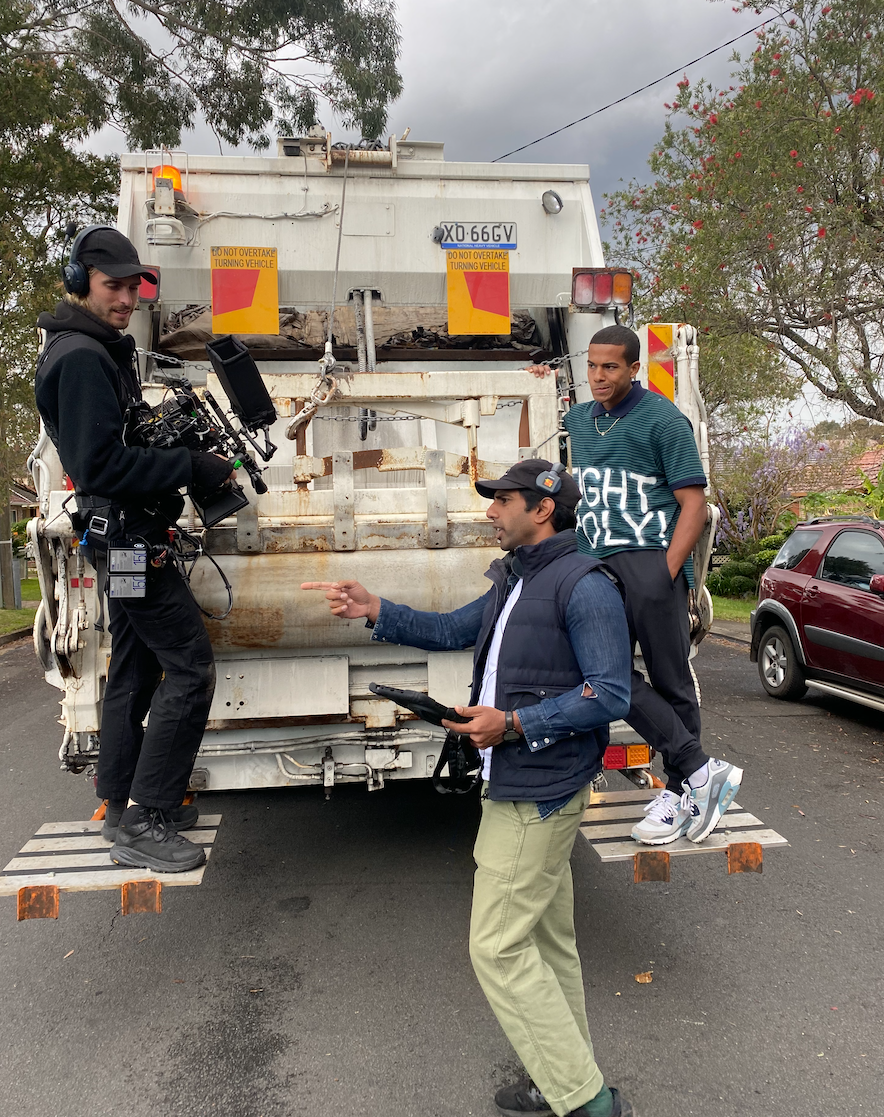
DAM: What was your favourite scene to shoot/Do you have a favourite memory from set?
RW: Hands down it was the Final Battle scene where Priya and her ragtag group of friends have to defeat a huge plastic eating-monster called Poly! The showdown takes place at an abandoned warehouse that we shot on location in Auburn. In the final edit, the VFX and sound design additions make this battle come to life… It was sooo fun to shoot!!!
SG: I have so many, but there’s one moment I won’t ever forget. So we’re getting ready to shoot our last scene of the project, the Call Out Rap. So Sonia’s talking us through the next scene then I start to practice my rap. But it felt like there was a rhythm missing, I was really trying to find it when suddenly, we hear beatboxing behind us. I turn around and its Jordan beatboxing along to my rap. So he’s just messing around having a laugh but it ended up helping me get the rhythm. Sonia and I looked at each other, and that was it. Two minutes later she put that in the scene. That’s how Raf’s beatboxing came about.
DAM: There’s so much Ethnic Diversity through this series which we love – how did it feel getting the opportunity to not only feature this particular cast on screen, but to have the power to tell this story behind the scenes as well?
RW: Oh it was so empowering to pull together this amazing cast! Sumi, who plays, Priya, has an amazing on-screen chemistry with Obi, played by Lakota Johnson – a TikTok star in his first breakout TV role, who brings a huge amount of energy, enthusiasm and mischief to the character. And then we can’t forget about Rajan Velu who plays Priya’s dad Sri. He brought such sincerity, humour and compassion to his role – he was the perfect father to Priya! We were also so pleased that Jordan Rodrigues, of Dance Academy fame, who is now a big star in the US (most recently in Disney’s National Treasure), took the time out to play a scientist called Rafael in our show – which made all his scenes really come alive. For us, it’s just been exciting to bring all these faces together and realise that Australian TV has come a long way – and that there’s not only room, but a hunger for new faces that represent what contemporary Australia is really like.
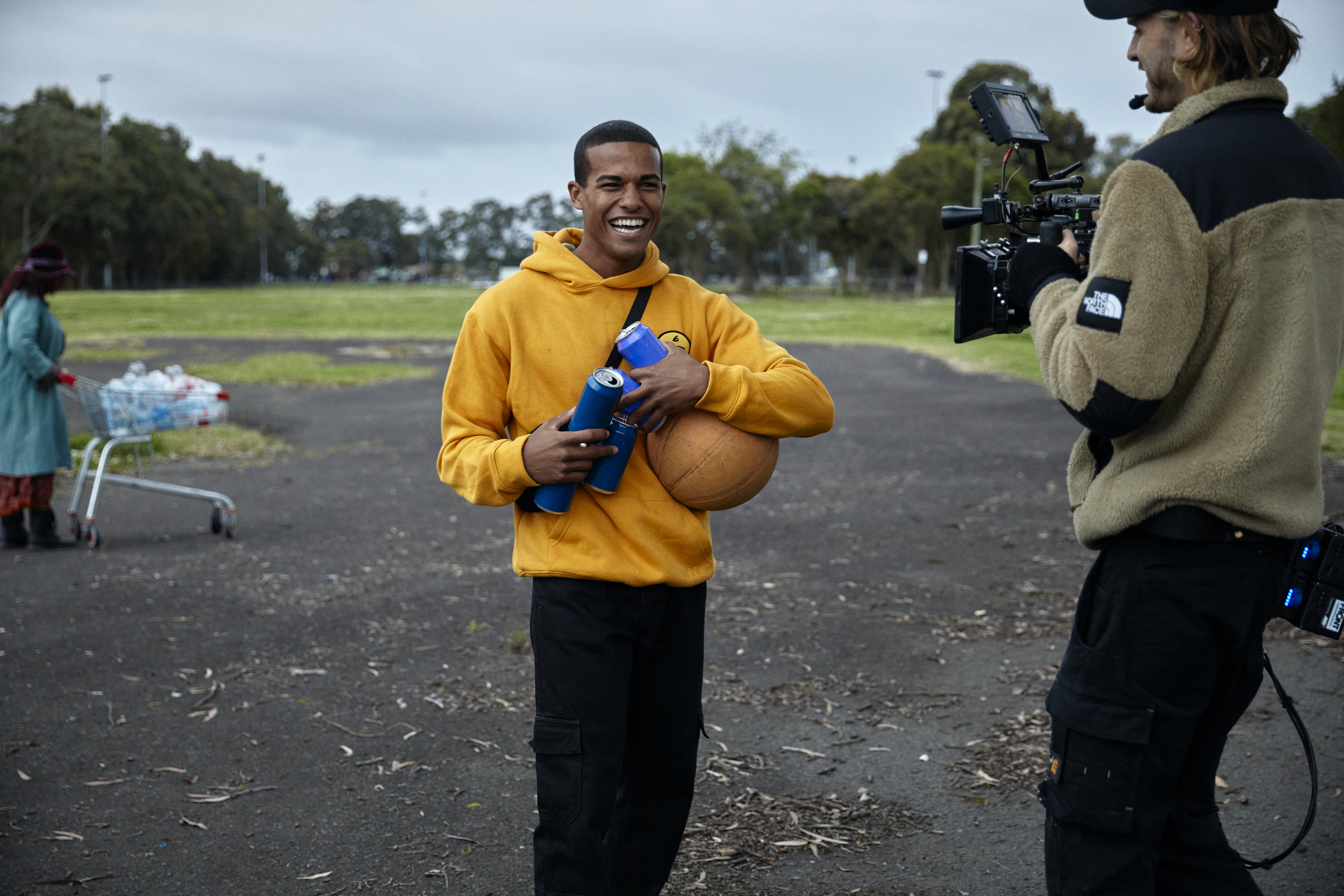
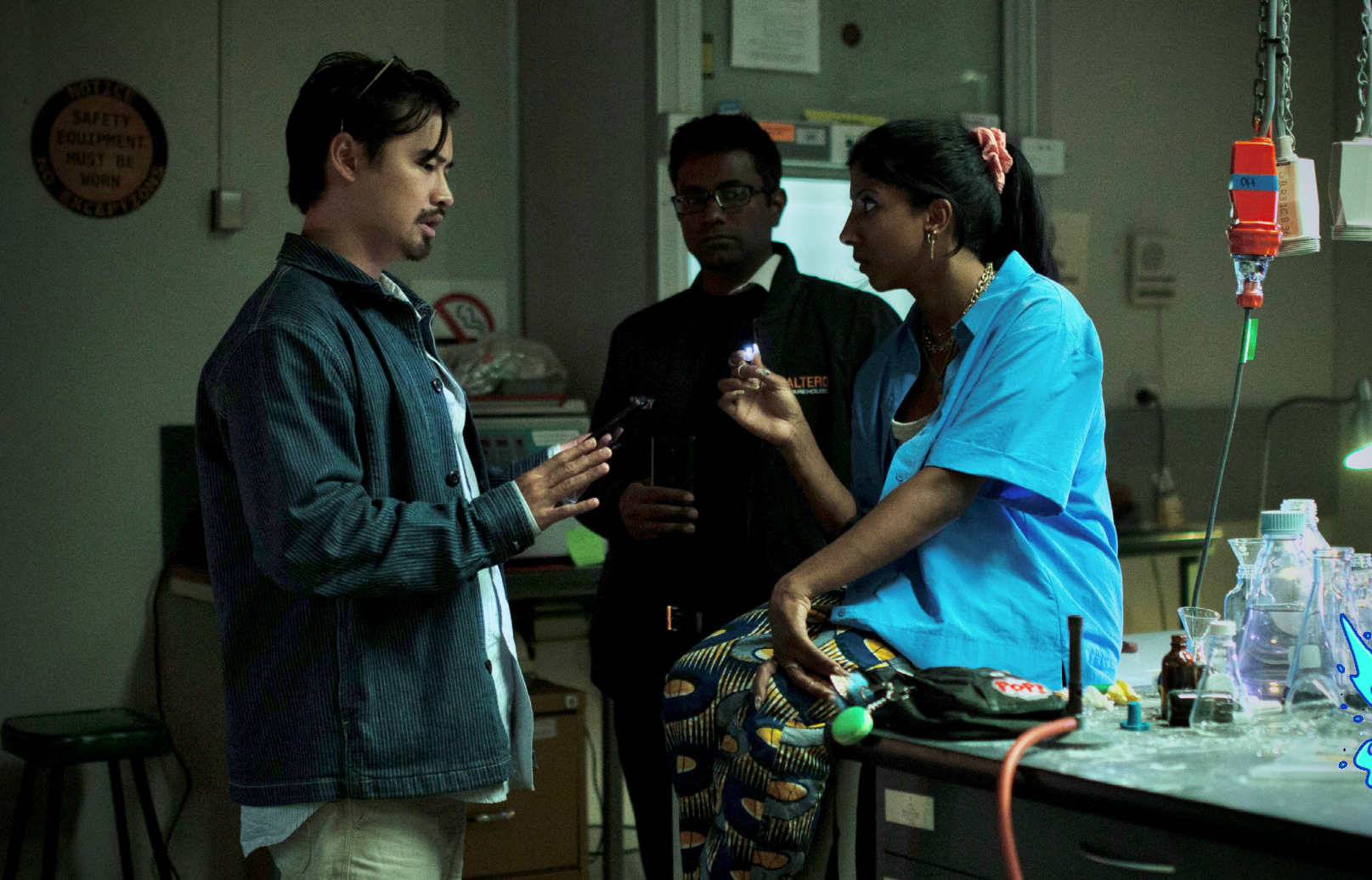
“It’s just been exciting to bring all these faces together and realise that Australian TV has come a long way – and that there’s not only room, but a hunger for new faces that represent what contemporary Australia is really like.”
Renny Wijeyamohan
SG: Surreal. There’s no other word to describe it. I felt honoured to be able to represent our people. You know even when I did see South Asian representation, I never knew why but I always felt disheartened that they always had fair skin. As a kid I just believed what the world told me. That there wasn’t space for people who looked like me on tv, let alone as a lead. So then getting to play Priya and seeing my dark skin on the TV nods to the colourism in many of our communities and also healed the little girl in me who hated her skin growing up.
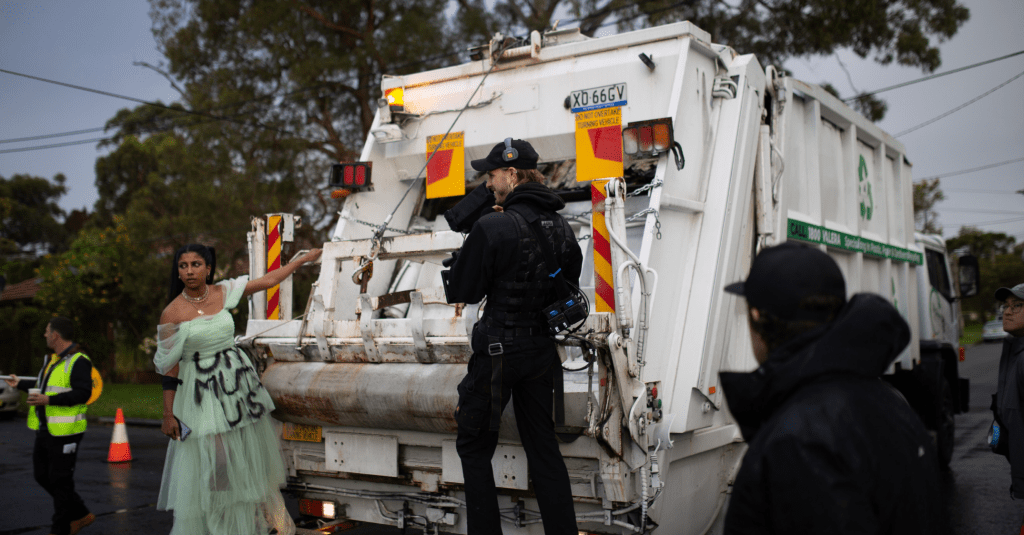
“Getting to play Priya and seeing my dark skin on TV… Healed the little girl who hated her skin growing up.”
Sumi Gunaratnam
SG: Along with this I also felt a responsibility to accurately represent the stories of refugees of all backgrounds who experience the hardships of living on a temporary visa. The process was incredible because I learned more about the realities of living on a temporary visa. The importance of this was always in the back of my mind, from the beginning of the process with the research, to being on set. I wanted to honour the truth of the stories I’m representing the best I could in my performance.
DAM: What do you hope people will take away or learn from this series?
RW: Look, there’s so much I hope people can take away from the show. First – that refugees have a huge contribution they can make to society and they’re people just like us. Second – we hope to inspire young people to find their voice and use it. No matter what the odds are, or how much adversity you’re facing, if you speak from your heart and find your community, there’s nothing that can stop you.
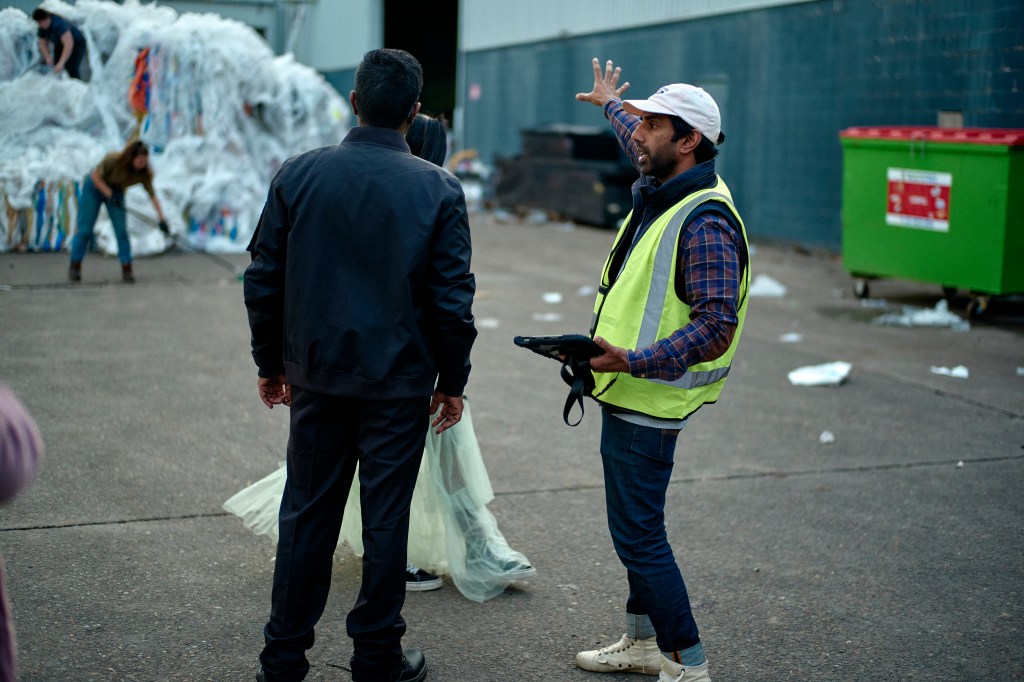
“No matter what the odds are, or how much adversity you’re facing, if you speak from your heart and find your community, there’s nothing that can stop you.”
renny Wijeyamohan
RW: We saw that in everyday Australian’s passionate advocacy for the Tamil family from Biloela, we saw it in the hundreds of thousands of young people who marched for sustainability and a new future in the School Strike 4 Climate movement, and we hope that Priya and Obi’s brave actions can show that young people – when they band together – are a force to be reckoned with!
SG: I think as a nation we have a sound understanding of the horrible conditions that asylum seekers who are off-shored have experienced, but we often overlook the difficulties of the lives of refugees living on temporary visas. Our goal was to really show what life is like on these visas and it’s heart-breaking. Josh’s character Joey says, “It’s so easy to get a visa nowadays, all you have to do is save the world”. And it’s a nod to how impossible it really feels to get PR.
DAM: Why do you feel it’s important to create stories that inspire in today’s world?
RW: We live in such a changing world – there’s a lot to be gloomy about according to today’s media, especially with global conflict, climate change and economic pressure… And it’s true… These realities exist and are something we need to contend with in our lives, but it’s also true that there’s still a lot of kindness, compassion, beauty and inspiration out there. We hope that by telling Priya’s story – that of a very unexpected hero – we can shine a bit of a light too, especially for people who don’t always have a voice and are not always championed.
DAM: Do you have any words of advice to other Creators out there, particularly those from BIPOC backgrounds in Australia?
RW: I think my advice would be – NOW IS THE TIME! There are SO many pathways, funding opportunities and BIPOC specific development programs via Screen Australia and Screen NSW running at the moment. Off the back of successful international projects like Black Panther, Moonlight, Never Have I Ever, Atlanta and Pachinko to name a few… there’s been a huge commercial interest in the last few years from big studios and streamers for new IP and new stories that can capture the viewing public’s imagination. Diverse filmmakers – with their range of unique lived experiences – are SO well positioned to take advantage of that!
SG: I don’t know if I necessarily have any advice, but I can say what has worked and helped me. I envision my career the same way I would if I was to work anywhere else. A regular 9-5. If I stayed at this 9-5 for 10 years then I’d definitely have huge career progression and a salary to match. So that’s how I see acting, if I train and audition and stick to it for 10 years or however long, then it’s going to happen. It just will. Don’t let yourself believe the mystical old Hollywood tale that, “It’s a one in a million shot”. I don’t believe it is anymore. Things are changing, let’s change our mindset with it.
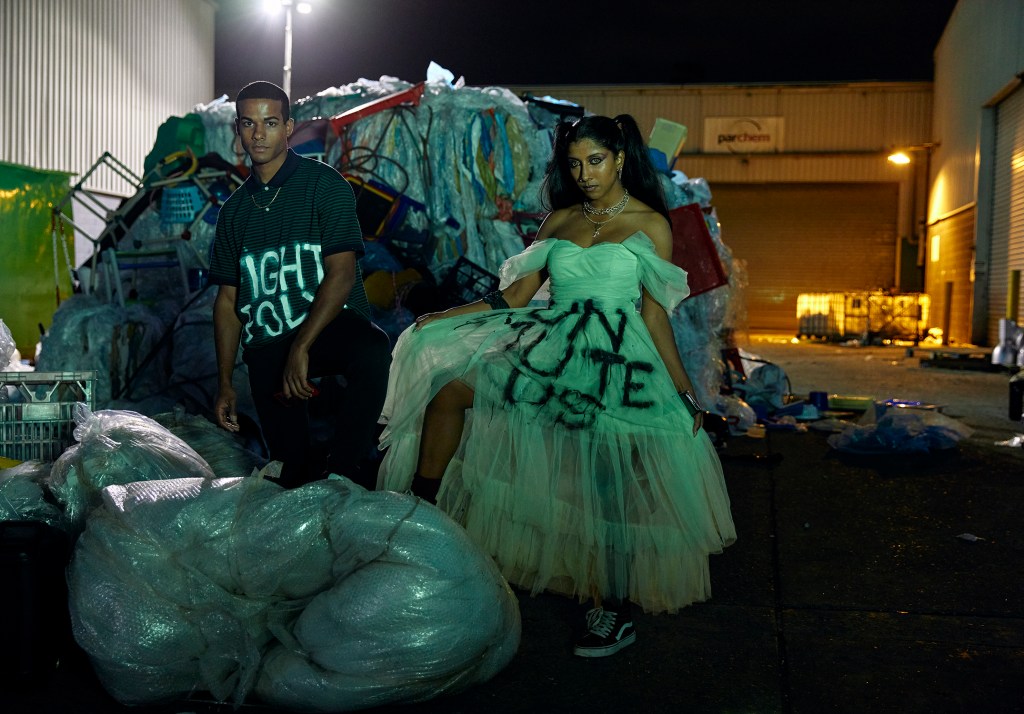
“Don’t believe the old Hollywood tale that, ‘It’s a one in a million shot’, I don’t believe it anymore. Things are changing, let’s change our mindset with it.”
Sumi Gunaratnam
SG: As a BIPOC, we have incredible stories to tell, just from living the lives that we did. We’re in this unique incredible time in the film industry where these stories are now being told. But there are thousands more. We have a richness in our cultures that is incredible to watch on screen. Respective to the character, tell the stories using the idiosyncrasies you have in your personality. Don’t copy what you see on TV or how you think a line should be said. Use the parts of yourself that are relevant. That’s a superpower that the world hasn’t seen yet, who we are in our homes. It can be really fun to bring those things into relevant roles.
.
Directed by Renny Wijeyamohan and Sonia Whiteman & Starring Sumi Gunaratnam, Lakota Johnson with Rajan Velu and Jordan Rodrigues – you can watch the series on ABC Me, ABC Iview & Tik Tok.
.
.
.
Published by Sangeetha Gowda ~
 Diversity Australia Magazine