
DAM: In a special first issue of Diversity Australia Magazine for 2024, we’re sitting down with Michelle Lee, the first Australian female to row solo across the Atlantic Ocean. Having no prior rowing experience, not a born adventurer, not an Olympian – yet achieving this remarkable feat which then lead her to become the first woman in the World to row the Pacific Ocean solo and unassisted, we speak on her journey and what it means to truly step outside your comfort zone to achieve beyond what you think is possible.
DAM: Welcome Michelle and thank for being our first interviewee for 2024! Could you please introduce yourself?
MICHELLE LEE: Thanks! I’m Michelle Lee, I’m 51 years old, I’m still discovering what I want to do. I’d love to be a professional adventurer where you go out, do your adventure, come back a little bit broken, unpack, rehabilitate, and get ready to go off on another adventure. I’m a remedial massage therapist and personal trainer and I just love to push boundaries.
DAM: So how did you come by adventuring? Was it a childhood passion?
ML: I’m actually, let’s say, a late bloomer to adventure, so I pretty much got to age, probably 38, when I really started to question my purpose and what I want out of life and I really asked some tough questions about where I was at – do I want to live like this for the rest of my life? I came up with a very strong no. I knew I wanted more, I wanted to get out of this queue of – falling into a job, getting a house, mortgage, and I knew that if this is the rest of my life, I’m done. I started to sort of talk to my heart and ask, what do you actually want? What would make you happy? I discovered it was adventure, It’s the things that you do when you step outside of the 9:00 to 5:00, Monday to Friday, all of those knowns, all of the certainties. I realised that my very predictable, very safe life was lacking the excitement of the unknown.
DAM: That must have been an initially terrifying thing.
ML: For me, I just started saying yes. I came up with this thing where you just have to say yes. Yes to opportunity, yes to invitations and doing things very differently. That led me down the path of mini marathons, triathlons and you know your mud runs. I knew I loved doing all that sort of stuff and I thought, OK, it’s time to ramp it up. Kokoda probably was my first real big, you know, sink your teeth into something where the training and the regime and the discipline that was required gave me that taste of love for adventure.

“When you start pushing boundaries, you become quite curious as to what else you’ve got in the tank.”
When you start pushing boundaries, you become quite curious as to what else you’ve got in the tank. I found that I was beginning to really question my own potential and how much was left. I call them bankable moments every time you achieve something. Outside of that norm, it’s like, ‘Oh my God, what else have I got? What else is there?’. I’m inspired by our past, present, future adventures, you know, I love your Shackleton’s of the world, Sir Edmund Hillary and Roger Bannister – it’s these people that give people like me (not a born adventurer, not an athlete, not an Olympian) permission to give it a crack because at the end of the day, they’re only human. It’s not so much as what they got but what they did that was so different.
DAM: So how did you feel once you started pursing life with this new found perspective? Was it all what you expected?
ML: In reality, once you get outside of all of our known comforts; constant running, fresh water, clean sheets, the ability to have a shower whenever you feel like it, food – that’s when you realise, holy moly, it’s the next level. As much of the training that you can do prior, there’s still so many things that you realise once you’re out there in the adventure that you can’t mimic and mock, you can’t possibly train for all these things. The discomfort of the humidity, you know, it was like 96-98% humidity. It was 35-36° every day and you have limited means of anything that resembles the first world. It also opens up a whole new world for you spiritually. Any of those adversities and all of those difficulties, that’s when you start to really question what else is there in the tank? What potential am I leaving untouched in my normal Monday to Friday, nine to five life? That’s why I love adventure, when you are truly stepping out and you get that opportunity to have a full Wi-Fi detox, a full first world detox. I try to encourage everyone just to look out the door but I’m often met with this resistance and the idea is shocking. If you tell people, just go and sit with yourself for 10 minutes every day in pure quietness and meditate, it’s a very long time for most people. When they first start, they will tell you about the urge to get up, ‘Oh, I’ve gotta go have the coffee. Oh, I gotta just check my email. Oh, I’d better..’ you know? Apparently that first 10 minutes is, you know, that’s like breaking the four minute mile for a lot of people when they start to meditate. It’s getting beyond that and now you can start having the mind rule the body rather than responding to the needs of the body in that moment. That’s where it gets addictive, you get over that 10 minutes, it’s like, ‘Oh, can I do another one or two minutes, an hour?’. The next thing you’re a monk!
DAM: Definitely makes us want to give it a go. Michelle, take us through your first rowing adventure – as the first Australian women to row solo across the Atlantic. What drew you to this journey in particular?
ML: I think it came to me at a time when I was questioning my life. You know, I was actually handed a book called ‘Rowing the Atlantic‘ [by Roz Savage]. And I read the book and for the next two years it plagued me so persistently and consistently that I just decided – if I don’t do this then I’m gonna die wondering. So that kind of became like a motto, a mantra, don’t die wondering, is now my motto and it came at a time in my life that I was ready to sink my teeth into something bigger. Discovering that the girl who wrote the book on the Atlantic, Roz Savage, was nobody special and she was from the corporate world, I thought, if you can, I can. It was honestly that simple. The fact that I was not a rower, not a lead, not an athlete or Olympian, it was all totally irrelevant. And with every single adversity, every challenge that was thrown her way and she didn’t have it easy, it wasn’t a tale of everything that did go right. She broke every ore, she was without satcoms for weeks, her gas cooker broke, her water maker broke, but she overcame every single challenge and that’s what left me doing fist pumps like, yes! Every time she got knocked down and got back up, I thought, Oh my God, I want that. I think it just came at the right time. It’s almost like I made that decision that I wanted more out of this life, my radar was now on high alert for any opportunities and I was inspired by that idea of overcoming and becoming. Like I said, I was not even a rower, I had never even put an ore in water before. The day we launched my boat was the first time I’ve ever even put ores in water as I learned to row on the indoor rowing machine.

It’s all about following my heart and thinking, ‘How do I want to leave this world? Can I live with the regret of not even giving it a crack? No way!
DAM: At the beginning there, you have this idea, this goal – did you meet much resistance from outside factors or voices?
ML: You’re always faced with naysayers, doubters, negativity from others, which what I have learned is actually – it’s their fears ultimately projecting on you. They’re imagining themselves being stuck on a boat in the middle of the ocean thinking, ‘oh my God’. So I just learned to create filters very early on and take notice of who was saying what because the people who are less inclined to do anything outside of Monday to Friday 9:00 to 5:00, they are the loudest and their fears were the greatest. It’s the people who I spoke to who where willing to throw off the bowlines and take off into the sunset on their yacht who where the people that I would bring into my world.
I realised that my circle had to get a lot smaller to [only] include the people who would champion my idea because I had enough of my own, you know, little birdie moments or imposter syndrome moments where you doubt yourself and you’ve got to constantly overcome that. I tried to shut out as much as possible of the external stressors and activity, and it’s just people’s fears.
“I realised my circle had to get a lot smaller to [only] include the people who would champion my idea because I had enough of my own imposter syndrome moments where you doubt yourself and you’ve got to constantly overcome that.”
DAM: It sounds like there was a huge journey before the actual journey itself? How did you prepare?
ML: That was a two year trip and it involved learning to row which was a main factor because you’re going to be doing that action over and over, that high repetition and if you are not trained for it then you’re prone to injury. The body has to acclimatise, It has to adapt physiologically as well as physically. There was the training aspect and then there was also the campaigning. I had to raise $200,000 to do the Atlantic Ocean row. I had to build a boat even though there were no boats for sale, so that was just a whole new chapter of being in a whole new world. Also a little bit of the mental prep that goes into it which I actually lacked for the Atlantic because all my energy and focus had to go to the bigger things, which was building a boat. It was getting the sponsorship, because I did the world record on the indoor rowing machine just to try and help the sponsorship side of things. I thought, if I did the world record, I’d be building some credibility, some validation so that when I am introducing myself to sponsors and they say, ‘who are you and what have you achieved? What have you done?‘, at least now I could say I’m the world record holder of the one million metre which to me says, you know, I will finish what I start. The journey was a whole 2 years of struggle because you’re fighting budget, you’re fighting time, you’ve never got enough time with these sorts of things. The day I decided I’m gonna row across the Atlantic Ocean was the day I had to change from the way I trained to my sleep, my recovery, my talk, my language, it all had to change. I had to become this new personality basically and here I am saying I’m going to be Australia’s first female to row solo, nonstop, unassisted across the Atlantic Ocean. At times that was very hard for me to even own, because I did have my own doubts. Everywhere you turned it was a challenge.

I had to become this new personality saying I’m going to be Australia’s first female to row solo, nonstop, unassisted across the Atlantic Ocean. At times that was very hard for me to even own because I did have my own doubts. Everywhere you turned it was a challenge.
DAM: So you’ve gone through those two years of preparation and challenges, how did it feel that first day your boat hit the water and it was time to set off?
ML: You get this calm over you that you can’t even anticipate and it’s like pure relief. Finally we are here, finally we are where we’re suppose to be and I felt like I had earned my position on that start line and I reflected on where I’ve come from and all the things that we’ve had to achieve and overcome. I finally realised the worth of the struggle and those hardships that I endured in those two years leading up to, that’s what actually gives you the mongrel, that’s what gives you that ‘oh yes, never give up, never say die’, because you’re sitting there in your rowing seat and you realise that this is what it was all about, all that struggle was about this. And then on those days when you’re out there and you’re struggling you just remember how hard it was and you think, ‘I ain’t given up for anybody, Man, I’ve worked too bloody hard to to put my hand up and say come and get me’. There’s a lot of work in the struggle, I appreciate it now and welcome it with open arms in anything that I do now. I think, OK, there is a lesson to be learned right here, and it may not be evident right now but I know down the track I’m gonna go, wow, that was almost like divine intervention.

“I finally realised the worth of the struggle and those hardships that I endured in those two years leading up to it… That’s what gives you that ‘oh yes, never give up, never say die’, because you’re sitting there in your rowing seat and you realise that this is what it was all about, all that struggle was about this.”
I remember rowing out of La Gomera, out of the marina where we have spent two weeks at the start line. As we’re rolling out on the day, you know, the horn blows and it’s my time, I’m rowing across the state line and I’m thinking, ‘Oh my God, this is the first time I’m going to actually lose sight of shore’, I’ve never been able to practise this in the two years, you know, leading up to this so you have all these sudden realisations. It took three days for me to actually lose sight of shore because we moved so slow and then I came out of my cabin on the third day and I’m like, this is it. What I was surprised the most at was how fast we adapt to a new environment. On day three, whatever routine I had adopted, stuck with me right through to day sixty eight. It just gives you this knowing and a new sense of confidence in yourself when you re enter back into the first world. It’s like your tolerance levels increase, they multiply. You remind yourself of the things that you overcame while you were out there and you kind of feel like you can do anything in the first world. Without sounding arrogant, I sort of feel like I will adapt to anything now.
DAM: That’s incredible and you definitely earned that mentality the difficult way. On that, we saw some photos of you in your boat and it’s not what we expected, it was much smaller than we imagined.
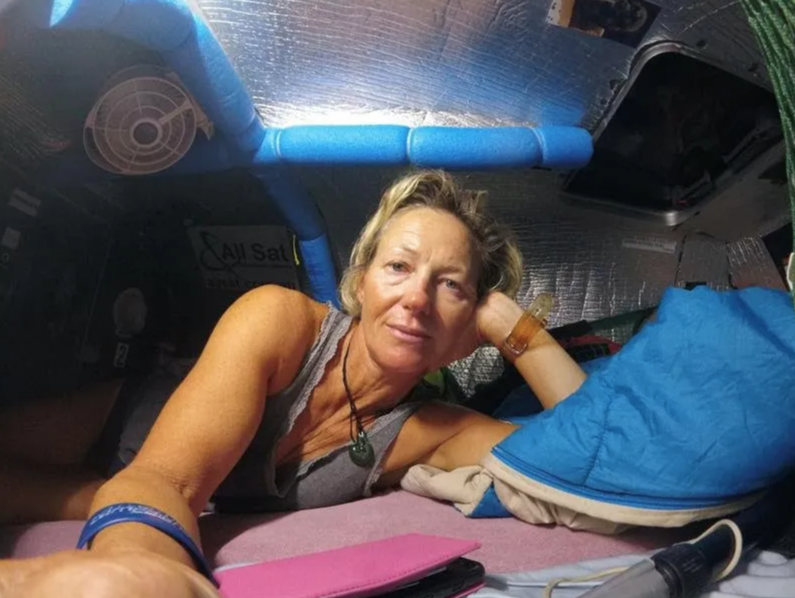
ML: Yeah, she’s amazing, I call her ‘the maid’. It’s her name – Australia Maid and it’s a bit of a contradiction because to rowing, she’s huge but in a big ocean she’s tiny. I tell you what though, she handles so well coming down the face of a wave because of her design which I chose. There were a couple of different designs I could have chosen but I went classic, I went with the very original ocean rowing boat design, which is called a Woodvale and of course as with designs, they get faster every time there’s a new design. Mine is slow and she doesn’t have the same wind assistance as the newer models but I absolutely know I made the right choice. She’s got beautiful square chimes, so she comes down the face of a wave nice and straight unlike these new ones which are a really round bottom which slip and slide. The newer ones have a lot more chance of capsizing. My boat is so stable in comparison, we never capsized once and I’ve been in five hurricanes and four cyclones! Good ol’ Australian Maid.

DAM: So when you’re out in the ocean, what would you say are your top priorities?
ML: Self-care is the first one and how you look after yourself and prioritise your own mental health and physical well-being. I had a protocol at the end of every single shift, and I would ask myself, ‘Body, what can I do for you today?’. I would also pay it gratitude. I would say, ‘Thank you so much for letting me do this’, I would talk to my body and then ask what can I do for you? So it might want me just to do a little bit of massage on the inside of an elbow or my achilles ankle. Whatever it was I would do at the end of every shift, which was normally 10 to 12 hours and doing that saw me through without injury ever. I can say that I never woke up feeling, ‘Oh man, I feel like I’ve just run a marathon’, there was none of that muscle soreness when we do long periods of activity. Also being aware of my hydration, my nutrition, ensuring that I never went into a deficit with calories so I made sure that even if I didn’t feel hungry, I would shovel that meal down and get those calories in because once you hit a wall, it’s very hard to come back. Making sure I didn’t get sunburnt, that was also a priority. I said to myself before I even left that there is absolutely no excuse to become burnt. It’s another stressor and strain on the body that you don’t need to deal with out there and you’ve already got enough going on. So I was very diligent just with wearing long sleeves in those peak times of the sun and I timed when I, you know, took my long sleeves off, etcetera.
DAM: How did you deal with the mental side of things, being at sea for that period of time?
ML: Having a mental toolkit, that was a big one for the Pacific. I failed to have a decent mental toolkit on the Atlantic Ocean because all my energy and time investment was going into boat building, learning to row and trying to get sponsors. By the time I got to the Pacific I could invest my time in other pieces of the puzzle, which was, for me, building a toolkit so I had the tools to cope with things like despair, overwhelm, anxiety and also to heal my body. I had the Jose Silva ‘Ultra mind’ control method under my belt and that became my main go to. Some other mentors were Doctor Joe Dispenza , Gregg Braden, they were all part of my mental plan, so I had unlimited guided meditations for different scenarios. And I have to say I spent probably a good 50% of my time in the zen state while I was rowing in dynamic meditation, so it was quite a privilege because so many people will never get to know that. They won’t really ever know that unlimited, uninterrupted time to meditate because of the demands of their normal first world, so I always say it was a pleasure, a privilege and an honour.

DAM: Do you also feel like that helped you with feelings of isolation?
ML: I would say that they certainly filled a void to the point where I actually never felt alone, that word was not in my vocabulary. I also put that down to the intentions, the prayers and the thoughts that everybody was sending me. All the people that were following me, my own tiny support network were everyday sending good intentions for me. They wanted to see me finish and there is a ripple effect of that so I just never, ever felt alone.
DAM: How important is it having a team?
ML: I always say that to say it’s solo is a joke and never ever underestimate the support crew because they were the backbone to my success. Having a weather router, who was constantly looking for favourable currents and winds and conditions, he was my number one. In fact, if I was only allowed to make one phone call a day, it certainly would have been to Roger the Weather router. I also had moral support from my naturopath, she was also doing a lot of remote healing for me. I would just tell her a little about what I was experiencing today and she would then go that night and do a meditation on seeing me well and healing this, so that was also extremely powerful. Then you’ve got your safety officer, I had the doctor, who was used to being able to treat remotely and without a hospital so in the event that I would, you know, gash my leg open, he would have been on the other end of that call and walking me through how to stitch myself up. Then my friends with their moral support. They all played a very individual role and at certain times in my mental state I knew who to call and I knew who would have the right things to say. If I was really, really struggling and on a downer, there were certain people I couldn’t possibly call because they just wanted to see me out of there. They just wanted to pick me up. ‘You don’t have to do this, Michelle. Just, you know, we’ll get you home’, whereas at that moment I didn’t need to hear that, I needed to hear, ‘Get over yourself, pull your head out of your bum and get out there on the row!’. I knew exactly who to call for the role that they each individually played.
DAM: Well coming to the end of the journey, what was that like? Was it a sense of relief getting to see family and friends again or was there some sadness to leave the journey behind?
ML: In the last three days of the journey you start to really reflect and say things like ‘Oh, this is coming up to the last time that I will be boiling and making water.’, you know, so you start to really try and savour these things, put them away so that you can recall them when you’re back in the first world. That’s probably I think when I felt the furthest away from everything when I was so close but so far. I was sitting on the other side of the Great Barrier Reef, which we had to navigate coming in and the Coast Guard actually brought my family out on their boat but they weren’t allowed to touch or talk to me. They did a circle around me and then they left, that’s probably the most lonely I ever felt. I’ve already been at sea for 238 days and now all of a sudden I felt lonely because I wanted to see them so much. We still had a big challenge ahead of us to get across the reef, which was now subject to tides or shallow water and winds that were unfavourable but it was interesting that mental change as soon as I got close to land.
DAM: Was it difficult to adjust back to life once you landed?
ML: It was a struggle that I didn’t anticipate reintegrating and now coming into the demands of having an inbox, having to answer a phone, a text message, updating social media, even just entering into Coles to do a grocery shop took four goes. I walked in and just turned around and walked straight back out. It was things like the lights, the noise and the speakers, I was highly sensitive to all of this overload.
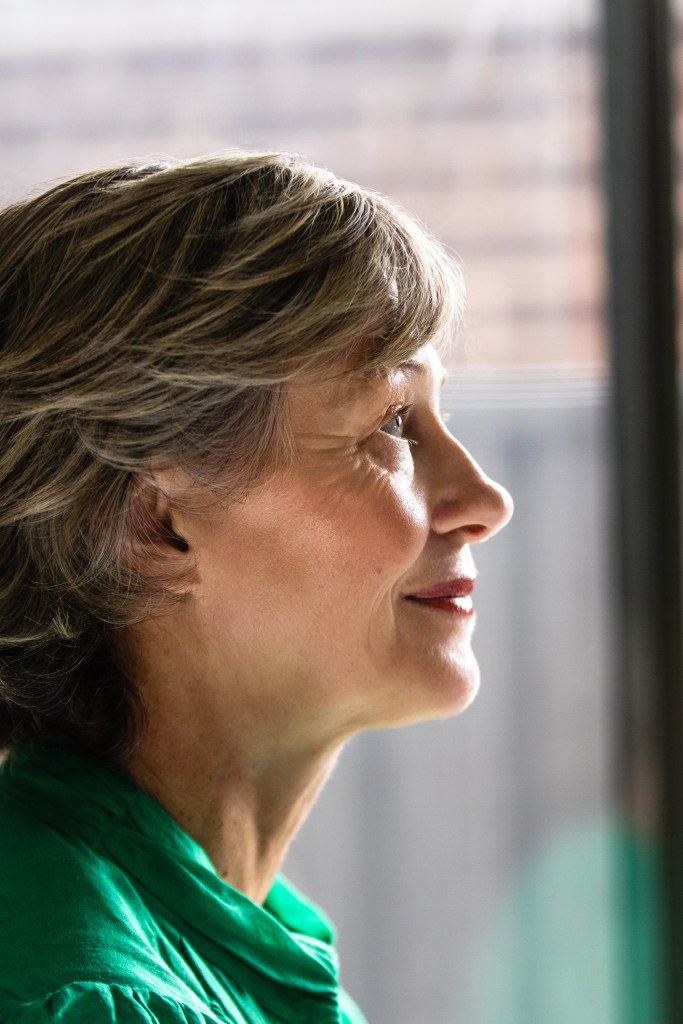
“[Readjusting to normal life] was a struggle I didn’t anticipate… The demands of having an inbox, having to answer a phone, a text message, updating social media, even just entering into Coles to do a grocery shop took four goes. I walked in, turned around and walked straight back out. I was highly sensitive to all of this overload.”
All of a sudden because I’ve just had unlimited space and time and now here I am. Driving was a challenge because I honestly just felt like everyone was too close, everyone’s going too fast and I’ve never felt like that behind the wheel in my life. It took me probably a good four months before I really felt OK I’m home, I can breathe, it’s not as bad as I was making out in my mind. My resistance was huge, so I actually had to have a good talk to myself and say, ‘Come on Michelle, the adventure is over, you always knew it had an end date and now it’s time to adjust, get back into the mode and get ready for the next adventure’. Rebuilding myself and recreating, you know, I closed my business. I got rid of my table, my towels, everything. As I said I was doing massage before but I left and decided that I’m not coming back to that. There was all this uncertainty of, you know, where am I going to get my money from? I’ve got to earn a living, gotta pay rent, all of those demands. I can say now what, we’re close to ten months since I’ve been home and I’m probably really only just getting super comfortable with it.
DAM: You previously mentioned meditation being a method that got your through tough mental times, did you apply it here?
ML: Yeah, absolutely, my anchor is meditation. I know if I go for a few days and I don’t apply the discipline then I suffer for the next few days. To sit down and think about how I want to be today, how I want to act today, what objectives I have and what they look like, what would I walk like? Talk like? That’s actually a need for me now. I’m addicted to it and if I go without it, I can really feel a big difference. It’s easy to slip back into the old you and I never want to go there again so now I catch myself a lot quicker. One thing Dr Jody Spencer said that really resonated with me, was that you will fall from grace, but how long are you going to choose to stay there? Those moments for me are getting much shorter and it’s like oh, I’m sorry, you don’t even need to go and do a little meditation. I actually can do it now, dynamically, I can do it while I’m driving, I can change my mood now while I’m fully conscious about my day. It’s about just raising your whole conscious awareness and I attribute that to adventure. It has made me so much more aware consciously of how I want to live, how I want to be and I sort of want everyone to go and experience adventure.

“Adventure has made me so much more aware consciously of how I want to live, how I want to be and I sort of want everyone to go and experience adventure.”
DAM: That’s amazing, it makes us want to give it a go out and adventure ourselves after this interview! What’s the next adventure if you dont mind saying?
ML: My next adventure is going to be a combination of hiking and there will always be something to do with the ocean. The mountains call and so does the ocean, they both got the magnetic pool, positive magnetic pool. I want to do the 5.8 ocean globe race, again, you build your own boat and you are racing apples against apples. You get the plans and everyone buys exactly the same plans so no one’s got a bigger mast or a bigger keel, no one’s favoured. It also means I’ve got to learn to sail but to me that’s irrelevant again. These things that you achieve are bankable moments, to make you realise that it doesn’t actually matter that you can’t do because you will learn it. I have the Larapinta Trail which is a hike through Outback Australia where you start in Alice Springs – that’s coming up in June. There are so many other hikes . For me, that’s again, a chance to exit the Matrix. I call this thing that we live in the Matrix so that’s a chance just to exit, put your backpack on, put your boots on, and you just walk and you just meet people on the way. Oh and the San Diego trail, I want to do that solo as well!
DAM: We’ll be looking forward to hearing more of these adventures from you! Lastly, if you could give one piece of advice to anyone who might crave that desire to leave their comfort zone but have fear holding them back, what would you say?
ML: I’m a list girl so make a list. Let’s say you want to do a triathlon, what does that involve? Well, OK, I’ve got to take up the discipline of running, swimming and biking. I look at where I currently am, I already swim, so I’ve ticked that box but I need to now focus my energies on getting the other two disciplines. It means that you’ve got to be willing to change your life and make some sort of sacrifices or compromises. Often things have to fall away in order to make room for this. I always just say, to go about your day with a positive, focused, conscious intention and attention on just starting that goal. Once you make that first step, that’s the hardest thing, everything else you start to just build.
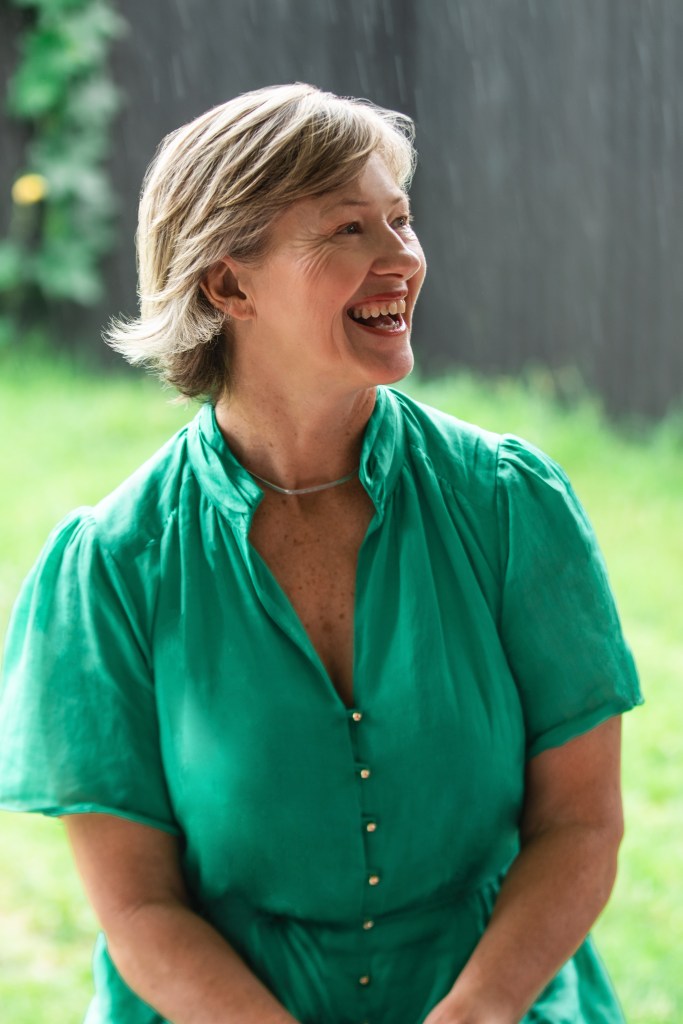
“I always just say, to go about your day with a positive, focused, conscious intention and attention on just starting that goal. Once you make that first step, that’s the hardest thing, everything else you start to just build.”
A rule for me, is doing a bit every single day towards that goal. I would ask myself, is doing this gonna get me any closer to the start line? For example, going out on the weekend with my friends and taking all those hours to just go out and sit in a pub and have lunch, that’s all very nice but is that going to get into the start line? No, because you know what? I’ve gotta learn how to splice some rope, I’ve gotta learn how to do things. I had a list constantly of all the things and the skill set that I had to develop. Remember, I had to grow into this so every single day, whether it’s making a phone call or spending some time trying to attract some sponsors, you have to keep the momentum going. To me, it’s like putting it in the vortex and I have a visual of a cylinder where the energy that I start to invest into the goal, it’s like swirling smoke. The more energy and the more things that I do towards the goal, it gets bigger and bigger and it’s that energy that I believe changes your frequency. While you’re doing all this action you are changing your own frequency. Then you will enter into the quantum and your frequency up there will match what you want. What you will find is things will start to come to you when you act with brain and heart coherence. That’s a tip, when you make the decision, make sure that your brain and heart are without conflicts. Once the head and the heart say yes, you watch the doors start to open and you watch the people and the opportunities that come into your life. It’s happened so many times to me now that it’s absolutely a given without having one foot in and one foot out, everything I need will come.
“Make sure that your brain and heart are without conflicts. Once the head and the heart say yes, you watch the doors start to open and you watch the people and the opportunities that come into your life.”

.
.
.
Michelle is also Australian Geographic Adventurer of the year and the current World Record Holder 1 Million Metre Row, taking more than 10 hours off the world record held by a German Olympic rower. Find more on Michelle and her journeys here:
Website: https://solorower.com/
Instagram: https://www.instagram.com/michelleleesolorower/
LinkedIn: https://www.linkedin.com/in/michellelee-solorower/?originalSubdomain=au
.
.
Published by Sangeetha Gowda & Marshall-Weishuai Yuan ~
 Diversity Australia Magazine