
DAM: Today we sit down with A. Hussain Ali, Engineer and Host of the In The Gap Podcast which highlights conversations with and tells the stories of Immigrants in Australia. Hussain what’s it like being the interviewee this time around?
AHA: This is actually my first ever interview in my life.
DAM: No way. Ever?! But you’ve interviewed so many people now!
AHA: Yeah, that’s something that’s amazing.
DAM: Amazing. Well Hussain, to start, can you take us back and tell us a bit about your upbringing?
AHA: I was born and raised in Pakistan. I spent 27 years of my life there, having gone to school, went to uni. There’s this city in Pakistan called Hyderabad which is where I was born and raised until I was 13-14. After that I went to Karachi, which is the biggest city of Pakistan where I spent most of my teenage years. At the time I was living with my grandparents for five to six years because my family was in Hyderabad, that is where I really came of age.
DAM: Would you say you connect more with Hyderabad or Karachi then?
AHA: I would say that I am a Karachite because that’s my hood basically.
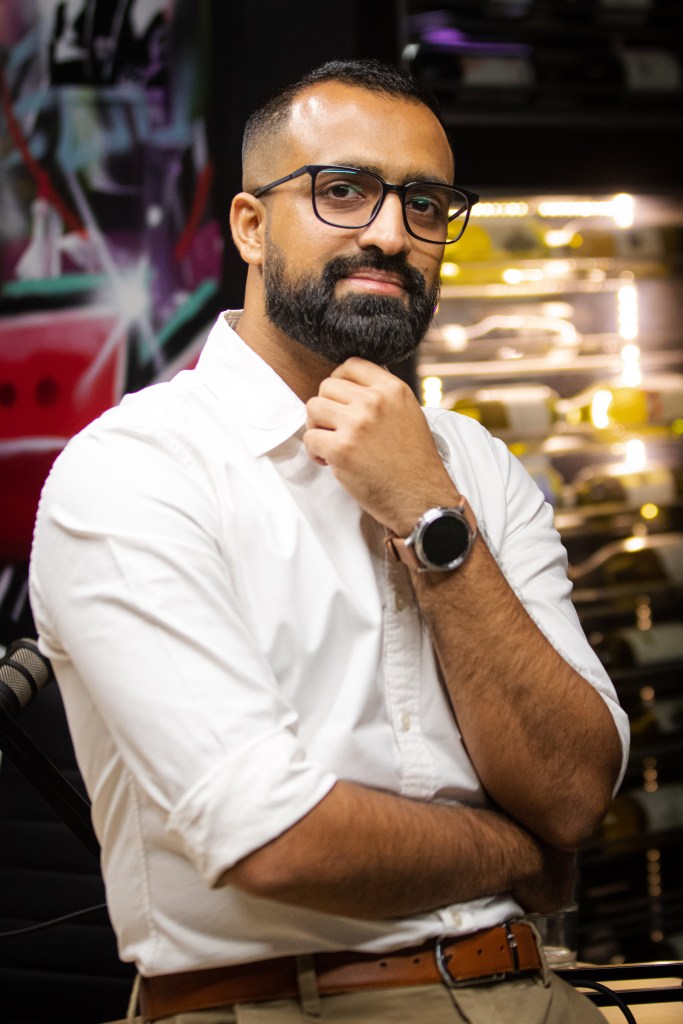
“I would say that I am a Karachite because that’s my hood basically.”
DAM: Where did your path lead you after high school?
AHA: I did four years of engineering at uni. I wouldn’t say I was born wanting to be an engineer but rather I just did engineering for the sake of it. In Pakistan you basically have three main choices; doctor, engineer, lawyer. So yeah, I went down the engineering path and am an Engineer by qualification, but in my life I always had a creative spark.
DAM: Tell us more about that.
AHA: From a very young age in school I always enjoyed being on stage. I was acting, doing plays and other stuff involved with being on stage. I used to be anxious in real life but as soon as I stepped on stage I felt very at home and very calm. When I was in uni, we used to have our annual plays so I was fortunate enough to act in them every year, and then I directed the play in my final year. That was when I actually took a serious interest in it. I think I could have done something in acting if I wanted to. There was a part of me that always wanted to explore something in film but there were no credible film schools in Pakistan and being a film graduate in Pakistan, it’s very risky because there’s not enough opportunity out there. The film industry is not as viable, it’s not as mature as it is in the States so that never really occurred to me. Plus being from a more conservative, career oriented family, I went down the engineering path but I tried whatever I could to keep that [creative] side of me alive.
So, I finished uni and I started working as an Engineer in Karachi and at the same time, it was around then that I got in touch with my partner. My missus and I actually went to the same high school but we hadn’t kept in touch for 6 years. Coming back from uni, we started talking through out mutual friends. I was at that point in my life where even my family was asking, ‘Do you have someone in mind?’. She came on my radar, we got talking and after some time I just popped the question. The way it works in our society, the ethical way as a good Muslim household, is that if you like somebody, you propose and then you see if the families match and click. I asked her and she said, ‘Have your parents talk to my parents. If they agree then I have no issues’. That was her way of saying ‘yes’. So in 2016 we got married and 2 years later I came to Australia.
DAM: What was your reason for deciding to make the move to Australia?
AHA: My wife and I made the choice together but I first came to Australia by myself in 2018 as a student to do my postgrad. The intention was that I do my postgrad here and if that works into a permanent residence, then I can stay here. My parents were pretty adamant on that and they wanted me to go for postgrad outside of Pakistan somewhere because it gives you a better opportunity career wise. However, I was conflicted about it for the longest time because I grew up as (and still am) a strong patriot. I love my country with all of its flaws but a part of me will forever be a proud Pakistani.
“I was conflicted about it [moving to Aus] for the longest time because I grew up as (and still am) a strong patriot. I love my country with all of its flaws… A part of me will forever be a proud Pakistani.”
In hindsight, I think it was the better choice to come over here because coming out here, there’s a lot more opportunity to do more and give back more service to people back home.
My missus joined me at the end of the same year, so I came in Feb of 2018 and she joined me in December of 2018 so we spent that one year apart. She was also working back there, she has her own career. By profession she is a data analyst so between the two of us my missus is definitely the smarter one! She’s actually done her postgrad from the Imperial College in London which is basically the second best uni in the world for data analytics so yeah, she’s very, very capable and very highly qualified, which is one of the things that I really admired and drew me to her.
So we decided that it was better, instead of coming over here and taking a break in her career, why not just stick around for another year? So yeah, she joined me here. 2019 was when we were both here and we’ve been living here ever since and I’ve been working as a civil Engineer.
DAM: What were your first impressions of Australia? Was it what you expected?
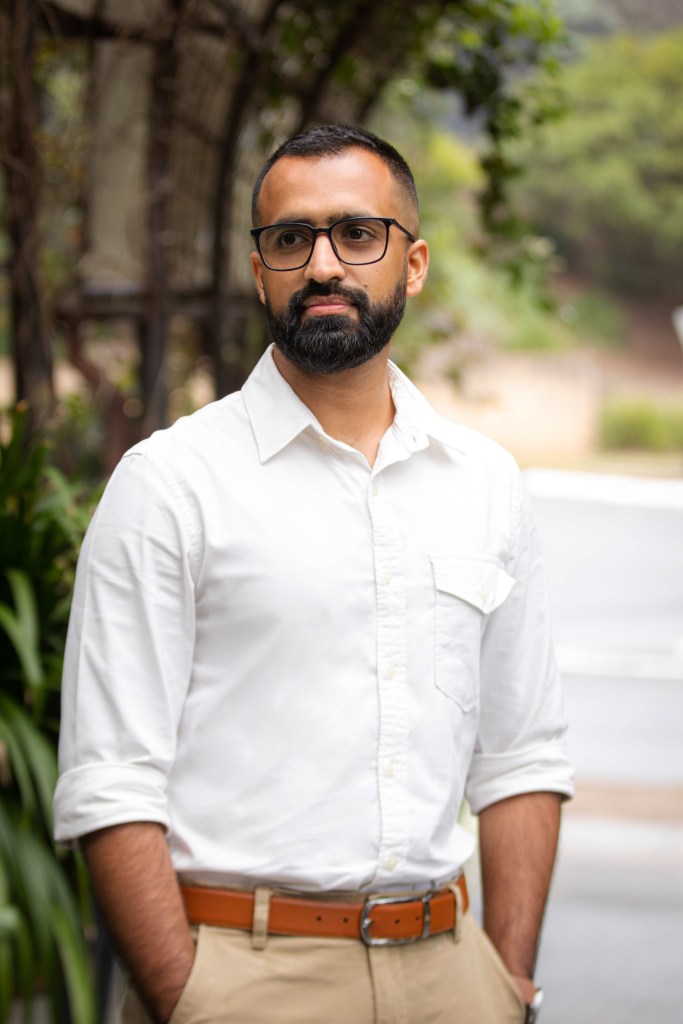
AHA: I did not have any preconceived notions because I had not lived outside of Pakistan at any point. I knew that it would be different but I’m the kind of person who is very adaptable to situations. You put me in a tough situation where I have to struggle to grind myself, I’m happy to do that. I’m the kind of person who is persistent and patient enough to get to where I have to be. When I came here, I had no hang ups because back in Pakistan you didn’t have to do your own laundry, you live with your family, you’ve got drivers to drive you around there. Coming over here I knew that it was going to be a shift and it was going to be a struggle but I decided to take it head on.
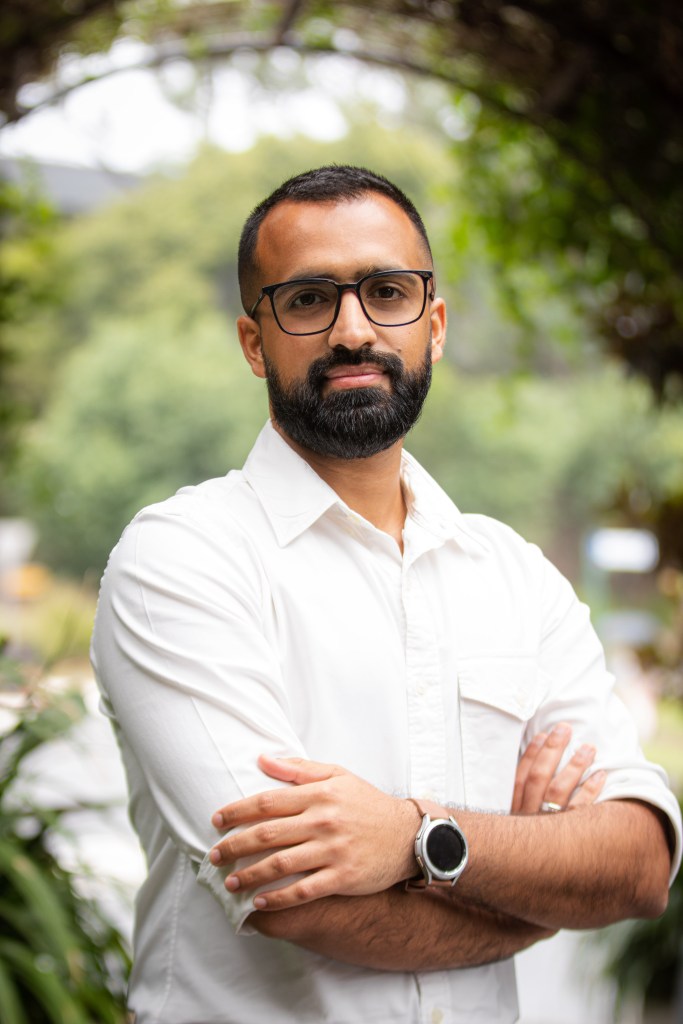
“Coming over here I knew that it was going to be a shift and it was going to be a struggle but I decided to take it head on.”
How I’ve found Australia since I came here, I think I found it really nice. When you’re living in Pakistan or when you’re living anywhere outside in the world, your perception of a white country is America because that is all you consume; the movies, the music, the pop culture. One thing I really love about Australia is that the family values are still very strong, as compared to maybe the US or Europe, whereas those countries are much more individualistic, you know, very nuclear families. I’ve seen people over here, white Aussie people with seven kids and I’m like, that’s cool. What I also liked was the general concept of mate-ship and just watching out for each other.
“One thing I really love about Australia is that the family values are still very strong. I also liked the concept of mate-ship and just watching out for each other.”
DAM: Why did you choose Australia as opposed to England or America?
AHA: The first thing is that when you’re trying to get out of Pakistan, it’s like, ‘which country is the easiest to get the visa for?’ That’s one of the biggest things. That largely depends on which country is actually accepting immigrants at that point in time. America used to accept a huge amount of immigrants back in the 80s but not so much anymore. The choice basically came down to Canada or Australia and I chose Australia, I just liked the sound of it. Also because I’m a cricket fan as well and I’m pretty sure Canada doesn’t even play! I thought that the weather and the landscape in Australia was a lot better. Career wise I thought that Australia had a lot more opportunity compared to Canada in terms of being a civil Engineer. In hindsight I have absolutely no regrets, I love Australia.
DAM: Going into In The Gap Podcast. What was the accumulation of that and why did you feel like it was something you needed to start?
AHA: I came into Australia as the first of my family or the first of my immediate circle to come to Australia. If I had gone, for example, to America, I would have had cousins there. I would have had uncles there and the same with Canada, I would have had a very good network there. In a way I am the pioneer. Once I came here, there were a lot of things that I realised I had to figure out on my own, like how do you get a part time job? How do you navigate? How do you buy a car? You know, something as simple as that. How do you apply for a rental application? So what I’m saying is that there were a lot of things that I had to figure out for myself when I came here. The podcast is actually a culmination of a few different things coming together.
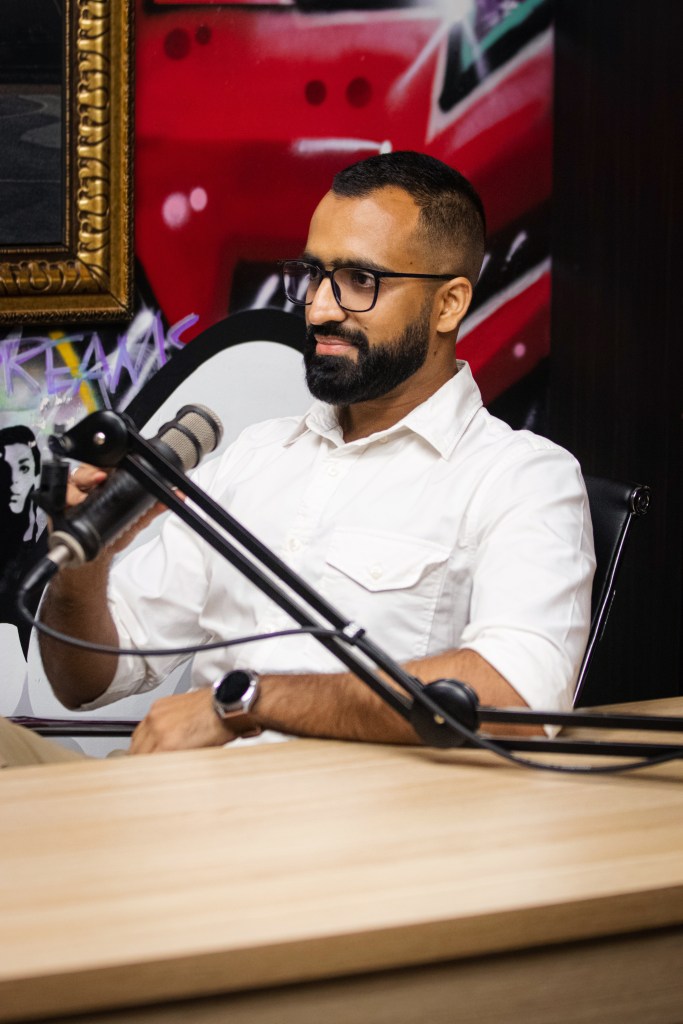
“The podcast is actually a culmination of a few different things coming together.”
One was that I needed a creative outlet because I had been grinding away at making my life in Australia for about 3 years and I was just kind of sick of it. I just needed to do something for me, you know? I needed a hobby. The second thing was that around that same time COVID happened. You would have noticed that around COVID, podcasts went through the roof. Podcasting was predominantly a White thing, it still is. The Immigrant communities do not listen to them, they don’t even know what podcasts are. Then I figured, there’s nobody in Australia who is an Ethnic podcaster. I was like, OK, that’s interesting. At this point I had already thought of other things such as a YouTube channel or if I should start acting again. Those take up a lot of effort, a lot of time and I don’t have that kind of time because I already have a career. Also my missus and I had a baby on the way so life was pretty full on. A podcast just seemed like an easier alternative because the editing is very minimal, the shooting is very minimal and you don’t need a lot of sophisticated equipment for it. Plus conversations are something that came naturally to me. I generally enjoy it, even if it’s not recording.
“Conversations are something that came naturally to me. I generally enjoy it, even if it’s not recording.”
If you and I sat down somewhere at a café or something, I would still enjoy it. I’m the kind of guy who would try to get into the nitty gritties, like don’t just tell me how you’re doing, tell me what you think about this? What are your aspirations? What are your inspirations? What are your fears? I enjoy doing that. Part of that comes from the fact that because I used to act – I’m in touch with my emotions, I want to understand the other person’s emotions too.
DAM: How did you decided what sort of content you wanted to produce through the podcast and what subjects you would talk about?
AHA: Most of those people who were doing them were just friends talking to each other. They put a mic between themselves and they just start bantering. I think because I’m an Engineer, I’m a student of science – everything I do has to be very methodical and have a purpose. I realised that if I’m doing a podcast, I want people to listen to it so that they can derive some kind of value or entertainment from it. I’m an Immigrant and I’m exploring Australia through my eyes, but what would it be like to see Australia from somebody else’s eyes? From somebody who’s similar to me but not exactly on the same path. How about the people out there who came from other countries; China, Korea, Sudan or Palestine even. What are their stories like compared to mine? There are stories of refugees who escaped persecution in their countries, who escaped war. That is when it clicked that, OK, this is something that I can tap into, there’s a human aspect to it. There is also value that can be derived out of it.
DAM: So what was the push?
AHA: For 2023 it was my New Year’s resolution and also my wife was sick of me talking about it, she said just stop talking about it and do it!
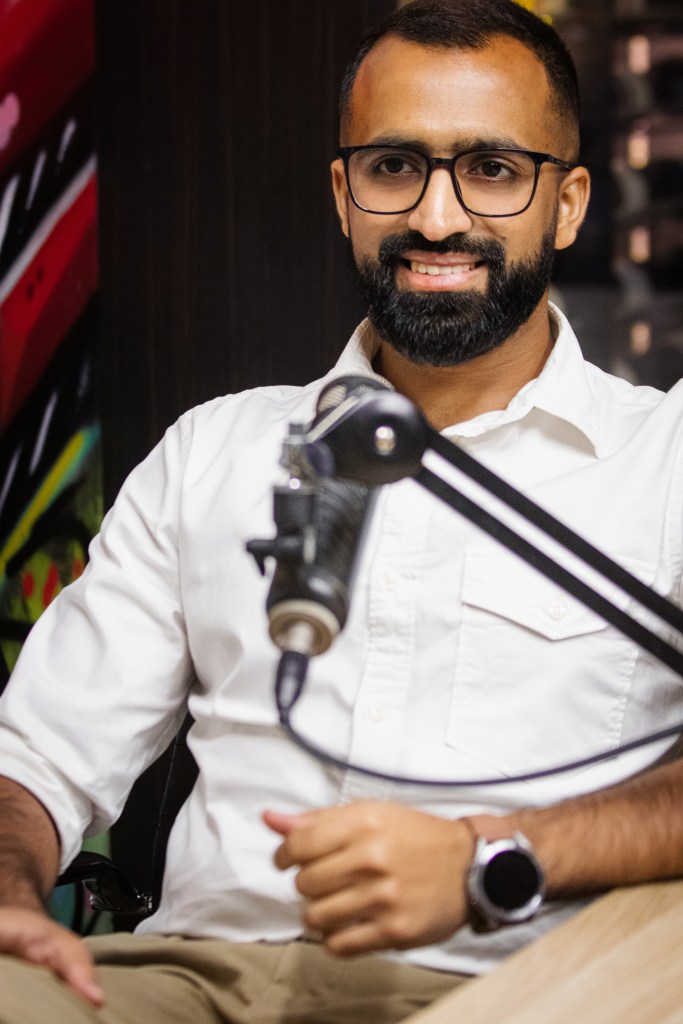
“It was my New Year’s resolution and my wife was sick of me talking about it, she said just stop talking about it and do it!”
I also talked to a few friends who were also like, you know, that’s a really good idea and has value, so that was kind of validation. It still took me about four or five months to figure out, OK, what equipment am I using? What am I gonna call it? What software do I need for editing? I did tons of research and finally in June of 2023, I recorded the first episode. I recorded it out of my home and I had already told my missus this months prior, that she was going to be the first guest. I felt that in terms of Immigrant stories, she had a good story to tell because that was a story unfolding before my eyes. She is a working professional who’s highly qualified, but at the same time she’s a new mother who’s struggling with, at times postpartum depression, who’s struggling with not having a support system in Australia because, you know, back in Pakistan’s traditional families, whenever a child is born it’s also born to the whole family. The child gets raised by uncles and aunts and grandparents and everyone. For her as a mother to go through that while she was still working full time… Whenever she was working she was feeling guilty about not taking care of the child and whenever she was with the child she was feeling guilty about not giving her 100% at work. So that was the first episode that I did and that kind of kicked me off.
DAM: Wow well you’ve had quite a few interviews in a short amount of time. I would have assumed you started earlier than you did!
AHA: The thing is when I started, there wasn’t an off switch, and this is one of the things that I’m realising is a crawl back. When I’m not working, or when I’m not with the family, or even when I’m with the family, or even when I’m working – I’m thinking about ‘how do I get the next guest?’. What am I going to ask them? I have to send out this invitation. I have to send out this email, oh, I need to finish the editing here. I need to do this there. You’re constantly thinking about it and I had initially decided that once I start, I’m gonna post an episode every two weeks. So I record one weekend, I edit the next weekend, and I release it the next weekend. In the past few months I think I’ve slept about 4 hours on average. I was just having this conversation with the Misses last night and I told her that I think I need to take a break because my daughter said she misses me as I take up my weekends interviewing guests. That’s what I’m working on so that’s what I’m planning to do. I’m gonna do one episode a month now, so that at least keeps me going and it gives me some time for myself and for my family.
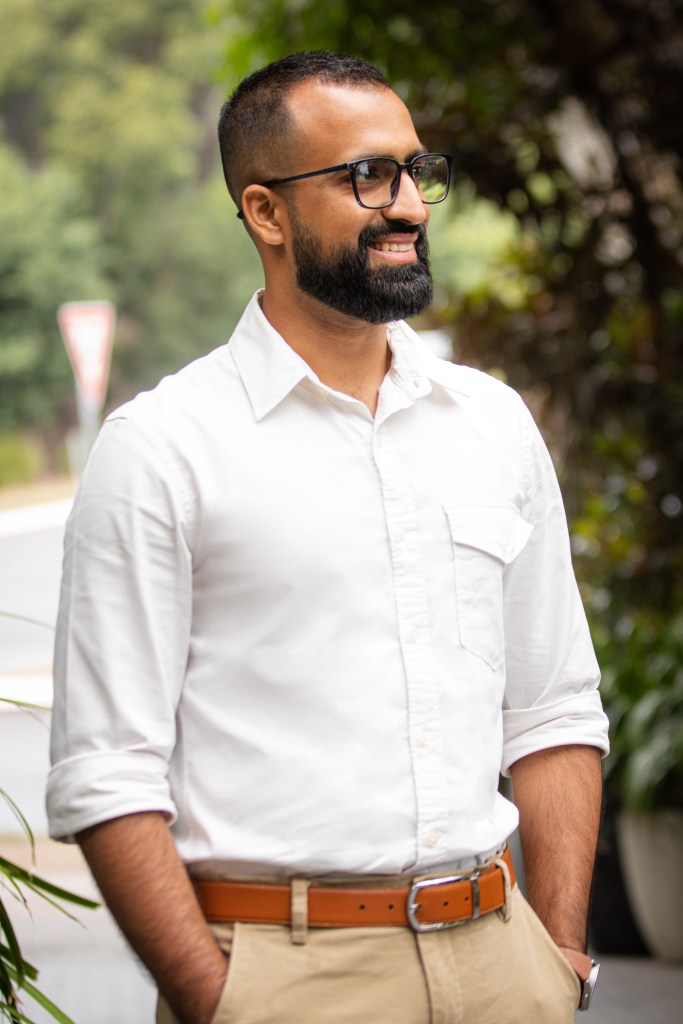
When I initially spoke to my Missus about needing to take a break from it, she said, ‘What you’re doing. You’re onto something’. I know this podcast isn’t getting the views right now, to be honest, I haven’t publicised the podcast at all. I have not spent a single dime on promotion and advertising. Every subscriber, every view that I’ve gotten so far is 100% organic. The numbers aren’t there and that’s what frustrates me, that the numbers aren’t reflective of the quality of the conversation that I’m having or the quality of conversation that I want to have. I also understand that it’s easy to jump into a market where the appetite is there. It’s easy to jump on TikTok and do dances and stuff, right? That’ll get you thousands of millions of views but what I’m trying to do is I’m trying to create an appetite for this content. I’m trying to get people like other Immigrants and Ethnics to listen to these things and I realised that once I have enough episodes, then it’ll be a good enough library to have a bit to offer to everyone. Once I have that then I’ll start promoting it. I’ll start reaching out to collaborate with people on different forums.
DAM: Would you say you’ve learned a lot through the process, do you feel like you’ve grown?
AHA: Ever since I’ve been doing this, I think my verbal skills and conversational skills have drastically improved. I feel that I can now explain my ideas in a much more concise and more effective way since then, so those are some of the benefits that I’ve gotten out of it. On the other hand, I’ve gotten to meet so many people. If you go and look at the list of all the episodes I’ve done, it’s incredible and this is a point that I wanted to make. It’s very easy to pigeon hole yourself like, OK, you’re Pakistani or you’re South Asian, pigeon yourself into that community. But if you go look at my first five episodes, I specifically found people who were as far apart from me as possible. In all the episodes I’ve done, I’ve tried to interview as widespread guests as possible, I want to touch upon everybody.
“It’s very easy to pigeon hole yourself like, OK, you’re Pakistani or you’re South Asian, pigeon yourself into that community. But I specifically found people who were as far apart from me as possible. I’ve tried to interview as widespread guests as possible, I want to touch upon everybody.”
Recently, I’ve also started looking at Immigrants who are White and that’s opening up the idea of what an immigrant is exactly. I was having a rant about this with a previous guest that every time you think of Immigrants, people tend to think of Immigrants and Refugees as the same, with depraved backgrounds – that’s the way that they put it in the media. Why can I not be the face of Pakistan in Australia? My other guest was also Pakistani, look at what she’s done? You never hear about a Pakistani girl doing a musical cabaret in Sydney. I started thinking about all of this. What’s the end game? What am I trying to do? I realised it was to provide guidance to newer, younger people who are coming in. Bring those stories to the forefront that don’t really get told, for example, get the conversation going that Immigrants are not necessarily a burden on the economy. Immigrants, if anything, are an asset and with the amount of Immigrants that are coming into Australia year after year, I mean, it’s been going on for a while, but it’s only increasing. These people need representation. These people need a voice, they had a platform that can soundboard their ideas to maybe people in policy. I realise that maybe the main goal is that I would love to talk to people who are in parliament. I would love to talk to people who are in decision making circles and find out what is actually the policy of the Immigrant in Australia.
DAM: Is that the direction you see this podcast heading towards?
AHA: Definitely, I would really, really love to have a tough conversation with somebody.
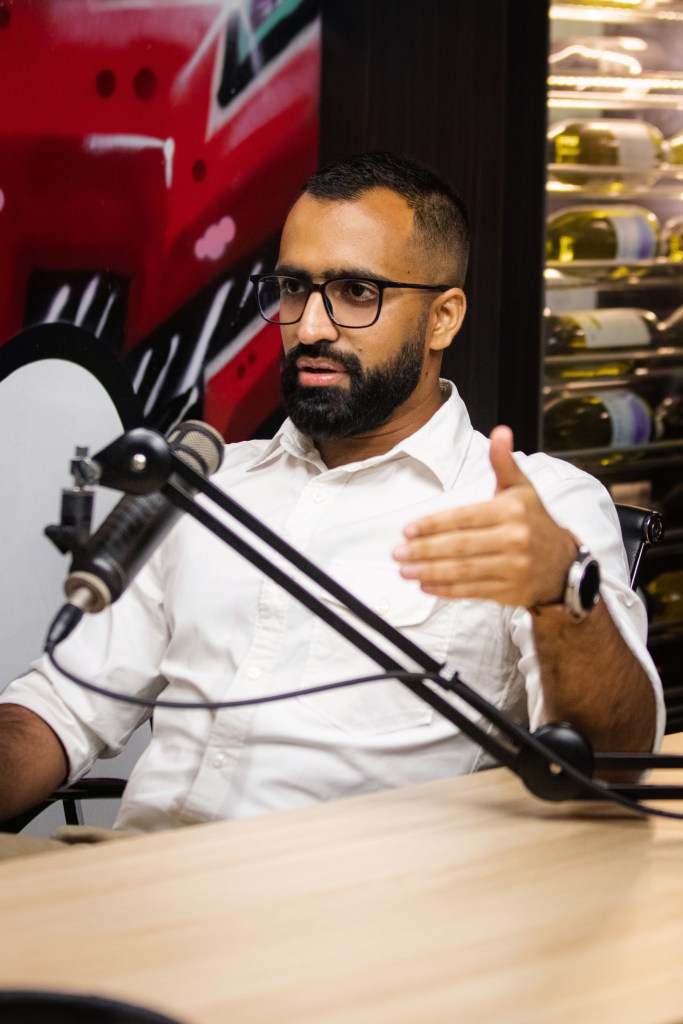
“I would really, really love to have a tough conversation with somebody.”
For example I want to sit down with somebody from India and have the India and Pakistan debate with them, or as a Muslim, talk with somebody from another faith. Even with the climate of today, just to sit and talk to someone Jewish and ask what is the deal with Israel and Palestine? I haven’t publicly touched on the Israel Palestine issue on the podcast. It’s a touchy subject, and if I do have that conversation, I want to have it with somebody who knows what they’re talking about. I want to have the conversation with somebody who would have the same kind of intellectual depth and the same kind of empathy to understand my rationale and then counter it and not just bombard me with slogans. Tell me, no, convince me that why you think what I’m thinking is wrong and why should I think more like you? That’s the direction that I would like to see that.
DAM: We’d love to see that too, those conversations while hard, are important in helping us all understand one another better. Do you see yourself expanding to interview people outside of Sydney too?
AHA: What I really love about Australia is that it is so big. Our reality living in the city is completely different from somebody’s reality living in Alice Springs. No matter which part of Australia you go to you can find some amazing people. I mentioned Alice Springs because there are families living in Alice Springs who are descendants from the original Afghan camel mans who came into Australia in the 1700s, I believe. They came as labourers to work on the railroad line that’s going from Adelaide to Darwin and they settled in Alice Springs. The first mosque in Australia was built by those Afghan men and it’s out there in the middle of the outback.
“The original Afghan camel men who came to Australia in the 1700s, came as labourers to work on the railroad line going from Adelaide to Darwin. The first mosque in Australia was built by those Afghan men and it’s out there in the middle of the outback.”
It would be great if there was a way to interview these people but I realised that if I want to have more conversations with more interesting people then I would eventually have to do online conversations or if I get to a point that it becomes economically feasible for me to travel. Because another great thing about podcasting is you get the opportunity to travel, that would be ideal. I believe in face to face conversation and I’m the type of person who needs that energy bouncing off each other.
DAM: Well to end off Hussain, I’d like to ask you a question that you ask at the end of your interviews on In The Gap. And that’s, what is your nugget of truth?
AHA: My nugget of truth is expanding more and more every day. I think about so many different things, there’s so many truths in life that come to you. If you go to my LinkedIn page or Facebook profile I’ve had a cover photo on that which I haven’t changed for about 8 years now. It’s a word, ‘Occhiolism’. The meaning is the awareness of the smallness of your perspective. What that means is that you understand that you are a very, very minute part of a very big whole and that is the biggest truth that life keeps on reiterating to me again and again. You are just one pixel on a grand image and unless you actually zoom out, you’ll never be able to understand the context of that image. You’ll never be able to understand the beauty of that image if you just focus on that one pixel that is yourself. I think that’s what life is constantly teaching us and that’s the reason why I’ve never changed my cover photo because I never found it irrelevant. It’s something that keeps me grounded that you don’t get too big for your shoes because every single person you meet knows something that you have absolutely no idea about. Everybody can teach you something and that’s one of the reasons why I have these conversations. You start to learn just how insignificant you actually are but at the same time, you have the ability to understand that bigger whole. As human beings, if all of us tried to understand each other a little bit more, I guess that’s the point of life.
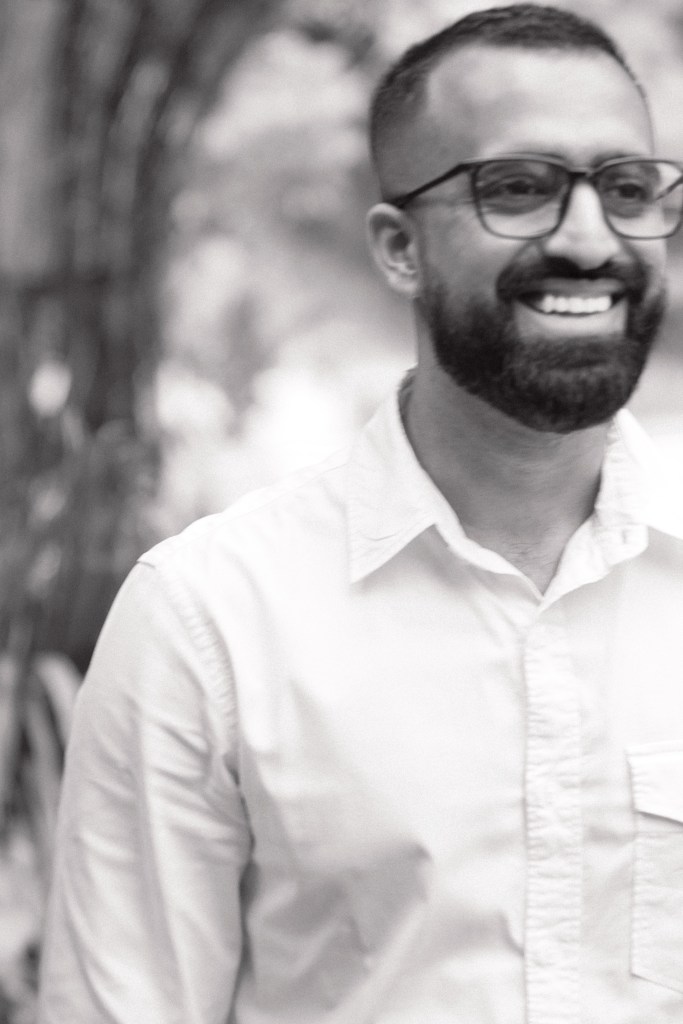
“Everybody can teach you something and that’s one of the reasons why I have these conversations. If all of us tried to understand each other a little bit more, I guess that’s the point of life.”
.
.
.
Find more on A. Hussain Ali & listen to In The Gap Podcast here:
Website: https://linktr.ee/inthegappodcast
YouTube: https://www.youtube.com/@inthegappodcast
Facebook: https://www.facebook.com/profile.php?id=100094451854307
Instagram: https://www.instagram.com/inthegapwithhussain/
Spotify: https://open.spotify.com/show/7HM8rgFAHAXeUYGlhntUR5
TikTok: https://www.tiktok.com/@inthegapwithhussain
Email: inthegappodcast@gmail.com
 Diversity Australia Magazine