
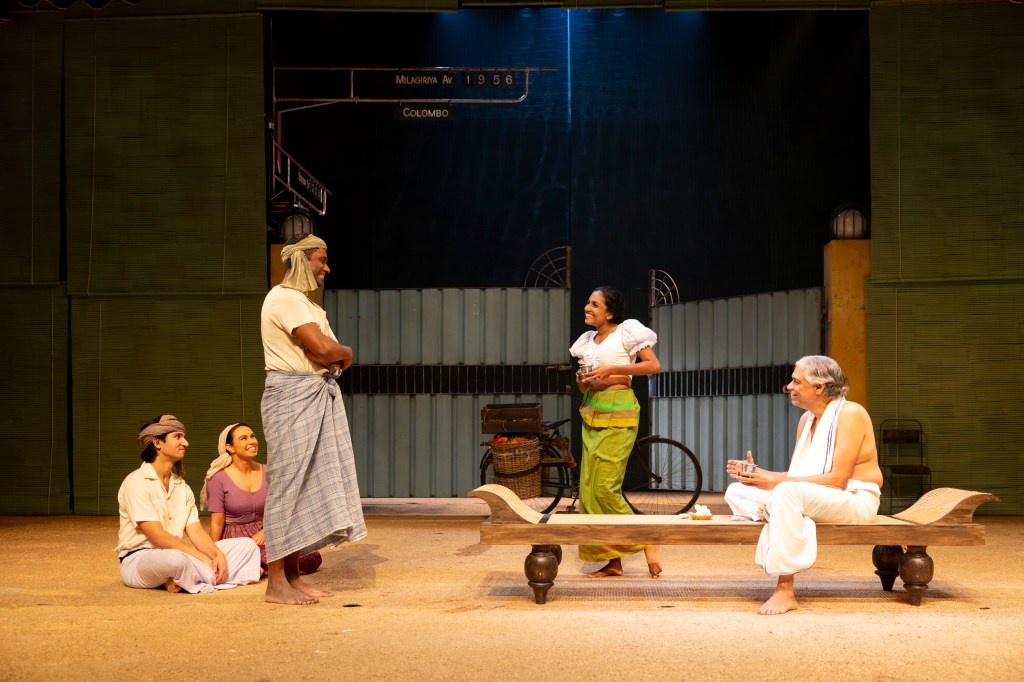
DAM: ‘Counting & Cracking’ has made waves in Sydney and the UK, and is now set to make its debut in New York this September, supported by the same company that premiered Hamilton and Angels in America. A true feat to reach this milestone, the play came together over many years, developed first with Western Sydney company Co-Curious, before launching a collaboration with Belvoir St Theatre. So often we’re told Australian stories – particularly those from Multicultural Australia, don’t resonate internationally. But the success of ‘Counting & Cracking’ proves otherwise, that our stories can in fact stand on their own and in their unique, individual voice. We spoke with S. Shakthidharan (Writer & Associate Director) and – Eamon Flack (Belvoir Artistic director, Director and Associate Writer) on the play’s journey, fostering stories from Multicultural Australia and what it means to be premiering in New York.
DAM: What’s the central story and message of Counting & Cracking?
Shakthi: The story of Counting and Cracking is of a mother and a son. At the beginning of the play we think they are moving on from the past, finding new connections in Australia, growing into separate lives and loves. But then a single phone call brings the past hurtling back, and we journey through multiple decades of the mother’s life as a young woman in Sri Lanka, and its ripples into the present. Over the course of this epic saga we wonder if mother and son can find a way to reconcile – between each other, between the past and the present, between their private lives and the public institutions that mess with them.
The stories we choose to believe in underlie all our actions, thoughts and feelings. In Counting and Cracking I hope to provide audiences with a new story to believe in: about Australia, about Sri Lanka. It’s a story in which migrants are not asked to discard parts of themselves to fit in, but instead are asked to present their full selves, to expand our idea of what this country can be. It’s a story of how the politics of division can win the battle, but never the war, around how power is gained in this world. It’s a story in which love may not triumph over adversity, but through sheer persistence and resilience can eventually overcome it.
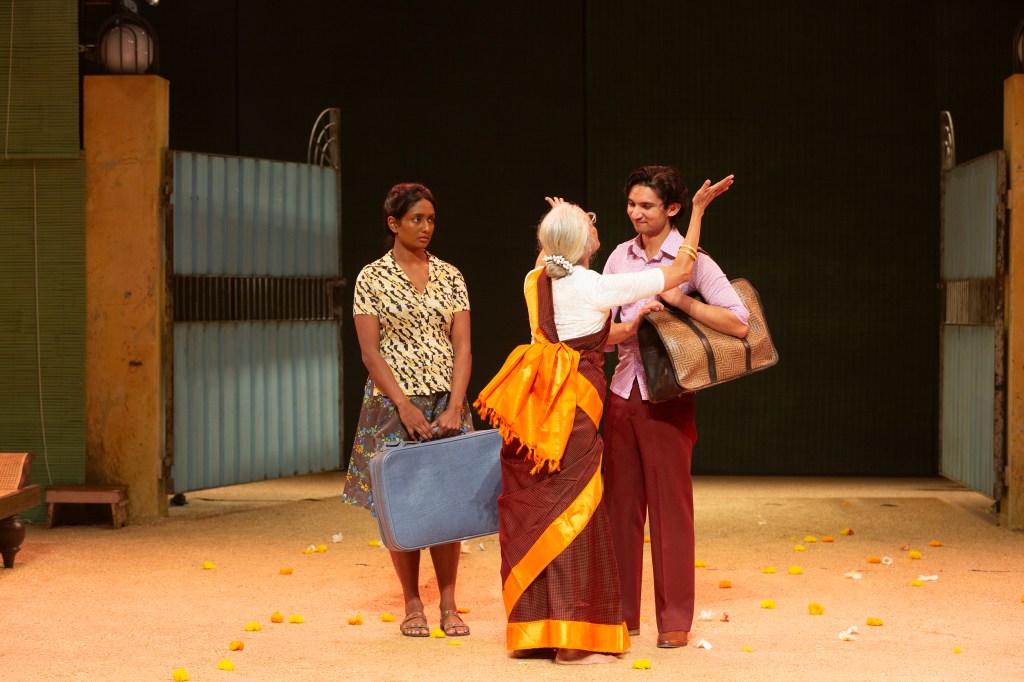
“It’s a story in which migrants are not asked to discard parts of themselves to fit in, but instead are asked to present their full selves, to expand our idea of what this country can be.”
Shakthi
DAM: Tell us of the creation of this play – how and where did this particular story get breathed to life?
Shakthi: This story came together over many years of deep, intimate conversation with Sri Lankans from all over the world. Overall it is a work of fiction, but every little detail of it is a part of real life, and drawn from something that really happened somewhere, to someone. Over the years of conversations I conducted with other Sri Lankans, I learnt that the politics of division destroyed the inherent public goodwill in our country, and eventually led to war. This version of our history had not, to my knowledge, been told, and so I felt I had a contribution to make there as an artist. This viewpoint also offered a pathway to reconciliation, and justice: for if we could find a way to condemn this kind of politics together and find solidarity across our differences in this, there would also be space to rebuild, together.
As part of this process, I returned to Sri Lanka for the first time in a very long time. Sitting in my uncle’s house in Colombo I received a shoebox full of my great-grandfather’s letters. I learnt the arc of my great-grandfather’s life – he went from being a farmer, to a politician championing unity, to a political realist seeing no other option but separatism. That moment – when I realised my own family’s story mirrored that of my homeland’s – was the moment all the different tendrils came together, and Counting and Cracking was truly born.
DAM: How did the play journey from Co-Curious to Belvoir?
Eamon: I saw a development showing of the play at Carriageworks in 2012 or so and met Shakthi at the same time. He sent me the script, which I read on the banks of the Yarra river in Melbourne. Half way through an early version of the wedding scene I suddenly understood the ambition and vision of what Shakthi was doing. And vision, I might add, is a word I rarely use. I decided then and there that I would do everything I could to make sure this play got put on and that it got put on properly. Shakthi and I then spent a long time in a sort of courtship – getting to know each other’s work, each other’s companies, each other’s thinking. And in those early conversations we made a deal: not to compromise; to do it properly; to let it be as big as it needed to be; and for it to bring together both Sri Lankan and non-Sri Lankan audiences. But the short answer is this: the play never really journeyed from Co-Curious to Belvoir. Co-Curious remained a crucial part of the work the whole way along. Belvoir never took over. If anything we gave over. Belvoir didn’t have the knowledge to do this show without Co-Curious – and vice-versa. So it became a true collaboration. We empowered Shakthi to lead the work in both companies.
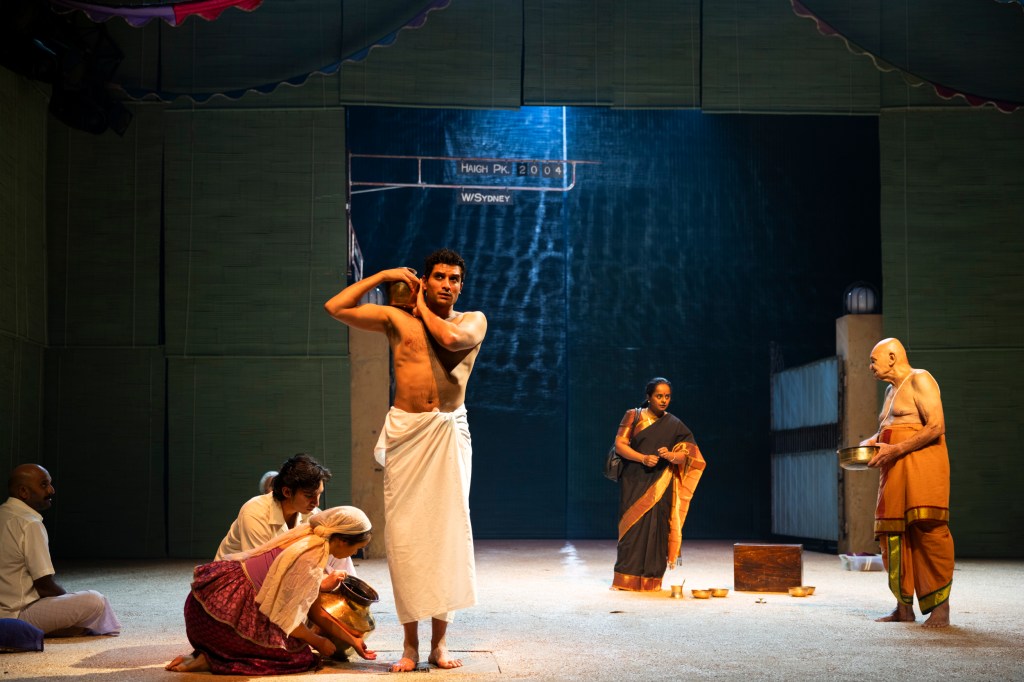
“I suddenly understood the ambition and vision of what Shakthi was doing… I decided then and there that I would do everything I could to make sure this play got put on and that it got put on properly.”
eamon flack
DAM: Shakthi – you mention the play brought together ‘memories of your ancestors’, was the story directly based on your family, and if so were there any parts of the story you felt vulnerable to share?
Shakthi: The entire work is an extraordinary act of vulnerability – for my mother and I, and for many in my community. Doing this work has been an ongoing process for me of learning how to cope with public vulnerability. It hasn’t been easy. But I’ve learnt something along the way – that only a public belonging is a real belonging. Belonging in private is belonging with conditions. The embrace of this show for my community has felt like an act of radical belonging, and is proof for me of the power of real vulnerability, despite all its inherent risks.
DAM: How do you feel now that the play has been picked up to showcase in New York, especially by the same company that premiered Hamilton and Angels in America? What does this mean for Australia and in particular, Multicultural Australian stories?
Shakthi: For so long, in the creative industries, I have been told that we should look to Europe and North America as a place to imitate; to model ourselves upon. What thrills me about Counting and Cracking going to New York is that perhaps there is a greater power in telling stories that can only be our own – fuelled by the power of our own cultures – and sharing that uniquely Australian perspective with the world. I’m still in shock that our humble, epic story – born out of the suburbs of Western Sydney, the memories of my ancestors and the most deeply held truths of my community – is joining up into that continuum of Angels in America and Hamilton. I can’t wait to bring our story to a truly global stage.
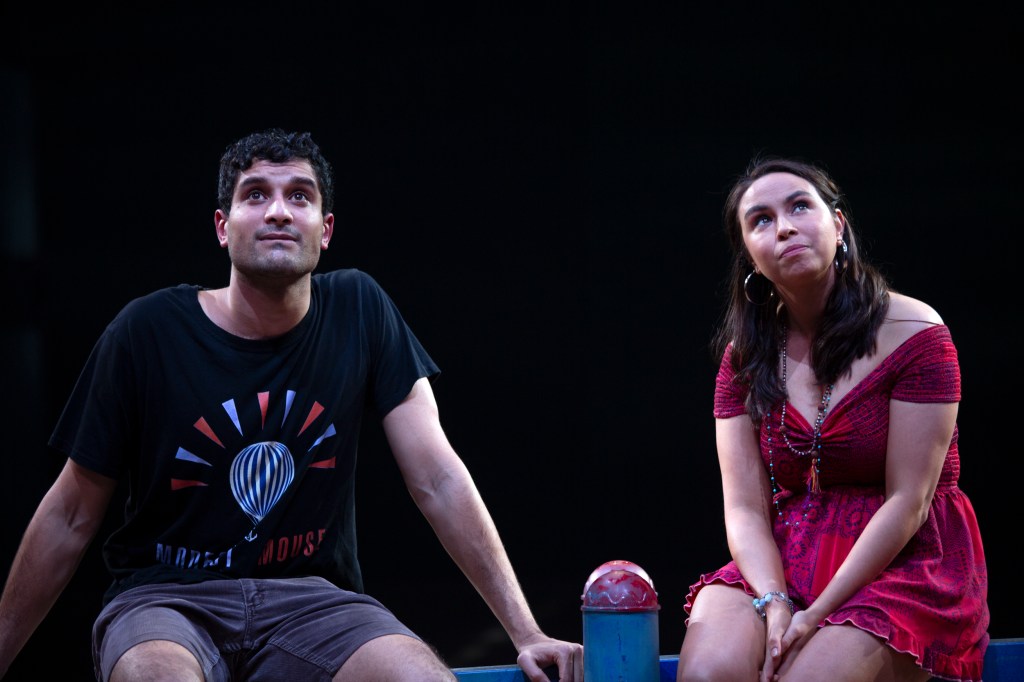
“What thrills me about Counting and Cracking going to New York is that perhaps there is a greater power in telling stories that can only be our own – fuelled by the power of our own cultures – and sharing that uniquely Australian perspective with the world.“
Shakthi
DAM: What’s been a favourite moment for you in the process of bringing this piece together?
Shakthi: There have been too many to count. Watching my mother slowly reconcile with her homeland over the course of developing the work. A cast member coming up to me during rehearsals and saying that the show allows him to spend time with the elders he never got to meet. My Uncle, no longer asking me to get a real job after seeing the show at its world premiere in 2019. Every message I get about how the show has sparked new, vulnerable conversations between parents and their children – and I’ve received hundreds of those now – every single one of those messages still sparks joy.
DAM: How do you think we can better foster stories from parts of Australia (such as Western Sydney) that don’t often get a chance to shine outside of their areas, into more mainstream spaces?
Shakthi: We have to encourage these artists to be bold, to trust their inner voice, to develop work that really speaks to who they uniquely are and what only they can say. We then have to commit to them over many years to manifest the best possible version of their work – not only creatively, but also in terms of audience engagement, producing models and community collaboration. The artist, hopefully feeling supported in this way, then needs to dig in and go on the very difficult journey of developing, editing, re-editing, again and again. It really is hard work; it involves vulnerability, collaboration, persistence. But it’s worth it. I believe if we invest in people, the right people, and help them grow, they will bring entire worlds with them – communities of artists and audiences and collaborative teams that don’t normally work in those more mainstream spaces – and they will transform the industry as they go about their work.
Eamon: My best answer is everything Shakthi says, plus this: Better policy. Better funding. Better public support. At the moment our arts funding is not fit for purpose. The institutions that exist are not funded for risk or adventure. Many of us are crammed into a fixed way of working. If you want different outcomes, you have to make space for difference processes. Counting and Cracking is proof of what different processes can achieve – but only if they’re resourced to happen. Most of the companies need to learn new processes. And there needs to be room for more companies, more artists, more work. Quite simply, Counting and Cracking is proof that policy matters.
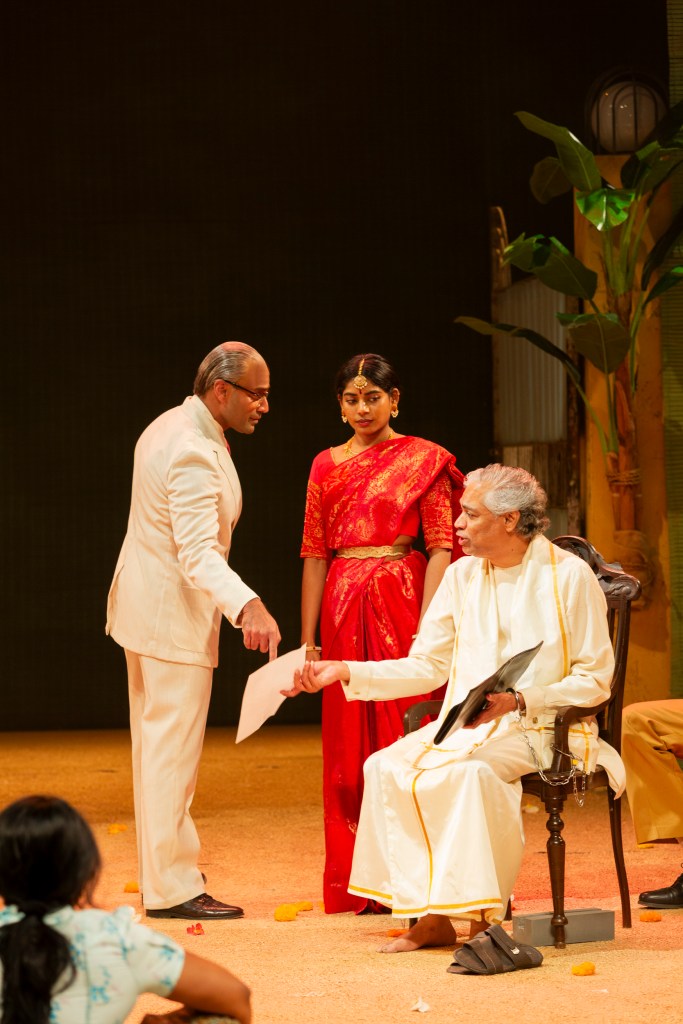
“If you want different outcomes, you have to make space for difference processes. Counting and Cracking is proof of what different processes can achieve.”
eamon flack
DAM: What do you hope audiences will take away from the show, especially New York audiences?
Shakthi: Counting and Cracking is about the secrets our parents keep from us and how the unlocking of them can make history real. We can’t know who we are without knowing where we are. Whether a war happens or not, whether democracy is successful or not, whether you fall in love or not, whether you find justice or not, is based on the truths you know and the actions you make and the decisions you make. Restoring the possibility of this, the vibrant, ongoing possibility of society working together again, hungry to make connections, is what Counting and Cracking is all about. It’s a feeling of real possibility and togetherness that I hope audiences take away with them.
In New York, I hope audiences feel like they’ve just seen a show which is unlike anything they’ve ever seen before. That their understanding of what storytelling can be, on stage, off stage, in our collective minds and hearts – is broken wide open.
DAM: If you had any advice for others who may be in the position you were when you started in this industry, what would you say?
Shakthi: Take the time to understand your values and your aesthetics and how they manifest in your particular voice. This is the version of yourself you want the industry to understand as you. Then, as you begin to make work, continue to trust your instincts and be ambitious. Make mistakes and learn, learn, learn! As you start developing your first major work, make sure that people more experienced than you are part of the team; assemble some trusted elders that can offer counsel. Listen to their counsel. Remember that the journey to something incredible is likely to be more difficult than you ever imagined; but the reward of making something you are truly proud of is worth it, also in ways that you could never have imagined.
“Remember that the journey to something incredible is likely to be more difficult than you ever imagined; but the reward of making something you are truly proud of is worth it, in ways you could never have imagined.”
Shakthi
.
.
You can find tickets to ‘Counting & Cracking’ here:
Sydney, 28 Jun – 21 Jul: https://belvoir.com.au/productions/counting-and-cracking-2024/
New York, Sep 6 – 22: https://nyuskirball.org/events/counting-and-cracking/
.
.
.
Published by Sangeetha Gowda & Marshall-Weishuai Yuan ~
 Diversity Australia Magazine