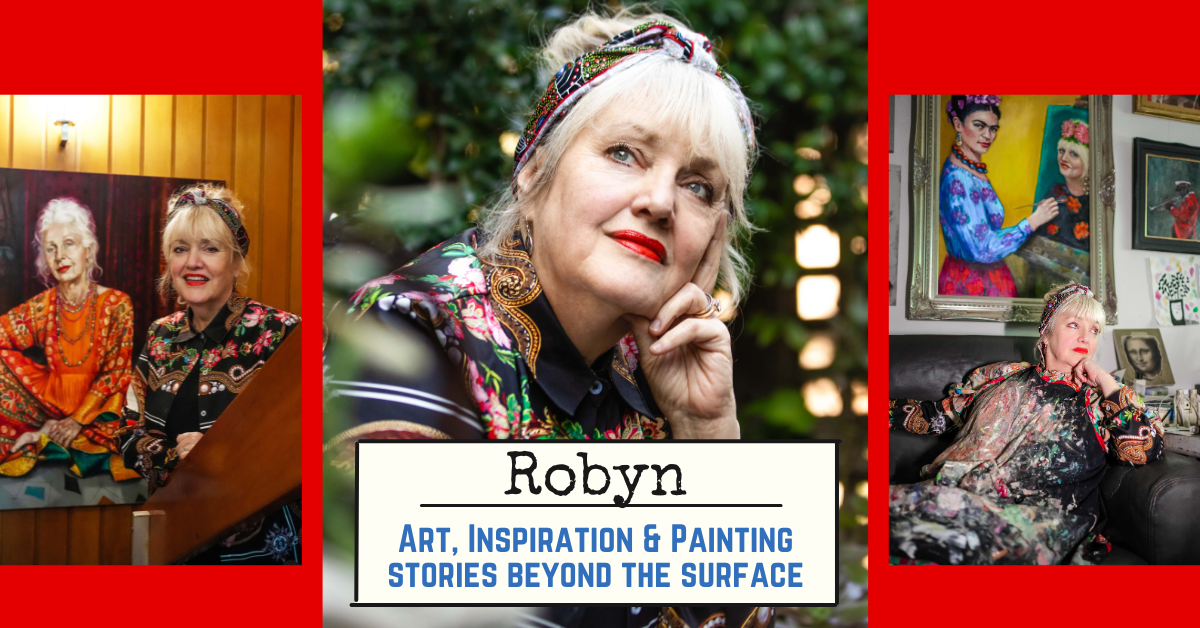
DAM: Today we sit down with Australian Artist Robyn Ross. We first discovered Robyn and her work in the Sydney Morning Herald, during the final week of submissions for the Archibald. Her portrait of model and author Sarah Jane Adams, was certainly a standout, and we’re grateful to have been able to learn more about Robyn’s journey into art as we chat in her beautiful home, which is colourful, vibrant, cultured and not short on creative flair – much like Robyn’s own story. We speak on her journey into an Art career, where she finds inspiration and the joy in expressing stories that go beyond the surface through her portrait work.
DAM: Robyn, tell us a bit about your upbringing, what was that like? Was your family very creative?
RR: Growing up we had a very happy upbringing, we were a close family (still are) and I had lots of cousins. My father was one of five boys and my mother who was born in Adelaide, was one of five too, so we spent most of our Christmas Holidays driving across to Adelaide to stay with her family. I have an older sister and a younger brother, I’m the middle child and I think I was probably the challenge in the family because thinking back – I realise I thought differently to others in a creative sense.
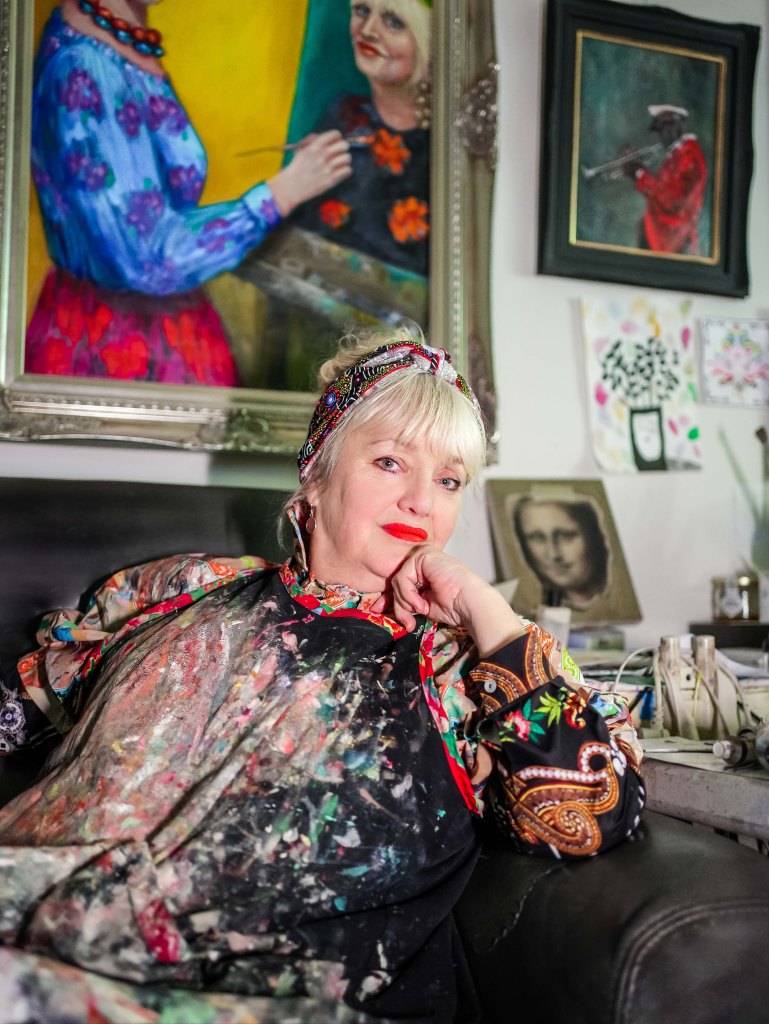
“I’m the middle child and I think I was probably the challenge in the family because thinking back – I thought differently to others in a creative sense.”
I remember at school we were asked what our favourite colour was and I can remember saying red and black while the other kids said pink and blue… I got in trouble for that. At home I was always drawing and arranging Ivy in vases and decorating things with flowers which must have driven my mother crazy as I wasn’t the one who picked up the dead flowers or leaves. My mother was a cake decorator and dressmaker and she used to make all our clothes, my father was a jeweller who had won design awards and I really do feel from both of them is probably where I got the creativity thing. The other link is my grandfather, who painted but was also a dog breeder, so he used to paint his dogs. Also, my great, great uncle, which we’ve researched a bit further, was John Lindley, who was a botanist and had the Lindley Library in London named after him. He is acknowledged as creating the Chelsea Flower Show and he was a botanical artist, as were his two daughters, so that’s probably the link of where the actual painting and art came from. I feel fortunate to have grown up with many different influences from friends and neighbours with different cultural backgrounds too.
DAM: Did you always want to be an Artist, or was there a certain moment that cemented this journey for you?
RR: I always used to say I wanted to be a famous artist. When I was at school I used to get the Women’s Weekly [Magazine] and was constantly drawing people’s faces out of the magazines. It wasn’t until I really got to high school, in year seven, that I had an art teacher, Miss McDonald, who was a real inspiration. I just thought she was marvellous and she really encouraged me and used to write very positive reports about what potential I had, it made me love art and feel that being creative could be a good thing.
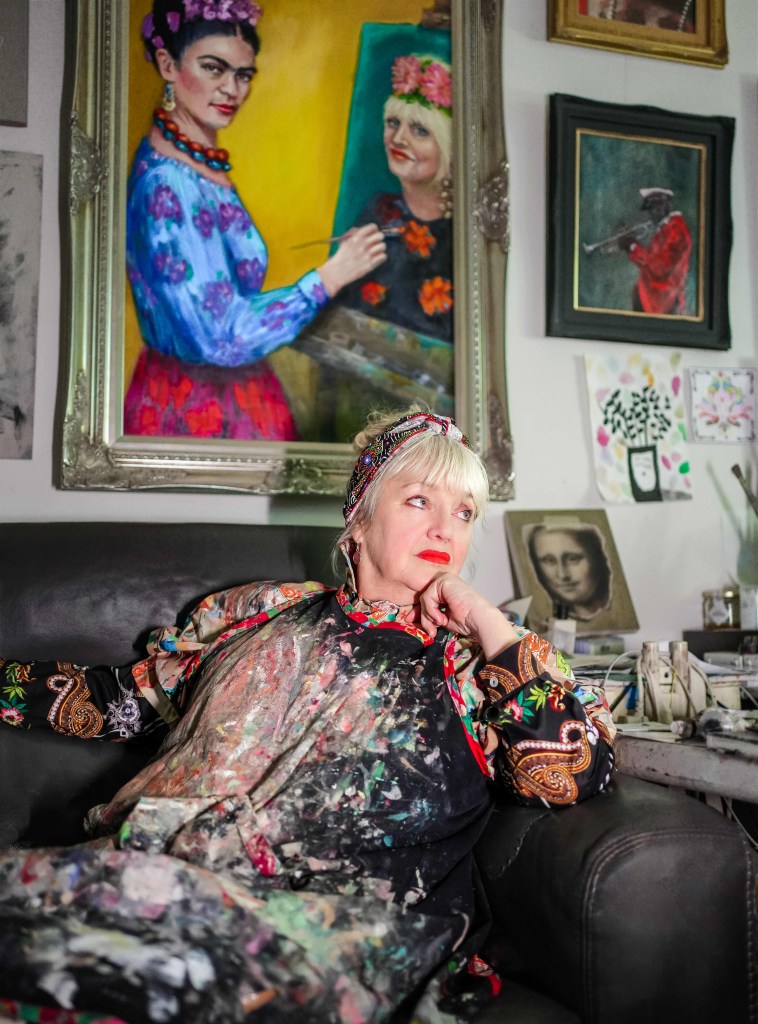
“[In high school] I had an art teacher, Miss McDonald, who was a real inspiration… She really encouraged me and used to write very positive reports about what potential I had, it made me love art and feel that being creative could be a good thing.“
I don’t think I ever realised at the time how much it meant to me, wanting to be an artist. The only speech night I went to was for art and that felt fabulous. When I finished school in those days you went on to sixth form or fourth form and I got an indentured apprenticeship at the end of year four. I wanted to be what they called a ‘commercial artist’ in those days but my parents didn’t think that was going to be a career, so instead I did cartography and engineering drawing – which is not creative. Then I met my husband, we were still young when we were married – times were different and I still like him even after all these years. I’m so grateful he’s always been very supportive and realised that art is a very big part of my life, as my children do too. They grew up with paintbrushes and paintings and drawings all over the place, probably thinking it was normal for people to have dinner while paintings were on the table!
DAM: How would you describe your Art style?
RR: My art is forever evolving really, diversity and eclectic are probably the best words to describe it. I really believe I was put on this earth as one of those people to experiment and experience as much as I can. I feel like I want to spread the word and share what I’ve learned with as many as I can because I’m only here for a finite time and what a shame it would be to spend all this time painting, doing what I do and taking it away with me, not to share it – that would be a tragedy.
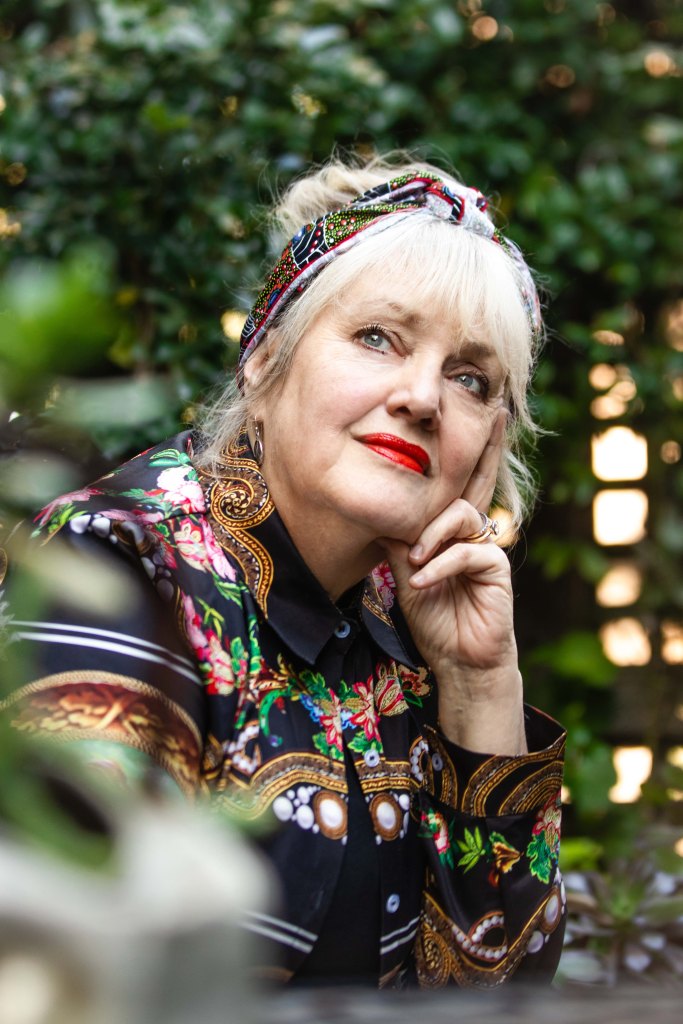
“I’m only here for a finite time and what a shame it would be to spend all this time painting, doing what I do and taking it away with me, not to share it – that would be a tragedy.”
Russian art in general is probably my greatest love of style but there’s so much amazing art in the world and you do get influenced by things from today and the past. Everyone’s influenced by something, nothing’s new and I believe it really is trying to take an experience of something that speaks to you and make it your own.
DAM: Are there certain things that inspire you to begin a new piece?
Things that inspire me can be as simple as walking through the archway of NSW Art Gallery and seeing the works of the impressionists or the beautiful old paintings. Then I’ll go back home and think about what I’ve seen and then decide, ‘I want to do a series of this’. Portraiture is my main love and what I usually do is commissioned portraits, so I’m always painting peoples faces.
What I find interesting about portraiture, is In the old days they used to have painted portraits to show your status and your wealth, people were painted in their finery in an elaborate setting – but now sometimes portraits are painted as a reflection of how the artists feels about the subject, and in some cases the physical likeness is not as important but rather open to peoples interpretation. With my work I say to people, ‘don’t sit and smile because it doesn’t tell me much except if you’ve got nice teeth or not!’ Whereas an expression on the face tells a lot more about someone than just sitting there smiling.
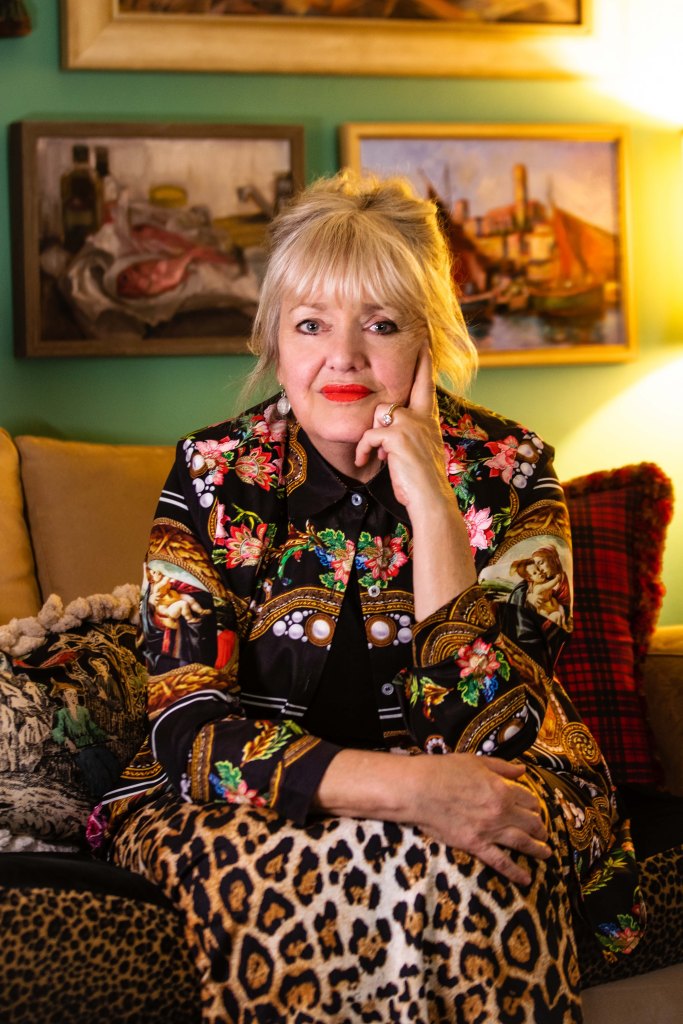
“With my work I say to people, ‘don’t sit and smile because it doesn’t tell me much except if you’ve got nice teeth or not!’ Whereas an expression on the face tells a lot more about someone than just sitting there smiling.”
Sometimes I’d say to my husband, ‘look at that person over there!’ while we’re travelling somewhere – often in a very public space and I’d asked him to go and step beside the person so I could do some sketches.
DAM: [laughs] We love that, very sneaky.
RR: What ends up happening is usually they notice and think that my husband and I want a photo, which defeats the purpose of him standing there! I remember one time we were in a restaurant in Portugal and the cook, who was this big, bald woman that had a hat folded like a starch soviet, just kept walking in and out of the kitchen, so I started sketching her. Eventually the owner came over and he said, ‘Excuse me, what are you doing?’ I think he thought I was making some critique of the food. I told him I thought the chef looked so fabulous and I was just doing a little sketch, the next moment, he goes into the kitchen and drags her out and has her stand at the end of the table!
DAM: Oh no! [laughs] Well, speaking of inspiration, tell us a bit about your Archibald Submission this year and its subject – Sarah Jane Adams, who began the ‘My Wrinkles are my Stripes’ campaign on social media and is a model and author of ‘Life in a Box’.
RR: I’ve been following Sarah Jane for about two years on Instagram and I just sent her a text one day saying how I loved her style and that I’d love to capture her for the Archibald. She messaged me back and she said, ‘Oh you know that’s so kind, why don’t we have a chat?’ Which I’m sure she then proceeded to check out who this nutter was! It all went well, then for the next step, I went over and we had a chat and I took my sketchbooks and did some sketches. Her place is just this amazing step back in time and just hearing the whole story about her was great because she is every bit as wonderful and open as I imagined. We went through this whole thing of her connection to many trips to India and her love of that over the years, to her early experiences in the antique jewellery trade in Portobello Road, to the meaning of the beads she wears and the old suitcases she collects. Then it became a narrative – which I love to do, not just create a portrait of someone sitting there but tell a bit more about them. I like to sort of feel that Sarah Jane’s portrait was about a vital woman who’s in her sixties, as am I, who is living the best life she can and enjoying it and not wishing to be young again.
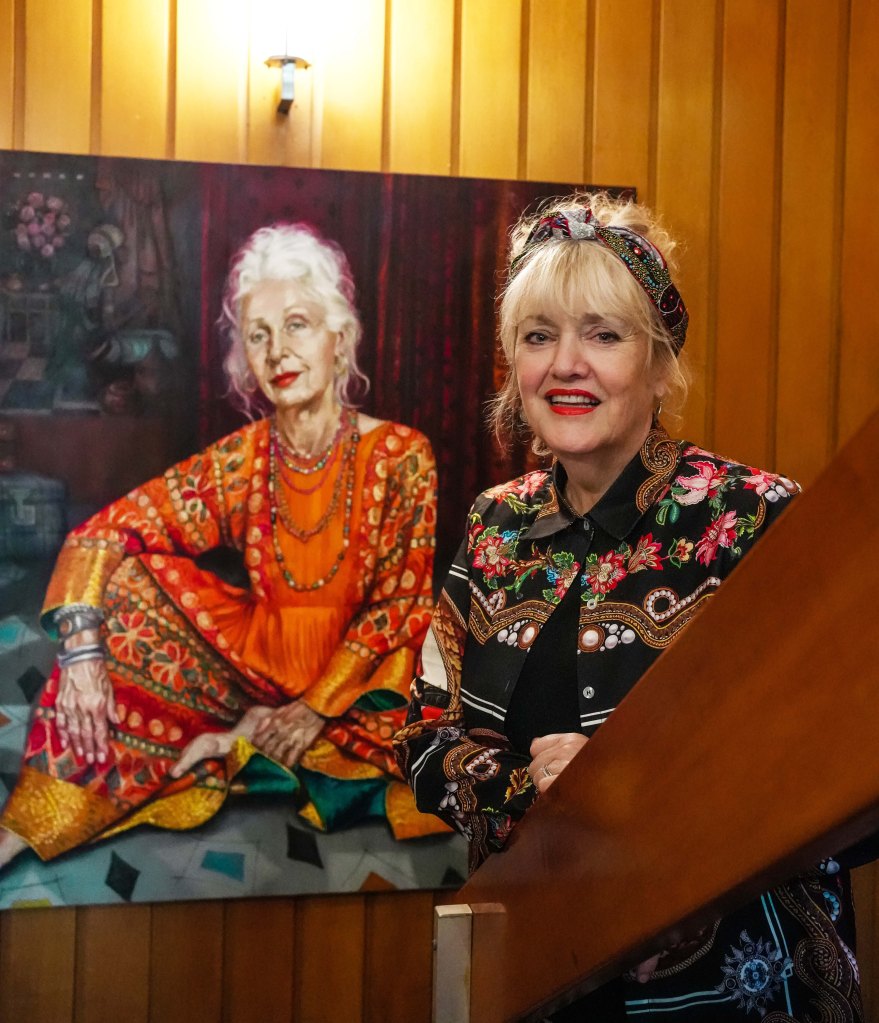
“I like to sort of feel that Sarah Jane’s portrait was about a vital woman who’s in her sixties, as am I, who is living the best life she can and enjoying it and not wishing to be young again.”
Her story resonated with me because I had a great lovely wonderful life growing up but I know I’m looking for the next great fun thing that I’m going to enjoy and I don’t want to go backwards, I want to go forwards. I think that’s the sad thing with a lot of people as they get older, they are always looking back instead of thinking, ‘what can I do to make the next fabulous adventure that will enrich my life?‘ Our family was having dinner the other night and my son in law said, ‘You’re the youngest old person I know!’.
DAM: We can definitely see that. Is there a particular Art Piece you’ve created or an experience that has really resonated with you or made you emotional?
RR: One of the most significant artworks in a way, was the first Commission I had from Sydney university. At the time I felt that there were a lot more better known Artists, I certainly was not a novice, but I was really surprised when they approached me. They asked me to put a proposal in and meet the professor that they wanted to paint, so it was this really formal process and I kept thinking, ‘Oh my gosh you know I hope they haven’t made a mistake, I hoped they got the right person’. I met the professor who I was going to paint to make sure that we clicked and we ended up hitting it off really well! He came to my studio and what gobsmacked me, was that this man, who had all these incredible academic accolades, was so interested in looking at what I did. That made me emotional. It taught me a lot and also gave me a lot of confidence. He said to me, ‘I can’t believe you do what you do’ and I said, ‘well I can’t believe you do what you do too!’. It’s weird to say the word intimate, but painting someone’s portrait is an intimate thing, in a way that everyone has a persona that they want to present to the world, but what I like to do in a portrait is get a little bit beyond that to show another side.
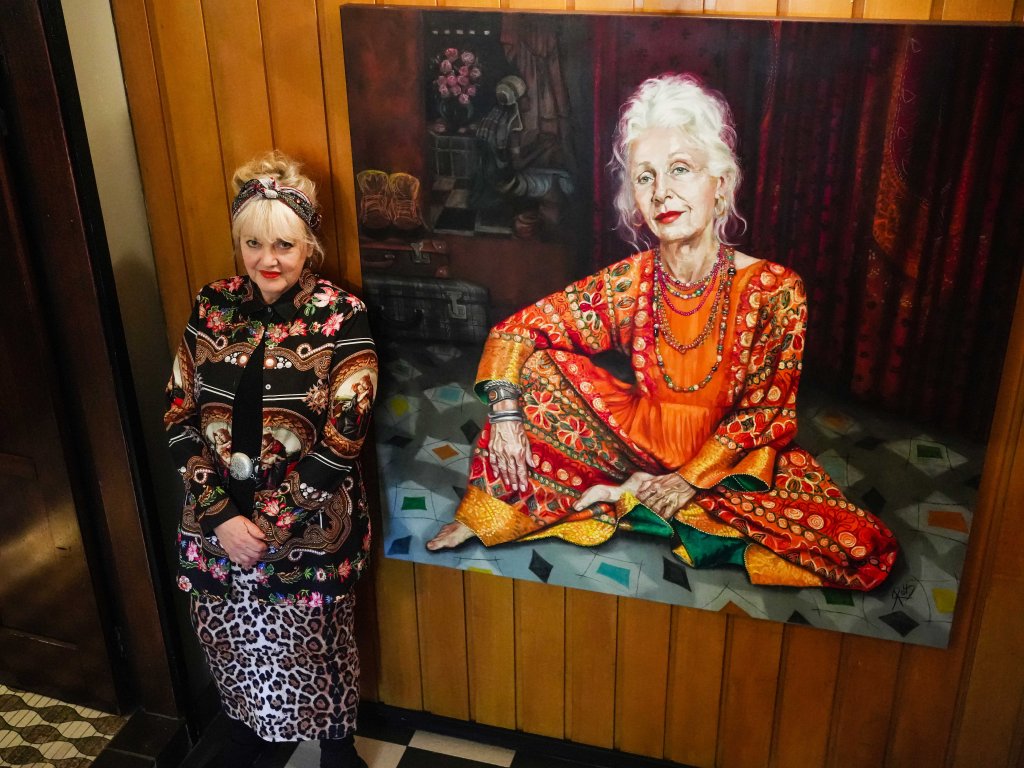
“Painting someone’s portrait is an intimate thing, in a way that everyone has a persona that they want to present to the world, but what I like to do is get a little bit beyond that to show another side.”
With some people it’s very difficult, they have this, ‘I’m alright, everything’s fabulous’, but I don’t want to show them in a negative light, I want to show a softer side. One of the greatest compliments I was told of a painting is, ‘you’ve seen into my soul’ and that makes me emotional because I think I put a lot into painting a portrait. I take it so seriously and every portrait I paint is just an absolute joy to show the person to the world. My grandchildren also make me emotional when they sit and want me to draw them. There’s one which won an award, it’s of my eldest grandson where he’s just sitting there really still, which I called ‘The Good Boy’.
DAM: That’s beautiful. Robyn, tell us a bit about your Charity Work, how does it feel to give back through art?
RR: I’d like to think that everyone’s got a social conscience. When our kids were little at school I used to help raise money for the school. That’s sort of how it started and it made me feel how great it was to be helping these kids raise money for things such as computers or grass for the lawn, but also then through my paintings, just helping with the charities because you’d go to a function and you’d see that they were trying to raise money.
RR: With Jeans for Genes, that was in 2002, I belonged to Portrait Arts Australia at the time and they used to ask for Artists interested to donate their time to paint the jeans for Jeans for Genes day, then they’d auction them off. For probably 17 years I painted and it felt really good! For Marist Youth I used to help with them because I knew someone who worked there and ran some workshops for some of the kids. That was very challenging, because they were children that had been removed from their homes due to issues at home and were now living in a communal house. A lot of them were very, very troubled and I found that hard because I am a more demonstrative person and some of these people you couldn’t go near, they found it hard to interact, but I felt good trying to help them just get their minds into a positive place and encourage them to express themselves through their paintings.
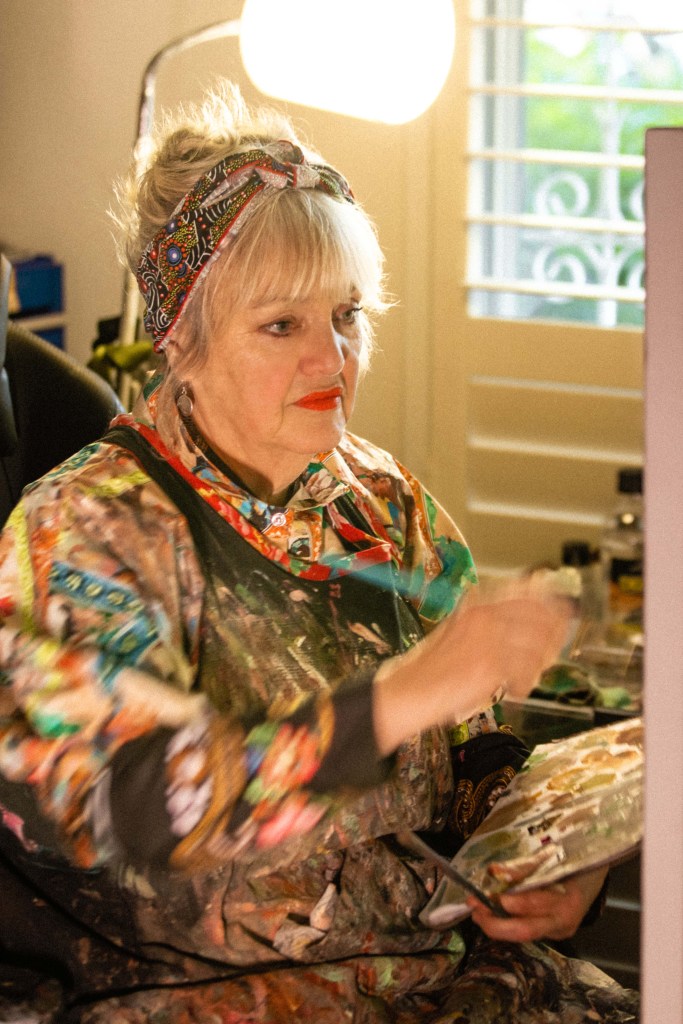
“…They were children that had been removed from their homes due to issues at home and were now living in a communal house… I felt good trying to help them get their minds into a positive place and encourage them to express themselves through their paintings.”
Friday, Professor Rodger Reddel, Director of the CMRI, had seen my painting of Sarah Jane in the newspaper and sent me a lovely message. I was so unbelievably overwhelmed. He’s such an important man and he just sent me another message saying, ‘thank you for all the years that you’ve supported us’, and just the feeling of having someone so important and busy and doing amazing things – thank you, is hard to describe really, it makes you feel very humble.
DAM: If you could give some words of wisdom to anyone considering a career in Art, what would you say?
RR: I think the first positive step is to pick up a pencil, get yourself a little pad and start drawing or sketching. Don’t be worried about what anyone else says or thinks, it’s never too early and never too late. I used to teach people who had careers as medical professors, architects, all sorts of people who had finally retired but always wanted to do art and never had the opportunity. Try fitting in 20 minutes, 10 minutes a day to pursue it. Not everyone’s gonna resonate with what you do. As a younger person, I used to spend all this agonising time thinking about how people didn’t respond to my art or how it didn’t sell at a show or whatever, but then you get much thicker skin over the years and you realise that’s exactly it – not everyone’s going to love it, buy it or dislike it. There will be however, many who do find that it resonates with them.
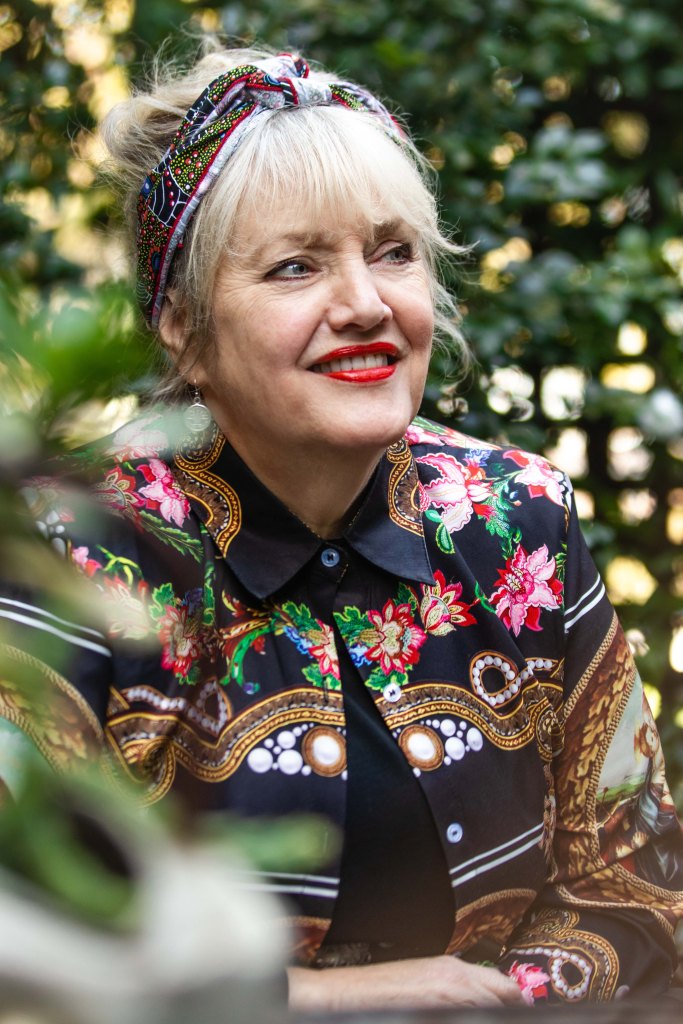
“I used to spend all this time thinking about how people didn’t respond to my art or how it didn’t sell, but you get much thicker skin over the years and you realise that’s exactly it – not everyone’s going to love it, buy it or dislike it. There will be however, many who do find that it resonates with them.”
There is no better feeling than someone loving what you do – and buying it. Also, not everyone’s going to make a living off of it. Its not easy to be an artist, you have to be persistent and not give up, over the years I have had market stalls, made things, hats, ceramics – all to make a bit of money to support my paints and materials. I kept going to the point that now I can actually charge a decent amount for a painting. Ultimately, it’s not a matter of selling it, it’s not a matter of even having it you know, mass produced, it comes from the feeling of satisfaction from what you create. Also, just not comparing yourself to everybody else or anybody else. You’ve gotta choose what path you want and what makes you happy. The satisfaction I get now is feeling that you’ve done something you’re happy with and that you feel that you’ve told a little bit of a story. Make it, gift it, donate it, find a way to get it out there and then do something positive with it. One of my favourite quotes is from Kofi Annan, who said, “Art doesn’t just speak to people, it speaks for them”.
.
Find Robyn & her work here:
Website: https://www.robynross.com.au/
Instagram: https://www.instagram.com/robnross/?hl=en
.
.
.
Published by Sangeetha Gowda & Marshall-Weishuai Yuan ~
Photos by NOAH Creative ~
 Diversity Australia Magazine
One thought on “Robyn Ross: Art, Inspiration & Painting stories beyond the surface”