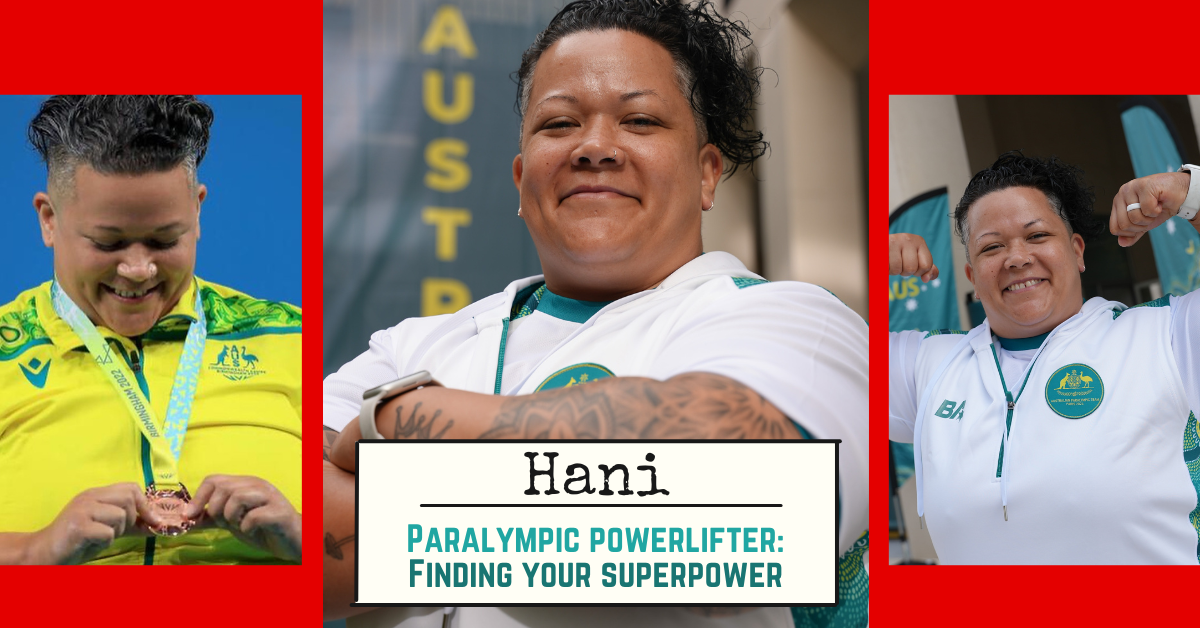
DAM: The journey to competing on the Olympic world stage is no easy feat, taking years of dedication, work and mental stamina. Hani Watson is no stranger to this, diagnosed with bilateral metaphyseal dysplasia at birth, Hani has overcome intense physical and mental barriers to find herself a 2024 Australian Paralympic Powerlifter at 41. Also known as Queen by her peers, Hani was born in NZ with Niuen/Scottish heritage, and grew up in Australia. We spoke on her journey to the Paris Paralympics and finding purpose through hardships.
DAM: Hani, what was your upbringing like?
HW: How much time have we got? I am the youngest of 5, the only girl and the baby of the pack. Unfortunately my parents split when I was about 4. I lived mainly with my mum but there were times I lived with my dad as well, and I would travel far and wide to visit both parents as dad worked in the mines. In his spare time he was a natural bodybuilder so I spent a lot of time sitting around in the gym from about 3 or 4 years old with my dad. Despite not having great mobility, he always pushed me hard to achieve the wonderful rewards. He loved hiking with me in the Springbrook mountains, visiting the waterfalls. We had to walk for an hour, which was hard for me, but the reward was always fantastic. Both my parents taught me how to enjoy the free things in life, like hanging out in nature, going to the beach etc, and always working hard.
DAM: What was school like for you?
HW: There was a time where it became hard for my mum to look after so many kids, so I ended up living with my eldest brother. However due to his house not really allowing me to continue through high school, I had to take matters into my own hands. At 15 I had to figure out how to live in a shared house, obtain Centrelink and budget my way through high school.
“The one saving grace I had was my high school principal handing me the keys to the school gym, allowing me access to train, shower and get ready for school there. If I didn’t make the right decision, my life may have taken a different turn.”
HW: After school I moved to Sydney, and just explored, worked and discovered who I was as a person, before the time came to look after my dad back in Queensland. He passed away at 42 from a very rare cancer, I was 17 at the time. I remember fondly how we would talk about all the magazines I would look through from the Joe Weider Olympia days, and how he would bicep curl me for fun as a kid. After dad’s passing, I travelled the roads around Australia before resettling back in Queensland, I can’t stay away from Queensland, it’s home to me. I took a road of working and working out, that was my life, and also trying various sports until my legs gave up. I was born with a congenital birth defect. To me growing up, I wasn’t seen as disabled or taught to be seen like that, it was just my normal. Until later in life, when surgeons said it wasn’t normal. My legs were breaking down from the inside, so you can’t see it despite the bowing, but the bones were giving up. I went through multiple surgeries to fix the issues and try to delay the inevitable – which is replacing my knees with special custom knees which are like those used in prosthetic legs. I’m not a fan of surgery but I know it’s the pathway I have to take. So until that day happens, I use crutches and a wheelchair, and I manage my life by balancing work, my sport, doggos, and good people around me.
DAM: Who would you say your hero is?
HW: I believe the ones who are closest to me in my life are my heroes, from my partner, to my doggo’s, to my parents, my closest friends and even my superhero coach. There are people who I have met and briefly gotten to know their stories and how they have had to overcome some incredible hurdles in life, they too are my heroes.


DAM: Can you tell us about bilateral metaphyseal dysplasia and how it affects you?
HW: My bones at birth were severely bowed, they stayed bowed for a very long time, lots of surgeries to fix minor things. When I was 9 they started the process of removing my growth plates which is why my legs are so short. At 31 I spent 6 years having surgery to fix each leg one by one, to straighten them and realign my weight distribution from the hips down to my ankles. Unfortunately it all failed and the supportive metal work has been taken out as it stopped me from walking. Today, I have osteonecrosis in my right leg with a growth to the back of the knee that needs to be removed, as it’s causing significant pain and swelling by pressing against a main artery. Post Paris, I am most likely having to prepare for surgery again.
DAM: How do you deal with the pain?
HW: The pain I experience is pretty next level, the surgeons were baffled as to why I wasn’t begging them already to try and fix the situation. But I have always managed to keep medications at bay with balancing a special type of breathing and yoga I learnt from a yogi once called Svaroopa Yoga. Plus I had a goal to get to Paris and wasn’t going to let up. I knew I could manage it, this is why you see me in a wheelchair and some days on crutches and maybe some days without, there is a fine balance of me having to try and manage the pain, the swelling, and needing to use natural movement to manage it all. My legs are very weak some days, the bone fusion in my knees have restricted movement and also I’m suffering from atrophy.
DAM: We can’t even begin to imagine what it’s like to deal with all this, it’s such a testament to your incredible mental strength to push through. How does this affect your goals as a powerlifter?
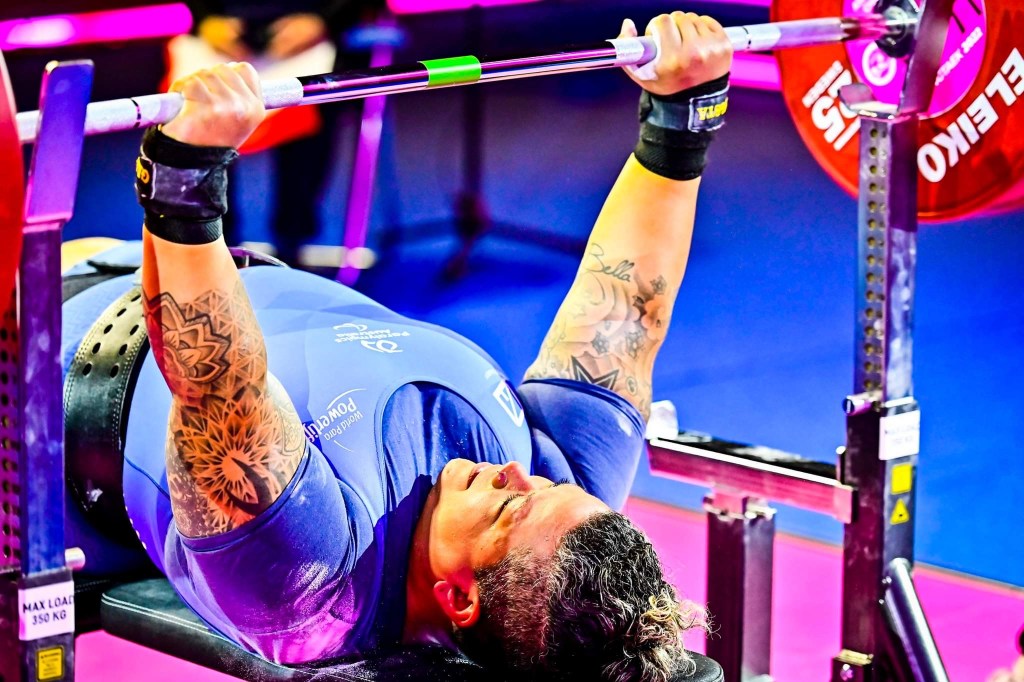
HW: I always wanted to be a weightlifter! When I would watch the games with my dad I would be glued to the TV watching it with him. Dad did have to say it wouldn’t be something I could do, so he introduced me to his world of lifting weights differently and because I have always been in a gym, my favourite movement was the bench. My dad strived to have a big chest like the greatest, Arnie, and I always strived to be strong like my dad. He had a huge chest and massive arms, so naturally benching became my go to every time I went to the gym. Powerlifting didn’t come into my life until post surgery in 2018, I used the compound lifting to try and help grow my femur bones when they were failing to grow themselves after surgery, the collagen in your bones that naturally throw to close a gap, well mine weren’t doing that and we thought I was going to lose a leg until I asked my surgeon to let me return to the gym and let me try. Then I found out about competitive powerlifting and then para-powerlifting in 2021. At this time that’s when my coach swooped into my life as he saw I could bench and I had buggered legs, and now we are here in Paris, crazy right!
DAM: That’s an amazing turn of unexpected events and congratulations for qualifying for the Olympics. Can you run us through the moment you qualified at the Para Powerlifting and how you felt?
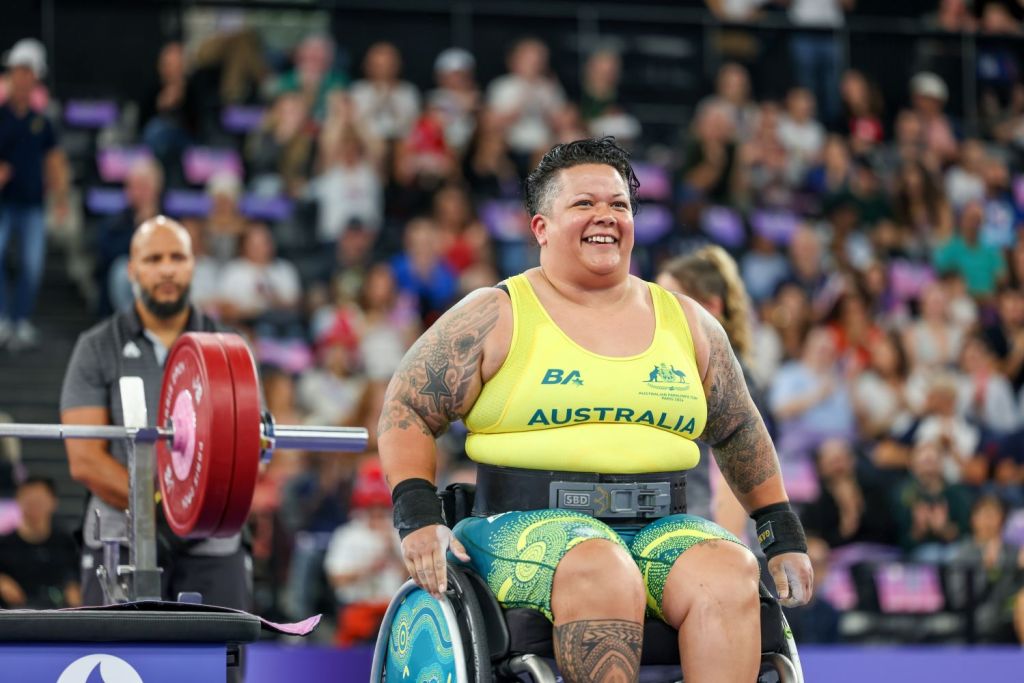
HW: It was a massive sigh of relief, a moment of calm, a moment of pride, and a moment of realisation knowing my mumma said she would be there on that platform in Paris, so I’ll be right there with her. We have worked so incredibly hard to get here today. Most people take a few cycles to get to the games. I did it in 3.5 years and in a strength sport of all sports, so I believe my mumma when she said I found my talent, my super power.
DAM: How’s your prep going so far for the Olympics?
HW: Honestly I didn’t have the greatest run in, I almost died twice. No kidding. I am allergic to a couple of things but I had two anaphylactic reactions in two months leading into Paris which landed me in ICU. What has caused it – we haven’t figured it out yet and more tests will happen when I get home. My body took a big hit, and mentally after the second one I was scared, so instead of being in the village we went north of Paris to a beachside town, Berck Sur Mer. They have an Olympic training facility here and once held the European para powerlifting championships so it’s got everything I need to train, and a beach to help keep my mind calm. I have a strong spiritual connection to the water, and I am so incredibly grateful that Paralympics Australia has organised this time for me.
DAM: That’s so intense and frightening at the same time. It seems like you’ve faced so much adversity even getting to where you are now. What would you say is the reason you do what you do?
HW: Ensuring you are creating a legacy for others to watch and follow, creating a vision and hope for others, that despite your legs might be shonky, your upper body might be banging, so why not use it to get stronger?
DAM: Do you think your condition made you stronger as a person?
HW: 100%, my parents never focused on that, they focused on what I could do, and that’s what has made me the person I am. I will always give something a go or try, and if I can’t do it that’s ok, I know a way to do something else and make that my strong suit.
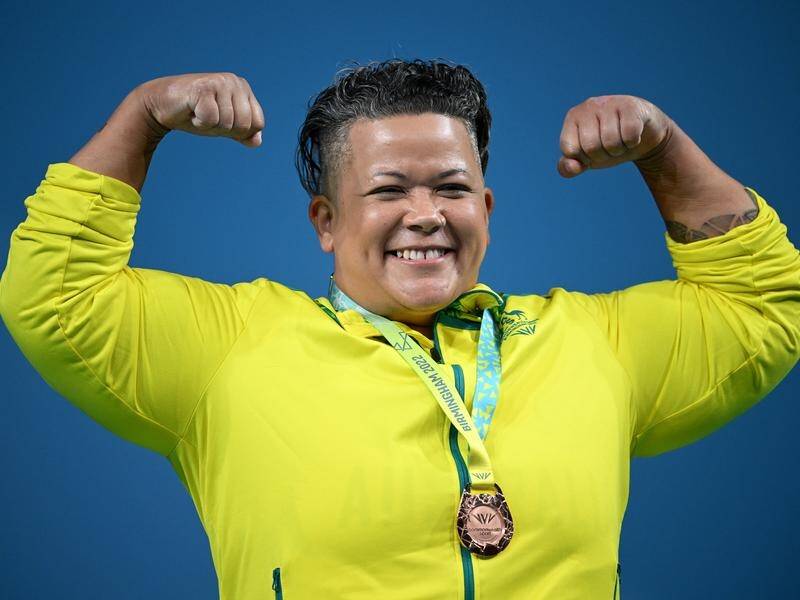
“Not everyone is going to be talented at everything, but we all have at least one superpower. You might find it when you’re super young or like me, now. This month I will turn 42, and I’m only just getting started in my powerlifting career!”
DAM: Well said! Any final words of advice?
HW: You can’t predict the future, but you can always create it. Always try something, anything and everything. Never leave anything to question.
.
.
Find more on Hani here:
Instagram: https://www.instagram.com/benchqueen/?hl=en
Website: https://linktr.ee/benchqueen
.
.
.
Published by Marshall-Weishuai Yuan & Sangeetha Gowda
 Diversity Australia Magazine