
DAM: The theatre production of ‘Guards at the Taj’ is currently touring nationwide and delves into friendship and the impact of patriarchal power on the world around us. We spoke to Director Bali Padda on discovering this work, the process of bringing it together and what he hopes audiences will take away from the show.
DAM: What about this script drew you to wanting to Direct? How did you first discover this piece?
BP: I actually discovered this script, I think around 2016, when a friend of mine actually emailed it to me and said, ‘Bali – you should play one of these roles, you should produce this work’. And I remember reading the script – it had just won the OB Award [Off Broadway Award] for Best New Play, and I read it just thinking, wow this is fantastic, but it was a little too much for me to handle at that time. It was really interesting and really complex, I wasn’t ready for it. Fast forward to late 2020 when I was catching up with Joanne Kee, [creative and executive producer of National Theatre of Paramatta]. We were catching up about the state of the industry and she mentioned that she was looking for a director for a play to program for 2021, and so we talked about it and I said I was interested in pursuing theatre directing. I had a little bit of a dabbling in some community theatre a couple years before. So yeah, she said would you consider Guards at the Taj? I was blown away, I thought it was a fantastic idea. I remembered 5, 6 years earlier, reading this play, it was sitting in my draw, and it felt right this time to be able to do it and do it justice.
DAM: What’s the central story and message of Guards at the Taj?
BP: At its heart, this particular show is about friendship. What really drew me to it was the exploration of male friendship. Ultimately it is about the affect of power, and I would say patriarchal power and the ego-lead decisions that patriarchal power has over the world that impacts humanity and impacts the beauty of the world. And that impact is felt in the most minute of relationships such as this friendship between two guards standing at the gates of the Taj Mahal. They’re kind of the lowest social status of that world.
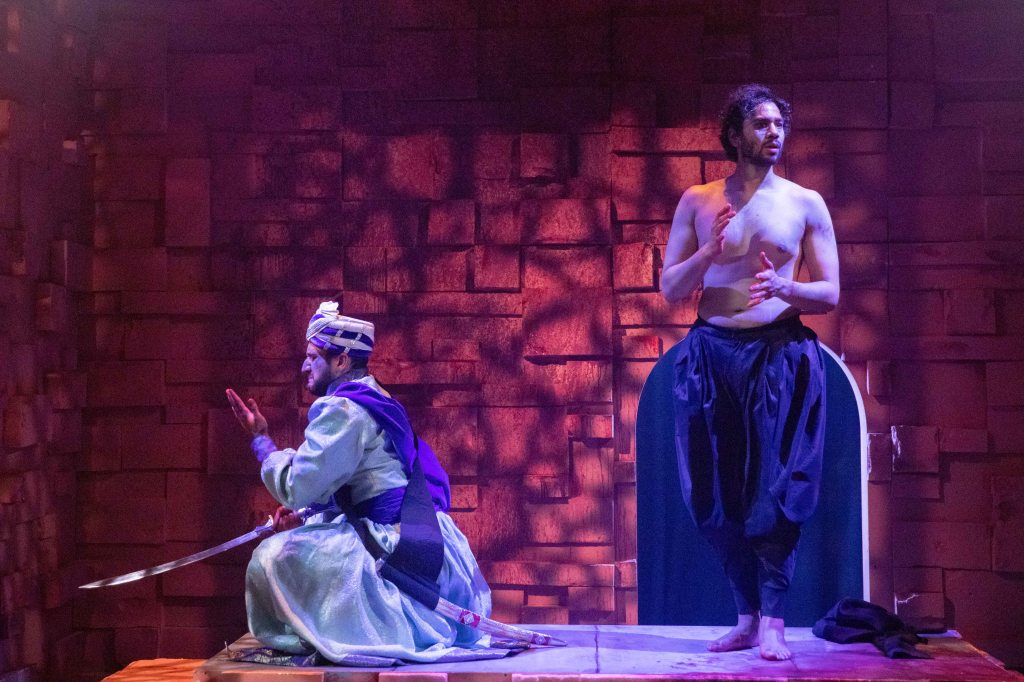
“What really drew me to it was the exploration of male friendship. Ultimately it’s about the affect of power… and the ego-lead decisions that patriarchal power has over the world and the impact on humanity. And that impact is felt in the most minute of relationships such as this friendship between two guards standing at the gates of the Taj Mahal.”
DAM: What’s been a favourite moment for you in the process of bringing this piece together for a second time?
BP: Yes a second time! I think it’s been really wonderful reconnecting with this story and this world and I continue to be really proud of the production that we made in 2022. It was a great achievement, I had a really great time, I felt awesome [laughs]. I really loved how we created this work and this piece, so it was really nice to step back into that world and feel proud again and feel this love for what we created. But it was also the relationships that we created with the team. It was really great to reconnect, especially with the cast members Akkshey [Caplash] and Idam [Sondhi], who are basically like little brothers to me.
DAM: As a multi-hyphenate creative, did Acting or Directing come first for you? What led you to the other, was it passion or necessity or something else?
BP: I actually started out as an Actor in this industry. I thought that that’s exactly what I wanted to do when I realised that I loved having an audience [laughs] – that perhaps I should pursue this as a career. I had stepped into producing theatre and some online content over the course of several years since I became an Actor. And then it was actually by necessity that I stepped into the role of Director for a show that I co-created and co-produced called ‘Sunderella’, which is a Queer, Bollywood adaptation of Cinderella. I had handed responsibility over to my collaborators to Direct or find a Director as I was busy producing another show, and they called me a week into rehearsals after doing two or three sessions with the Actors and said that they were having difficulty with Directing this work and could I come in and do a little bit of workshopping. So I came in and actually really enjoyed the process of collaborating with the Actors, coming up with access to story and character, exploring the emotional and psychological wants and needs of the characters and where the scene was going. So I fell into the role of Directing that production which we did in 2017 for Mardi Gras and then in 2023 we brought it back for Sydney World Pride for a sold out season. So that was actually how I fell into Directing and it was a few years later that the conversation with Joanne came about.
DAM: Do you find Directing and connecting with Actors easier, being an Actor yourself?
BP: I definitely do find directing and connecting with Actors easier, well it depends though what I’m comparing it to as I haven’t directed Actors without being an Actor. I do find that I come from a place of performance first and I love the technical and creative aspects of theatre as well – I love producing theatre. But, and this is some of the feedback I’ve had from other creators, is that often a lot of things get left to the last minute – such as how does an Actor perform this costume change during the scene or how do they deal with the set, which is only really dealt with at the end when you have all the costumes in place. But I really focused on making sure that the technical aspects of being an Actor where being managed throughout the rehearsal process. I come from a creative decision-making place of what would this be like for Actors who have to perform character choices, creative design choices and costumes on this set? So a lot of that problem solving was dealt with much earlier in the process. I utilise a lot of the coaching and methodology that I’ve had and received from Directors as an Actor. So yeah, I think I do a really great job with that.
DAM: How do you think we can better foster stories from parts of Australia (such as Western Sydney) that don’t often get a chance to shine outside of their areas, into more mainstream spaces?
BP: This is a big question and ultimately it comes down to investment, and developing and offering the same opportunities to people from aspects of Australia such as Western Sydney to have access to the same kinds of opportunities that everyone else has, that often find themselves more predominantly in the mainstream space. I think investing and spending time investing in communities is really important, but also listening to what communities want to do and how they wanna tell their stories and what kind of stories they want to tell. I have had the privilege of having someone in a position of power saying, ‘I see the potential in you and I could hand you an opportunity, what support do you need?’ And that’s what Joanne Kee did and I’m very grateful for that and I think a lot of people are out there who have such untapped potential that just need that support.
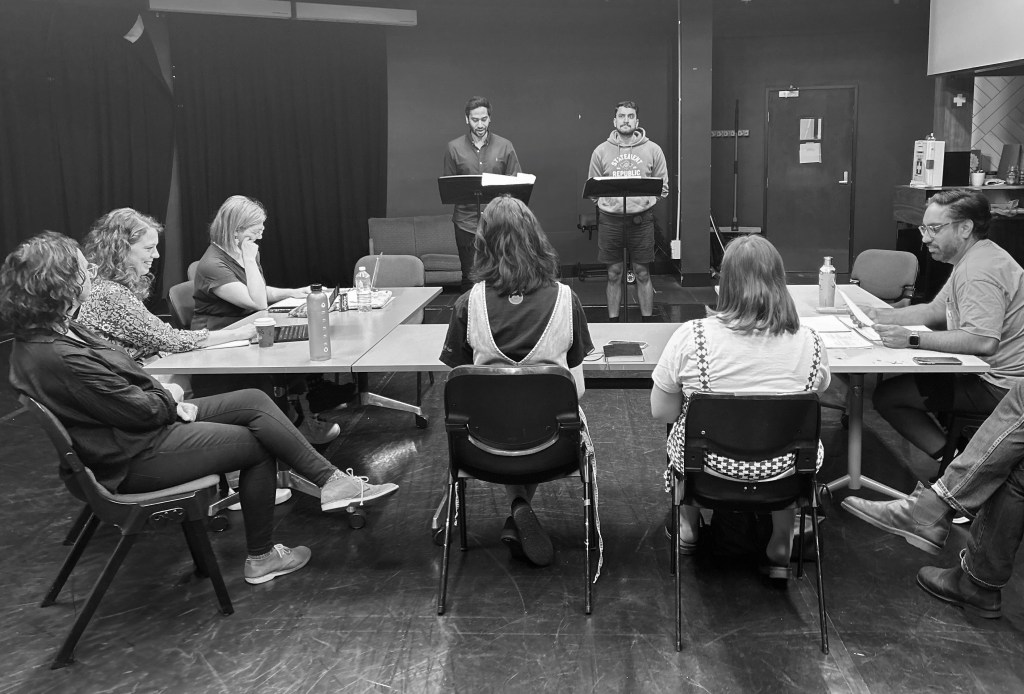
“I think a lot of people are out there who have such untapped potential that just need that support.”
And I think we’re all a little bit, potentially impatient and just need things to be done and solved quickly and come to the table with these answers and its a very sort of commercial, capitalist sort of imperialist way, a colonial way, of looking at creating art. I think if we also export the idea of tearing away some of those requirements or expectations and just letting things blossom in their own time, with the appropriate structure around, I think we can do so much more to profile those stories.
DAM: What do you hope audiences will take away from the show?
BP: I hope they come away with a really moving experience about friendship, about love between new friends. I’d like to see people question their place in the world of how decision makers come into power and the kind of decision makers they are. I’d also love them to come away with feeling that they had a really great experience, an immersive experience that perhaps was a little bit uncomfortable but was also entertaining and transported them to a different world.
DAM: If you had any advice for others who may be in the position you were when you started in this industry, what would you say?
BP: I would say, lead with courage and optimism. I know that I started with a naivety, courage and bold optimism. But also, spend time finding the right kind of information and access the opportunities that are out there. I guess as easily or as quickly as possible, I didn’t do that, but it was one of my regrets that I just sort of decided to jump on a plane to London and turn up and become an Actor with no connections, no relationships, not even knowing what to look up. And it just so happened that there was a callout in a local newspaper in the area of London I was living in that were looking for performers for a theatre production. And it started for me over there. I think continue looking at and absorbing content. Watch things that are not great, watch things that are great. Search into who made them, who was involved? See if you can find their own social media channels or some articles or podcasts about how they do their craft. Just connect with the local industry as much as you can, agencies, support the arts. Do whatever you can to make work and just keep trying.
.
.
Guards at the Taj is currently touring nationwide, including the Illawarra Performing Arts Centre, Wollongong from 19-21 September.

 Diversity Australia Magazine