
DAM: In our December, Christmas issue for DAM, we sit down with Artist, Designer, Vegan Food Creator & Mother of 5, Susan Gowda. When speaking to Susan, she radiates a hopeful, positive and kind nature, making it hard to imagine all the many things she’s been through in her life – from getting married at twenty-three to her husband of a different culture, raising her first two of five children in London through financial hardships, physical and mental health difficulties growing up, including being diagnosed with Type 1 Diabetes in her early forties. Yet she carries it all with a persistent, unwavering faith and optimism for the future. In this interview, we speak with Susan on growing up on a farm and in Alice Springs, her journey into art, fashion and food, and the power of faith, God and purpose.
DAM: Susan, great to sit down with you today. Where about did you grow up?
SG: I was born in New Guinea, surprisingly, but I was only there as a young baby. Then we (my family) moved to Australia. My dad is English, and he was the manager of a copra plantation in New Guinea, that’s where he met my mum, who is a doctor, and she was from Sydney. Originally she was working in New Guinea, so that’s where they met. He said he used to always go to her doctor’s surgery, and say, “I’ve got heart trouble” , “I’ve got a heart problem” [laughs]. I don’t really know what happened after that, but they started seeing each other. They got married in Sydney, then they went back to New Guinea and then that’s where I was born. After a few years we moved to Southern Queensland, near the border of New South Wales, on a farm in the Goomburra Valley that had 2,000 acres or something. We had animals, crops; it was a really big farm. My dad came from a family of farmers in England as well.

“After a few years we moved to a farm in the Goomburra Valley that had 2,000 acres or something. We had animals, crops; it was a really big farm. My dad came from a family of farmers in England as well.”
DAM: So your mother is a doctor, your father was a farmer – where would you say your passion for art came from?
SG: I’ve always liked art for as long as I can remember, anything from drawing, painting, cooking, decorating, dancing, sewing – any creative thing I liked from a very young age. When I was six, my family moved to Toowoomba, which is in southern Queensland. It’s quite a cold climate, not typical of a Queensland climate, but they have this place called the Garden City in which they have the most beautiful gardens there, I think that’s what really inspired me creatively. My family used to drive around and look at them because my parents liked gardening. My dad was a good gardener, so they were always looking at all these gardens, and I think that was very inspiring because I was also really into fairy tales and fairies. I remember my grandmother always told me about fairies so I wanted to be a fairy and live in one of those gardens.

“When I was six, my family moved to Toowoomba… They have this place called the Garden City in which they have the most beautiful gardens… My family used to drive around and look at them, I think that’s what really inspired me creatively… I wanted to be a fairy and live in one of those gardens.“
DAM: That’s sweet. Did you live there long?
SG: No, so after a couple of years we went to Alice Springs, in the very centre of Australia. My mom got a job there because in Toowoomba, she hadn’t been working as a doctor, and my dad only got jobs like bricklaying because the farm wasn’t really making any money. So my mum got a job there in Alice Springs, and part of the job was being a flying doctor around all the remote communities, especially Indigenous communities up there.
DAM: What was it like growing up in Alice Springs?
SG: It was really amazing actually. It was a very interesting place because, obviously, Central Australia is in a desert area, but Alice Springs itself is not like a desert; it’s like a little oasis in the desert. It’s actually surprisingly green, and things grew really well there. We had a big house there and we had a really nice garden. We had a huge tennis court, it was a grass court. Then we had a big orchard in the back with mandarin, orange, and lemon trees, and an above-ground pool. Then we also had a separate – almost what looked like a granny flat-type building. It was that big. But it’s where the previous owner had put an entertainment space. He’d made his own bar and everything, but that actually became my playroom, for me and my brother and we kept all our toys there.
DAM: What was school like?
SG: I didn’t like school. School was not good for me there. It wasn’t like Queensland, where all the kids behaved themselves really well, listened to their teachers. In Alice Springs, it was totally different. They did not listen to their teachers. They didn’t have much discipline or respect. Sometimes they’d just go running around the classroom, they wouldn’t even sit down and be quiet! The worst was in religion classes – I really used to like to listen because the teachers would tell Bible stories, but I couldn’t in Alice Springs because most of the kids would be running around the room shouting and screaming and just being silly. The kids did that to the religious education teachers because they came from outside the area. See, with a regular classroom teacher, they would behave a lot more, but with a person like that from outside, they wouldn’t behave. And it used to frustrate me because I could never hear what the teachers were saying.
DAM: You must have felt quite alienated, how did you cope?
SG: Yeah, well, I always did – like I said, drawing, but also I really liked cooking, I really like baking. Even though my mum didn’t like cooking or baking. Maybe that’s partly why I started that too because she would make cakes and stuff, but they weren’t very good! Then she made cookies. And she made these cookies she called rock cakes. And literally, they were like rocks. You could have thrown them at somebody and hurt them. [laughs]


“I really liked cooking, I really like baking. Even though my mum didn’t like cooking or baking. Maybe that’s partly why I started that too because she would make cakes and stuff, but they weren’t very good!”
DAM: Hahah! Ouch! So you started developing a passion for it?
SG: Yes, from a young age I always liked to experiment with food. I remember when I was really little, my brother and I would make dinner because my mum was at work. I was only probably about seven and he was about five and we didn’t know how to cook then. We got a big bowl. We got everything we could find in the kitchen and everything we could find in the cupboard. Like, you know, cornflakes, Vegemite, tomato sauce, baked beans – whatever was in there. Just put it all in the bowl and mixed it. And then when my parents came we said, ‘Look, we made you dinner!’ They were horrified. They said, ‘What the heck have you done?’. And after that, my mum bought us a cookbook. And it had simple recipes for children. Like, how to bake biscuits and cakes and stuff. So after that, I started doing proper things. I really always liked sweets. I always liked chocolate and things like that, and ice cream. So, yeah, I had that.

DAM: Did you have any other artistic passions?
SG: I did dancing too from a fairly young age. I started doing jazz ballet. They had a youth center there and it was really good. They had so many activities for kids. And so they had all these different dance classes, gym, theater. So I started with jazz ballet and then I really liked it which led to real ballet. I became really passionate about that and that training has kept me fit all these years.

DAM: You didn’t continue doing ballet?
SG: Well, I wanted to continue. But when I left school, I went to Brisbane and then I went to art college. I did it for a while, but it was really hard to have the time to do that and also to find the right place. Some of the teachers I encountered were just horrible. They were very weird as in, trying to mess with your head psychologically. Some teachers are people who wanted to be professional dancers but they failed because of an injury or they couldn’t make it so they became teachers. I think some of them had a chip on their shoulders and because of that, they weren’t very nice to their students. I was knocked back a lot, although they would compliment me and say things like ‘you’ve got the most beautiful feet and legs and everything for this’, but then they would just keep putting me down all the time. After that I had no confidence at all, they really slammed my confidence. Even in Brisbane, I tried to find different teachers but they’re all were kind of the same, always knocking me all the time and it was just really horrible.
“I was knocked back a lot, although they would compliment me and say things like ‘you’ve got the most beautiful feet and legs and everything for this’, they would keep putting me down. After that I had no confidence at all.”
DAM: Do you think if you had good teachers, you might still be dancing?
SG: Yeah. Because I really, really was passionate about it. But I don’t mind because the thing is, it’s kept me fit, it was a discipline. At that time it was the 80s, which was obviously a big fitness era when I was a teenager to a young adult. I really got into the fitness craze in the 80s and I did aerobics and all that which I was really good at. It really did build up my discipline to regularly train. Training has kept me fit because even now I do exercise regularly just to keep fit and it’s that discipline that gets built in, so I’m always thankful for that aspect.
DAM: So after you graduated and eventually, you went to art class. Was there kind of a choice between – do I continue doing ballet or do I kind of delve into cooking or something arts? Like what happened during that period?
SG: Well, see, it’s interesting because I went towards art and one of the main reasons is because there was one teacher in high school who actually really encouraged me with the art. She said I was very talented and I should pursue it seriously. She was the first teacher who actually gave really positive, strong encouragement, because I’ve actually had a lot of bad teachers, at all three schools, who would knock my confidence all the time. This one teacher, however, like she just said how great I was at doing this. I believe it was her continual encouragement and always telling me that I’m good at something, you know what I mean? Because even with art, although I did it and all that, I never really thought I was that good at it, to be honest. Because obviously sometimes people say, ‘Oh yeah, that’s really good what you did’ and stuff like that but there was no real positive encouragement that was sort of continual. from someone, such as an art teacher, it meant a lot.
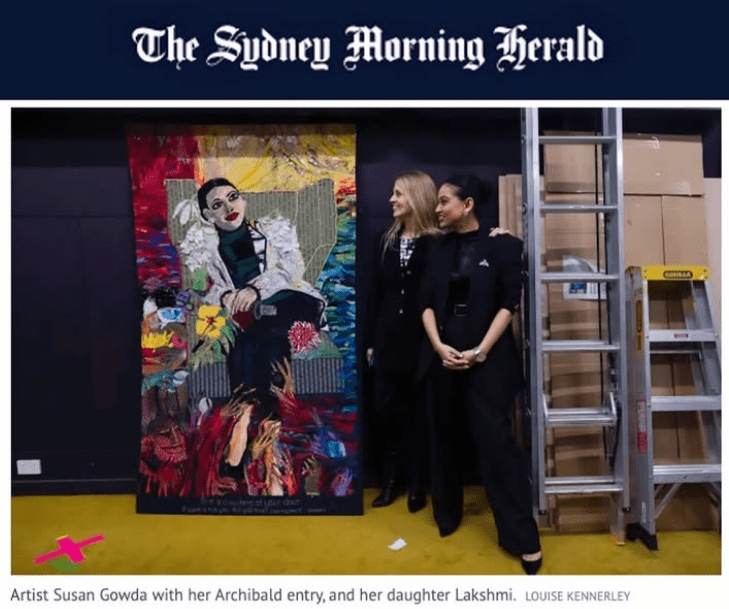
“I went towards art because of a teacher in high school. I never really thought I was that good at it. She was the first teacher who actually gave really positive, strong encouragement… She said I was talented and should pursue it seriously.”
DAM: Did you not have support from your family?
SG: When it came to art they always said I’m good at it, but I don’t think they ever really wanted me to do a career in it, particularly my mum. She said, you’ve got to get a ‘real job’. And she goes, ‘Oh, you have to be really good to do that’ and I thought, ‘well, I thought I am good’. My dad was the more supportive one. He is a creative person himself, because he was really good at creating, making beautiful things out of woodwork and all that. He used to make the props and the costumes when I did dancing. He would make all of that. They always called on him to do it because they knew he was really good at it. Unfortunately my mum was the dominant person in the house because she earned the money. She was the doctor, like the one with the high qualifications and all that, which in those days, it was unusual for a woman to be in that position. But in this case, my dad was at home. And he was doing more household stuff and stuff with the kids. And she was at work. So, kind of, what she said was what went on.
DAM: Well, we understand that during art college, you ended up dropping out and moving to London. Tell us a bit about the decision behind that?
SG: Well, art college, it didn’t work out the way I thought. A lot of the people were mature age students, and I was very young. And even though there were others my age, I was, you know, quite an innocent child, I didn’t know much of the world. Other people my own age knew a lot more than me, but I found it difficult in that world of older people or more mature people. So I didn’t get along well with people and I used to end up skipping class and I didn’t even get all the work done. At home, they didn’t want me to pursue it anymore anyway. So I said, ‘You know, I’ll go to Teacher’s College’ because, obviously, I didn’t want to be a doctor, which they would have preferred, so I went to Teachers College. That’s where I met the girls who became my flatmates. They all attended a church there and so I started going with them to church. I’ve been to church, but I hadn’t been in quite a long while ever since the end of high school. So it got me back into church and that actually really reestablished my faith and relationship to God, which had always been there from a very young age. But obviously, as a teenager in high school, you get into other stuff. But they got me back in, which I’m very thankful for. Because I was involved in that, I got involved in a missionary group who took missions to India.
DAM: How was that?
SG: It was extremely difficult going to India for the first time, it’s really like landing on another planet. Anyone who’s experienced that will understand what I mean, but if you haven’t, you won’t really understand. There’s so much going on, honestly, it is totally overwhelming and I was too afraid to leave my hotel for the first few days. So anyway, I was involved in that group. They had similar mission groups in Europe and the UK and well, a part of being involved in that group, I lived with them. They had a communal house in Brisbane. And so I lived with that group and we did other things. One thing I did was volunteer teaching English to migrants. And most of them were from Latin America, like El Salvador and Columbia, and places like that, Chile and . some were from Spain. So it was mostly Spanish people or Spanish-speaking people that I was helping and I got to know them so well.
I really liked the people, especially the men, because I was looking for a husband actually. That was something that was in my mind. And some of these mission trips went to Spain. I really wanted to go to Spain because I thought, ‘I really want to marry a guy from Spain’ because I like them a lot. So anyway, they started out in the UK, and I had this really strong desire – that I had to go to London as I felt I was going to meet my husband over there. It was almost like knowing something. Do you know what I mean? It’s kind of weird, but I kind of knew that’s what was going to happen. And I knew I had to get there.
My grandmother passed away, which was probably a year or so before that, and she’d left me some money and it was enough money to get over there. But I didn’t want to go alone. Thankfully, I had this good friend, a guy, who also really wanted to go there, but he didn’t have the money but I had enough money for both of us so it helped us both. I also didn’t want to go alone so that worked out. We went to London and had to share a room in someone’s house, because rent’s so high in that city. That’s the way I lived most of the time I was there, because that’s what was affordable. Then, obviously, I’d run out of money, so I needed to get a job. I found this job with an Australian cleaning company based there in London, so I started working with them, because they mostly took Australians. That’s where I met my husband. He was like a supervisor with that cleaning company. They put you on different jobs each week and you got to go to a different location. It was mostly cleaning building sites. I went to one, and he was there as a supervisor.
DAM: What was your first impression of your husband?
SG: Well, it’s funny because when I got off the train to go to the place where they were working, I saw him up the road near the van where we had to go. I just saw his hair, it was really black and really curly, he had really nice hair. You remember Michael Jackson in the 80s? And Lionel Richie? That was the kind of hair he had. And I thought, ‘oh, he’s got really nice hair, I’ll have to talk to him’.

“I got off the train and I saw him up the road near the van where we had to go. I just saw his hair, it was really dark and curly. Remember Michael Jackson in the 80s? And Lionel Richie? That was the kind of hair he had, and I thought, ‘oh, he’s got really nice hair, I’ll have to talk to him’.”
So I went and then we met and we just spent the whole day talking instead of working. But the funny thing is he’s Indian and it wasn’t in my mind to marry someone Indian because like I said, when I went to India, it was too overwhelming. I really liked him, he had a great sense of humour, just a lot of fun, easy to get along with. Even though we hardly knew each other, it was like we’d known each other a long time. We got married only four months after meeting, which is very fast, really. But we just knew, that we were supposed to be together, so why delay it? Because he would have had to return to India as his visa in London was running out. And he said if he went back, they were already in the process of arranging him a marriage. They were lining up potential brides that he would have to meet and decide between. And he didn’t want to do that because he knew some of these people, he knew who they were and he didn’t like them anyway. So he said, ‘I don’t want to have to go back because they’ll force me into a marriage.’ And since we’d already decided, well, we’re going to be married at some point. Ideally I would have liked to wait until he came back to Australia, to have a proper wedding. But because of that, we decided just to get married then so that he was able to stay in the country. And also me, because I’m British as well as Australian, I have two passports. So he became a citizen of the UK because of that too. So that made it easier and also to come to Australia. Since then we’ve had 5 children together.
DAM: What was it like raising five children?
SG: It was very rewarding, but it was very challenging. For most jobs or careers, you have to do some kind of training. Sometimes it’s very intensive training, but for being a parent, there is no training and you just get thrust into it. Personally, I never had anything to do with younger children except briefly when I was teaching, so I really didn’t know what I was doing. I had to learn on the job and I feel like I made a lot of mistakes, especially with the first two, but with the other three, I was probably a better parent by then.

“For most jobs or careers, you have to do some kind of training. Sometimes it’s very intensive training, but for being a parent, there is no training and you just get thrust into it.”
When I got married in London it wasn’t that common then for two different cultures to marry so when people would see us with the children, they would come over to see what the children looked like. I remember once when I took them to the park by myself, this person asked me, ‘Are you their nanny?’ Because they see me, a white person, with two like Indian-looking kids. So they just assumed I was a nanny, and there were things like that. But apart from that, I personally didn’t even think about it too much. I think at the end of the day we’re all humans, we all have the same kind of feelings, emotions, wants, likes, dislikes, and all that. Like, we’re all pretty similar, no matter what culture. When I lived in Alice Springs, there were a lot of cultures there. It’s the kind of place people came and went a lot and there are actually many cultures in that place, surprisingly. So I mixed with a lot of cultures even there. From a very young age, I just kind of accepted people for who they are. I didn’t really look at, oh, you’re from this culture or whatever.

“I think at the end of the day we’re all humans, we all have the same kind of feelings, emotions, wants, likes, dislikes, and all that. When I lived in Alice Springs, there were a lot of cultures there, so I mixed with a lot of cultures. From a very young age, I just kind of accepted people for who they are.“
But it was interesting being with someone from another culture, whose family’s in another country, because we got to visit his family in India and experience more of their culture and obviously, I’ve learned how to cook Indian food. And I now cook it very well. People are often surprised! Obviously, their art, their fashion, their fabric is really inspiring to me because as you know I love the art and the fashion side and they have a very rich culture when it comes to artistic expression.


“Their [Indian] art, fashion, fabric is really inspiring to me because as you know I love the art and the fashion side and they have a very rich culture when it comes to artistic expression.”
DAM: So we know faith is something that’s very important to you as a person, tell us more about this.
SG: Faith is very important. It’s always been important in my life. Because, like I said, from a very early age, I had the desire to know God. And I always knew God was there. I didn’t even question, ‘Is God real’ or anything, I just kind of knew from very, very young, and it’s not because I was even brought up in a religious way. We did go to church when I was in primary school but in those days, it was like a done thing, especially in English culture. You’d just go to church on a Sunday. That’s what everyone did.
So that’s what we always did and I went to Sunday school and learned about the Bible and all the biblical stories. I really enjoyed that and I just always was connected to God, but then obviously in high school, I didn’t go to church then because they’d stoped going by that point anyway. But I had a friend who was part of a youth group, so I went with her for a while to her church but then some of those people were not very nice to me so I stopped going. When I got older and I went to college, like I said I went to church with my flatmates and then that really strengthened my faith and because of that, I got involved in missionary work. Then when I went to London and I got married, I didn’t pursue that because we started a family, but it’s always been very important.
I’ve been through a lot of struggles because obviously when we got married, it wasn’t easy, we didn’t have much money and we had a lot of financial issues. Apart from that, I had a lot of health problems. I always had health issues and over there, I had an extremely bad health issue where after my eldest child was born, I got thyroid disease and no one picked it up. They thought it was postnatal depression but when it went on and on, a doctor actually realised it must be something else. She looked into it. She discovered it was a thyroid problem, which sort of mimics postnatal depression in a way and it can be triggered by a pregnancy, which was what happened. That was making me feel crazy. It’s really hard to describe, but it gives you such extreme anxiety. You feel like you have to run away from something when there’s nothing to run away from, like you’re going to a mental prison. I felt like I was going to end up in a mental asylum or something because it was just so bad and I couldn’t even sleep. I was sleeping maybe one hour a night. I was just going crazy. And in that time, it’s the faith that got me through. Honestly, I thought I could probably die from that.
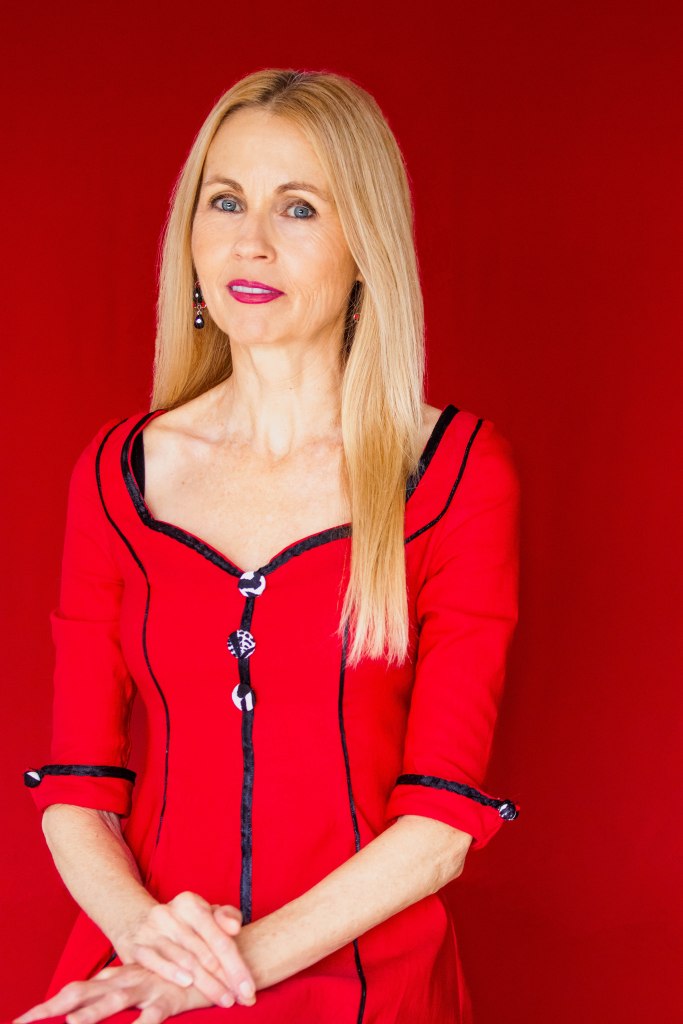
“It [thyroid disease] gives you such extreme anxiety. You feel like you have to run away from something when there’s nothing to run away from… I was sleeping maybe one hour a night. I was just going crazy. And in that time, it’s the faith that got me through.“
We went to a church there and it was really good. There was a British African pastor there and he was very good, very tuned into God. He came and visited a couple of times because he knew I was having a lot of trouble. He gave me a word from God each time and it really strengthened my faith because he said that God said, ‘you will not die from this. He will heal you, you’re going to be fine’. Like he’d give a really encouraging word that was very appropriate to me and he didn’t actually know all this. He knew I was unwell, but he didn’t know the extent of it, so what he was saying was – what God told him to say, because I didn’t tell him personally all the details but what he said really was what I needed. That really strengthened me and helped me to get through that. I eventually got medicine to help me with it but obviously it takes time to work because it has to build up in the body. It was a few months after that it really started to stabilize. It was the faith that got me through that because also at the time I had a young baby, Lakshmi [eldest child], who was very young so I had to look after a baby as well. It was very, very hard but it’s been points like that in my life where faith is the only thing that has got me through it.
DAM: How would you say someone could strengthen their faith in trying times like this?
SG: A really good one is reading the Bible and learning verses from the Bible, and you don’t have to be a Christian to read the Bible, you can be anybody, even an atheist. This is something I used to always do. You get a verse, you repeat it in your head. If you’re facing a very stressful situation, if you repeat Bible verses in your head over and over, it gives you the strength and the courage to get through things. I learned this from a teacher when I was about 11 who came to the school to do Bible classes. Thankfully, by then, the kids had calmed down, and she made us all learn Bible verses. She said, ‘I’ll give a prize to the person who can memorise them all at the end of the term’, so I memorised the whole lot. I was the only one who could remember all of them so I got the prize and it was a bookmark which said, ‘God’s way is my way’ on it. I always kept that bookmark and remembered, but from her, I remembered the importance of learning the verses and ever since then, I would repeat them in my mind if I was in a stressful situation. That’s what I did with my own children, I used to have them all learn a Bible verse every week. They would have to say it at the end of the week so I would know whether they had learned it or not and sometimes I’d give them lollies or some treat for learning it.
“A really good one is reading the Bible and learning verses from the Bible, and you don’t have to be a Christian to read the Bible, you can be anybody, even an atheist. If you’re facing a very stressful situation, if you repeat Bible verses in your head over and over, it gives you the strength and the courage to get through things.”
I mean, obviously, God can speak through anything. He could through something you see on the street, like a sign, or from reading something, or watching a movie, or anything. God knows what speaks to you. But I find, you know, just reading, like I said, reading the Bible, getting verses out of it and learning them is actually a powerful thing. But even when it comes to that, any positive affirmations or positive quotes, even if it’s not from the Bible are great. A lot of these positive quotes actually can be found in the Bible. People don’t even know that. They go around quoting these things and they don’t really know where they come from. But a lot of them do come from there so if you don’t even want to read the Bible, if you read positive quotes or positive messages or affirmations, like, you know, always saying positive things about yourself and about others – it gives you more confidence. Even if you don’t feel like saying it. I actually have a book where I’ve written down affirmations and words from the Bible and I read it every day. If you get a habit of doing things like that every day, it goes into your mind and it goes obviously into your subconscious mind so that in the future, if you were to face some really terrible situation, it would probably come to you in that moment. That’s a way to do it.
DAM: Do you think faith also ties into purpose?
SG: I’d say that it’s very important you have a purpose because that really keeps you motivated and on track and learning and growing and pushing yourself forward. There’s a verse in the Bible that says, ‘without a vision or without a purpose, the people perish‘, which is very true. You won’t necessarily die physically, but you will die mentally, emotionally, and spiritually if you don’t have a purpose in mind. Obviously, sometimes you don’t know what that is, but it’s usually tied to something that you’re good at or something that you enjoy doing or you feel passionate about, that’s usually a key to what your life purpose is. If you tune into that kind of thing and feel a real desire to keep doing that thing and that you feel like it’s doing good for you and doing good for other people, then that’s probably what your purpose is.


“It’s usually tied to something that you’re good at or something that you enjoy doing or feel passionate about. If you tune into that kind of thing and feel a real desire to keep doing that thing and you feel like it’s doing good for you and doing good for other people, then that’s probably what your purpose is.”
Make sure that you value yourself, respect yourself. You’ve got to respect and value others, obviously, but you have to remember you have to do it for yourself as well and value your time and make sure you’re spending your time on things that are moving you forward to that purpose as well. It is important that you use your time wisely because obviously no one lives forever on this earth. The main thing I’d say is to connect to God. A lot of people say they don’t believe in that or they have other beliefs but you know everyone can connect to God in some form. It’s important to try and get that connection however you think you can do that. Like I said, I’m very inspired by nature and I often find myself just going out into the natural environment because God is the ultimate creator and he created all the natural world. So, if you go out in God’s creation and just absorb yourself in it, that’s often a way you can connect to God.
“A lot of people say they don’t believe in that or they have other beliefs but everyone can connect to God in some form. It’s important to try and get that connection however you think you can… If you go out in God’s creation and just absorb yourself in it, that’s often a way you can connect to God.”
DAM: Any final words of advice?
SG: With the world we live in, social media is a great tool because we’re actually living in a time that it’s actually a big asset. Although a lot of social media is not great, you’ve got to use it to your advantage because when I was young we didn’t have all that. But now you have a tool in which you can reach the entire world really quickly and easily. This is a great way to showcase your passion out there, what you want to do. You can start putting bits out on social media so people get to see it and know who you are and what you’re doing. You’ll probably find many of those people will like it and support it. They may even want to donate to it or help you out in some way if they really like. So I think it’s a good thing to make use of these days because it’s there.
If you have a dream, like a strong dream, then that obviously would be your life’s purpose so you shouldn’t give up on that, even if other people don’t encourage you or say it’s stupid or you should do something else or something else is better or whatever. Don’t get discouraged by that. You’ve got to keep that in your mind if you really want to do it, you know, because I have faith in God and I believe God wants me to achieve these certain things and will help me. That does give me confidence, even though a lot of people, even now, people say, oh, ‘that thing you’re doing is sort of dumb’. Like ‘where’s it going to lead?’ ‘ How do you think that’s going to go anywhere?’ You don’t and can’t focus on that because you have to face the fact that we live in a negative world. The world is geared to negativity, it really is. And you have to work hard at being positive. You’ve actually got to really work hard at keeping on track, keeping a positive mind, keeping your goal in mind. It’s a very good strategy to write down your goals, write down what your ultimate purpose is and steps you can take to get to it. And even if those steps look kind of impossible or far away at this point, it doesn’t matter. Just do what you can with whatever you have right now because you may not even have the money or the resources to really do what you want but you’ve got to take whatever little you have at this point and do something with that.

“If you have a dream… You shouldn’t give up on that, even if other people don’t encourage you or say it’s stupid or you should do something else. Write down your goals, what your ultimate purpose is and steps you can take to get to it. Even if those steps look impossible or far away, it doesn’t matter. Just do what you can with whatever you have. You may not have the money or resources yet but you’ve got to take whatever little you have at this point and do something with that.”
.
.
.
Find more on Susan and her companies Lavender Coco Kitchen & LakshmiBee here:
Susan’s Instagram: https://www.instagram.com/susangowda_/
LakshmiBee Fashion Instagram: https://www.instagram.com/lakshmibee/
LakshmiBee Website: lakshmibee.com
LakshmiBee Youtube Channel: https://www.youtube.com/channel/UC0Bh3j3D-59KsY5hhGYUw_A
LakshmiBee Podcast Youtube: https://www.youtube.com/@LakshmiBeePodcast
Lavender Coco Kitchen Instagram: https://www.instagram.com/lavendercocokitchen/
Lavender Coco Youtube: https://www.youtube.com/@LavenderCocoKitchen
 Diversity Australia Magazine