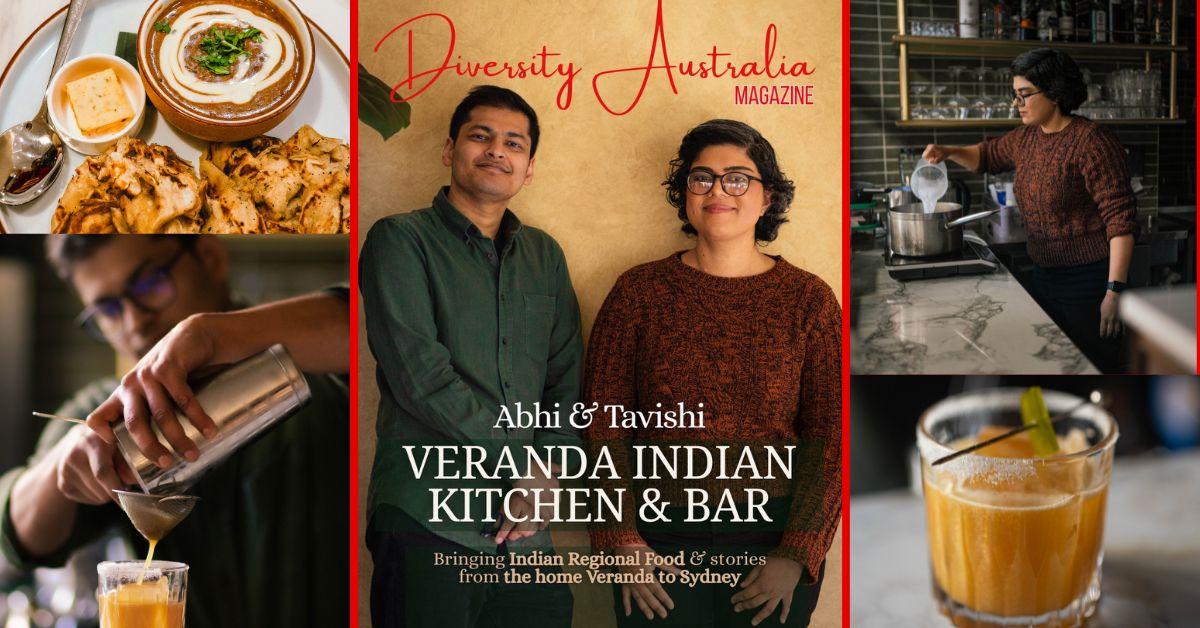
DAM: When I first dined at Veranda Indian Kitchen & Bar, I was pleasantly surprised to see dishes on the menu that I grew up eating in my own home. These were dishes taught to us by my South Indian father, ones I’d not commonly found in other Indian restaurants that I had been to. Browsing through the many options, from all different regions of India, I was warmly greeted by one of the owners – Tavishi, who told us the stories behind these dishes, and behind the name, ‘Veranda’ itself. It was clear that this restaurant was attempting to do something new, to bring back the ‘experience’ element of dining that was somewhat lost after covid, whilst opening up Australian palettes to a diversity of authentically traditional foods eaten across India.
We chat to co-owners, Tavishi and Abhi, on their desire to bring ‘Veranda Indian Kitchen and Bar’ to life after meeting (and marrying) during covid, their favourite dishes on the menu and the stories behind them, as well as their goal through serving and sharing the regional food from their home ‘verandas’ to diners here in Sydney.
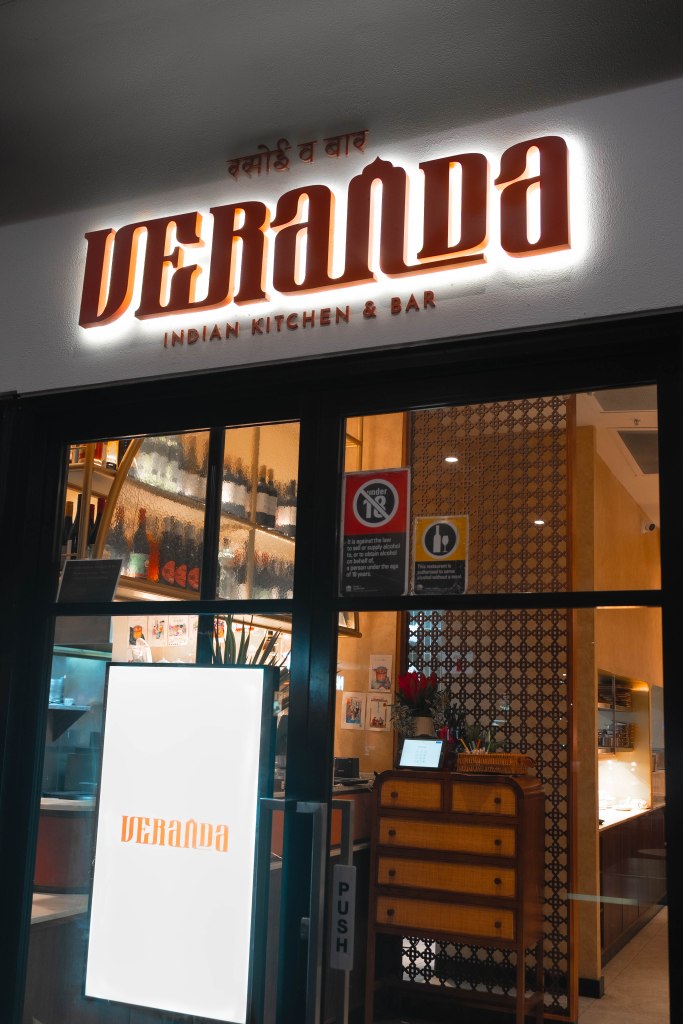
DAM: Tavishi, Abhi, have you always been in Sydney?
T: I’ve been in Australia for 10 years, I did relocate to Tasmania for a year but I’ve lived in Sydney for about 9 years.
A: I came to Australia in 2011, as a student – not from this industry at all. I started out in something very different. Over the years, different experiences lead to different paths, and here I am 15 years later, in hospitality.
DAM: And how did you both meet?
T: Abhi and I met during COVID.
DAM: Oh wow!
T: Yes, our friends still laugh about it because we’re very different people but we both love food, specifically – I love eating and he loves cooking.
DAM: Haha! That’s perfect.
T: So it worked for us. During COVID, we were each other’s plus ones and he would just cook for me. Our entire relationship is kind of built on a love for food.
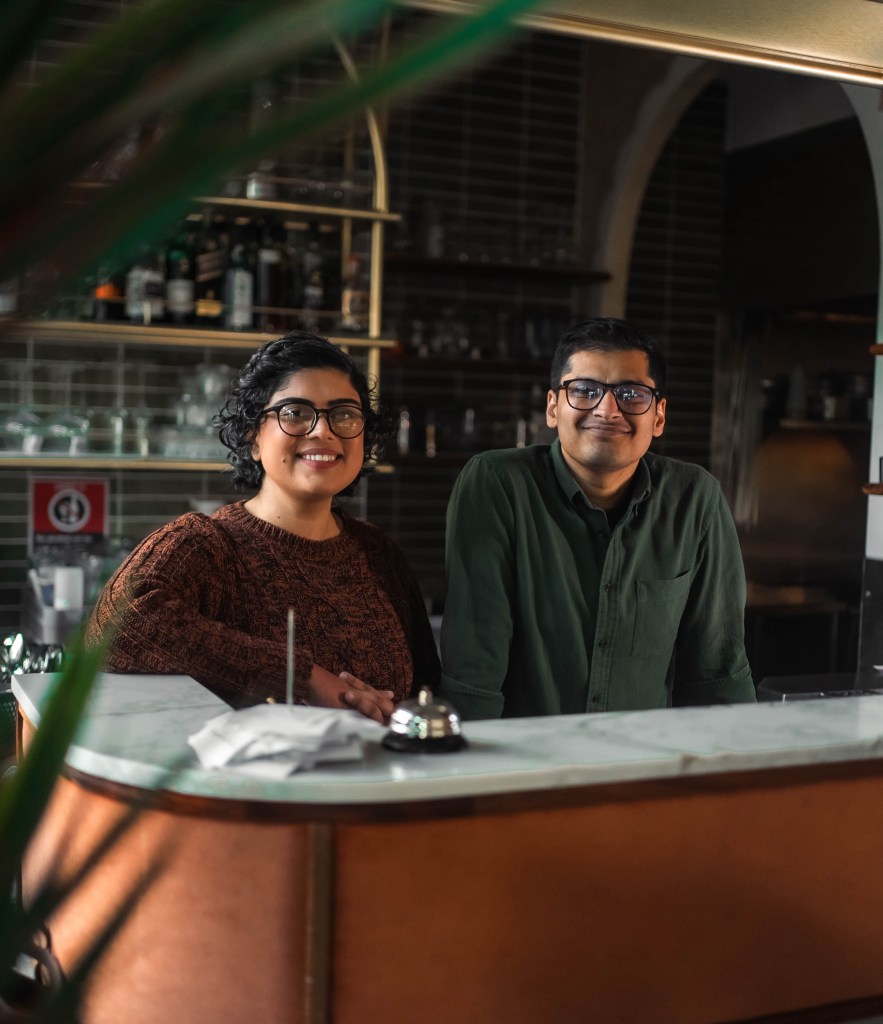
DAM: Is this what led you into the hospitality industry, or did it begin earlier for you?
T: I’ve been in hospitality all my life. Since I was 16, I’ve loved organising events. I went to boarding school and was always the go-getter—volunteering to plan things. That’s what led me to hotel school. I did my undergrad in Switzerland and spent four years organising events. My first real job was running weddings, which I loved. I briefly worked in a hotel in India too. Once I moved to Australia, I worked across stadiums and events, doing corporate catering. I even taught at a hotel school at one point. So it’s been a mix of hotels and events.
Abhi being a vegetarian made things interesting. We love food, but we don’t like cooking all the time, so we’d go out a lot—and we were often disappointed. Even though I eat everything, I still felt that something was missing in the food scene here. Once we started dating and going out together, that gap became even more obvious. Even with vegetarianism being fairly common, it felt like we weren’t being included in the experience.
A: For me, it was that, but also the ‘experience’ aspect of things. Because I’ve only lived my adult life here in Australia, I find that most restaurants that you go to, it’s centred around food and drinks, but the experience element always gets lost. People have either forgotten or just don’t care about your experience and the whole thing that goes along with more than just eating out effectively. If it was just about food, I can just be in the comfort of my own home and just get take out. I thought that experience was missing, so that was one aspect, and then the other aspect came from our cultural background. We’ve always felt that there’s a misrepresentation of Indian culture and in general. People only think of Indian restaurants as very casual takeout friendly restaurants, something that started in the UK. The mindset is it’s all just about those simple curries and a standard ten things that you can think of.
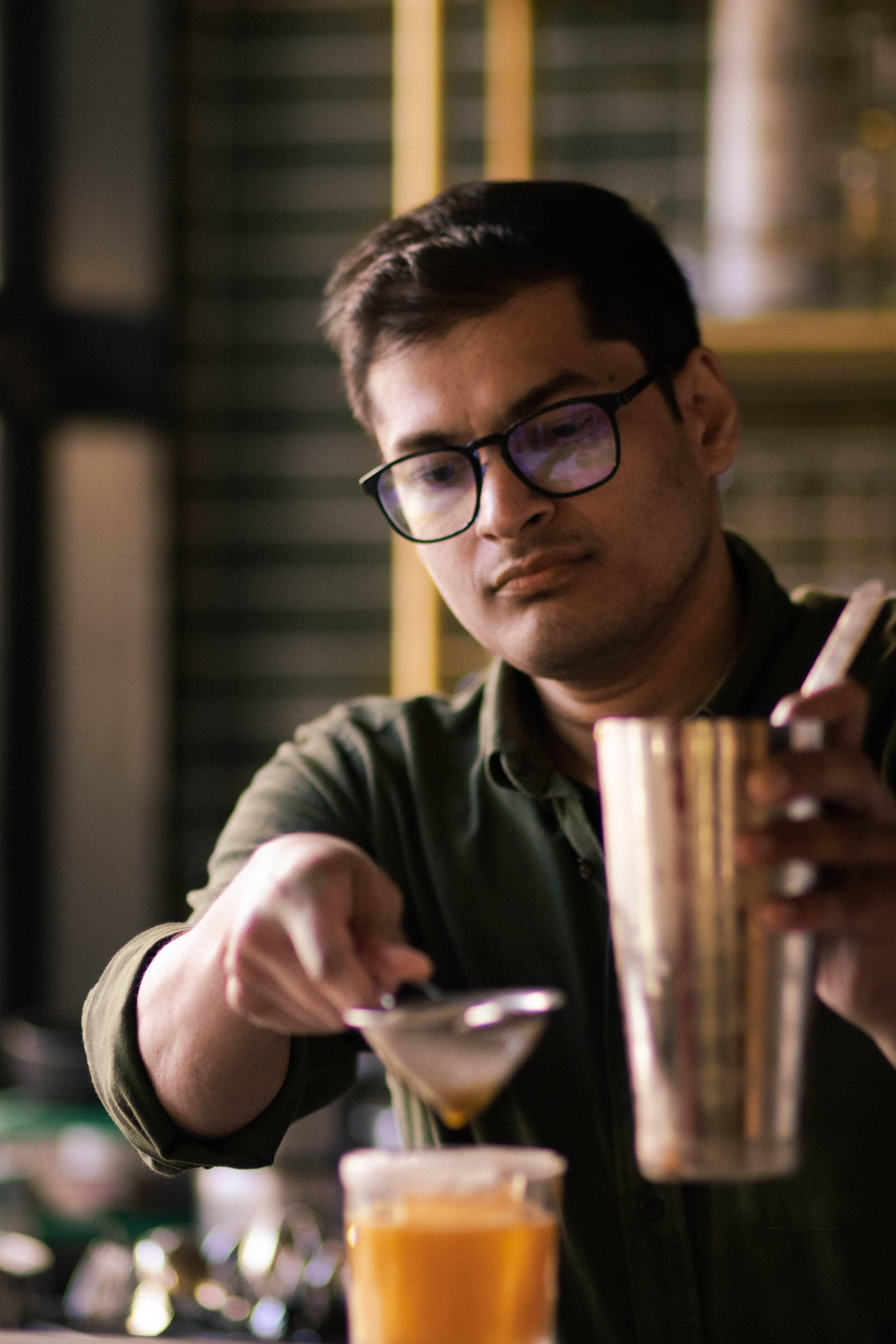

“We’ve always felt that there’s a misrepresentation of Indian culture and in general. People only think of Indian restaurants as very casual takeout friendly restaurants, something that started in the UK. The mindset is it’s all just about those simple curries and a standard ten things that you can think of.”
abhi
DAM: That’s very true.
A: Growing up however, it was very different for us, we don’t eat the kind of food that is presented in most restaurants. What’s worse is when you get to second generation kids who have grown up here, who probably had Indian parents or grandparents, they have no idea what Indian food is. A lot of times we’ve actually noticed that when we talk to people who are second or third generation, they always say ‘oh, I didn’t know this is Indian food!’.
T: The quote is usually, ‘I thought I hated Indian food before I went to India.’
A: Because it’s completely different in India. It’s sad and also frustrating at the same time that that’s happening. People like to obviously categorise and put things in boxes because it’s easier to understand, that’s human nature, but sometimes then you take the beauty out of things. What sets it apart is what makes it beautiful. If you don’t celebrate the uniqueness, the diversity in different things, it gets boring and that’s what we wanted to challenge. That was one of the biggest reasons why I actually wanted to get into hospitality because I knew that that’s one industry where you actually interact and influence a lot more people than potentially any other industry because it’s a face to face industry.
“The quote is usually, ‘I thought I hated Indian food before I went to India.’ …If you don’t celebrate the uniqueness, the diversity in different things, it gets boring and that’s what we wanted to challenge.”
Tavishi & Abhi
DAM: That’s so true because a lot of times you would ask non-indians here, ‘what’s your favourite dish?’, it’s always butter chicken. I’m half Indian so I grew up with my dad, who is South Indian, and he would make and teach us dishes from his region, which I would never see in restaurants.
T: Exactly! But there’s nothing wrong with butter chicken being your favourite, I love butter chicken, but I think that you still have to be open to other things. There’s one thing which is, diversity for the sake of diversity and then there’s another thing which is, diversity because you’re open to adventure and understanding people’s stories and nuances. In India, food is very, very seasonal as it is all over the world. It’s very regional, but it’s also very personal. When you go from food, how it’s prepared in my home and then my best friend who lives 20 metres away, the food’s going to be prepared differently because it’s very personal, it comes from your own cultural stories. What ingredients you use to spice the dish will be nuanced, it will change based on where you’ve grown up from, where your maternal grandparents are from versus your paternal grandparents. I think it’s about being open to those stories, those nuances, about not just having diversity, somehow for the sake of diversity.


“In India, food is very, very seasonal as it is all over the world… When you go from food, how it’s prepared in my home and then my friend who lives 20 metres away, the food’s going to be prepared differently because it’s very personal, it comes from your own cultural stories.”
tavishi
DAM: We love that. Well, run us through the moment you had the idea of this restaurant, ‘Verandah’. Was it always something you had in mind?
A: So to give a bit of backstory, we actually used to run another restaurant in Castle Hill. That was basically more of a training project for us. We bought an existing business that’s been running for like a good six, eight years. It was a very typical curry house where you had those standard template dishes. It was more about us, or mainly me, actually understanding how this industry operates and what the nuances are. Over there, we always felt that we wanted to do something different, we just didn’t know how. We were on the lookout for some different opportunities and when this lease space was coming up, that’s where we were like, ‘You know what? Let’s try it’, and we’re not going to do the same thing. Let’s try and break the mold. Let’s try and experiment. We didn’t want to do it in an existing business because then it felt just completely shut down. So we were like, how about we start from a new one? Because then it’s not like you’re breaking expectations as you’re setting new ones anyway. Interestingly, though, our experience has been very different around that aspect.
DAM: Really? How so?
A: A lot of people still don’t consider us as ‘authentic’ or a ‘traditional’ Indian restaurant, which is interesting because it’s not just non Indians that are thinking that, it’s actually the Indians who think that we are either a fusion restaurant or an experimental restaurant of sorts. We’ve actually had more pushback from Indians rather than non Indians and when I say Indians it’s mainly either – people who are like me, who grew up in India and then moved, or first generation.
T: I think there’s an expectation that just comes from having the word ‘Indian’ and people are like, ‘Oh, you’re an Indian restaurant or you’re an Indian restaurant and you don’t serve curries? How can you be an Indian restaurant if you don’t serve curries?’
A: Most people don’t even want to look at the menu. They’re like, oh, we know exactly what we want.
T: But I think to challenge what you said a little bit, if you pay close enough attention, the people who feel that we are fusion or defying expectations and being experimental are also people who have grown up in a box. Indians who have travelled within India or have lived in metropolitan cities that are not Delhi because Delhi, again, has a beautiful, beautiful food culture but is very limited to Delhi culture in some ways, whereas some of the other metropolitan cities, if you look at, Mumbai, you look at Bangalore, they are exposed to more types of subcultures, because Indian food also has a lot of subcultural food. And for them, it’s not experimental because they understand that these are real dishes from real parts of the country. I think that the ones who are defying us are also people who’ve just grown up eating the same kinds of food. It’s just also their comfort zone.

“I think there’s an expectation that comes from having the word ‘Indian’ and people are like, ‘Oh, you’re an Indian restaurant and you don’t serve curries?’ If you look at, Mumbai, Bangalore, they are exposed to more types of subcultures… And for them, it’s not experimental because they understand that these are real dishes from real parts of the country.”
tavishi
DAM: Linking to that then, when you both opened the restaurant, what was the general feedback of it, was it just like what you said or was there a lot of positive feedback?
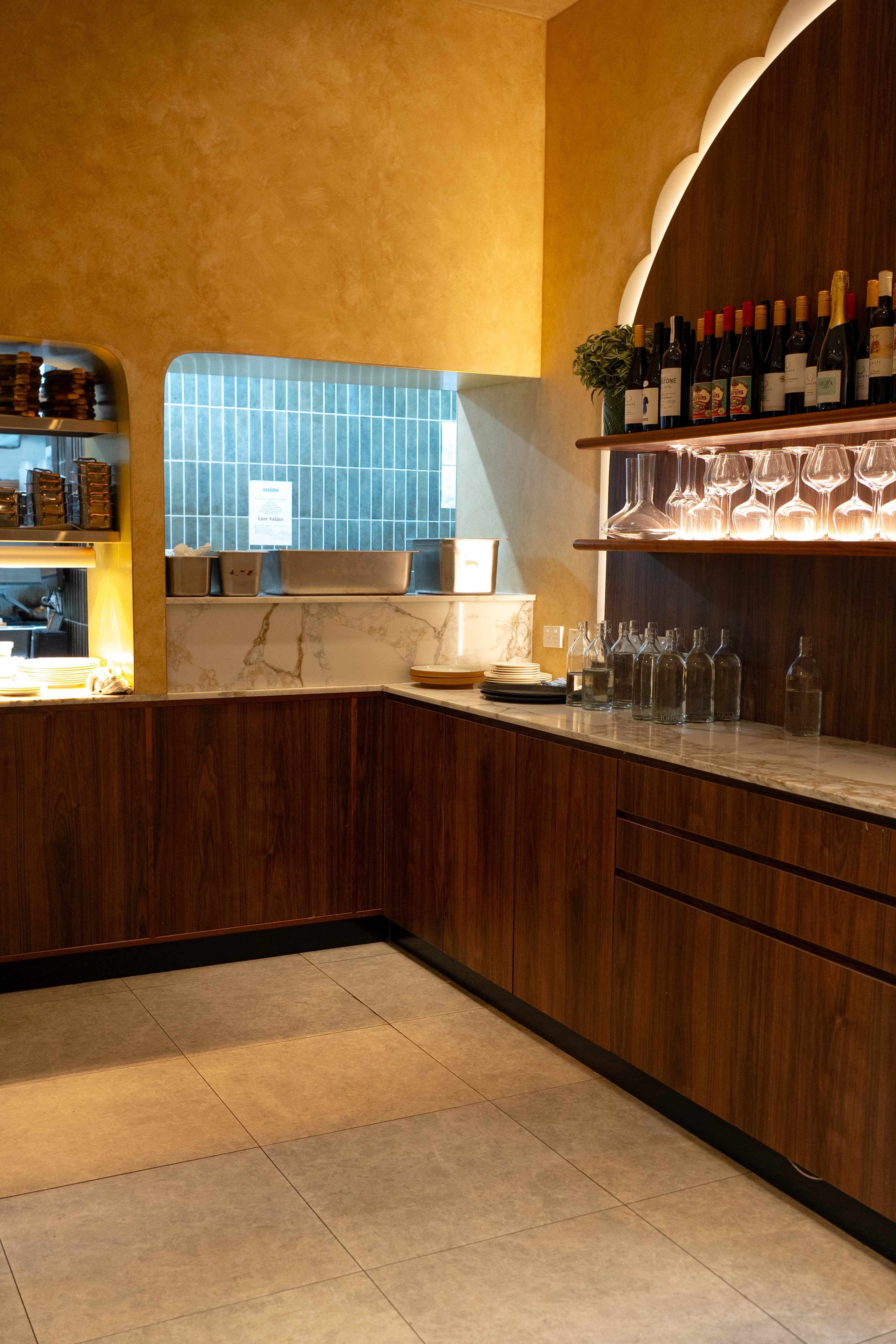
T: When we first opened, we had those beautiful table mats, we had the lamps on the tables and we just wanted to bring this warm, cosy and slightly premium vibe, the kind of place you kind of want to dress up and go to. We found that the people didn’t want that from Indian restaurants. I don’t know if it was the thing of being in shopping centres, but we actually have people saying, this is Rouse Hill, it’s not The Rocks. We would hear people saying, oh, that place looks too expensive, you know, we’re not going to go in. So I think we had to really pivot.
A: It’s partly because of the street and location and the shopping centre and that’s fair enough. But it’s in my opinion, it’s also because that’s what you expect from an Indian restaurant. This is about going back to the challenge that Indian restaurants aren’t just your takeaway friendly restaurants, sometimes they can also be upscale restaurants. I mean, we have been to upscale restaurants back in India. Why can’t we have that here?
T: Yeah, most people would tell us, ‘Oh, we can’t tell that you’re an Indian restaurant, perhaps a flag somewhere’. Maybe the garish pinks and, you know, bottling it down to a stereotype and like, ‘Oh, are you Indian? I couldn’t tell you were Indian’.
A: This is exactly how our home used to look like. We’ve just basically done an extension of where we came from or how we grew up.
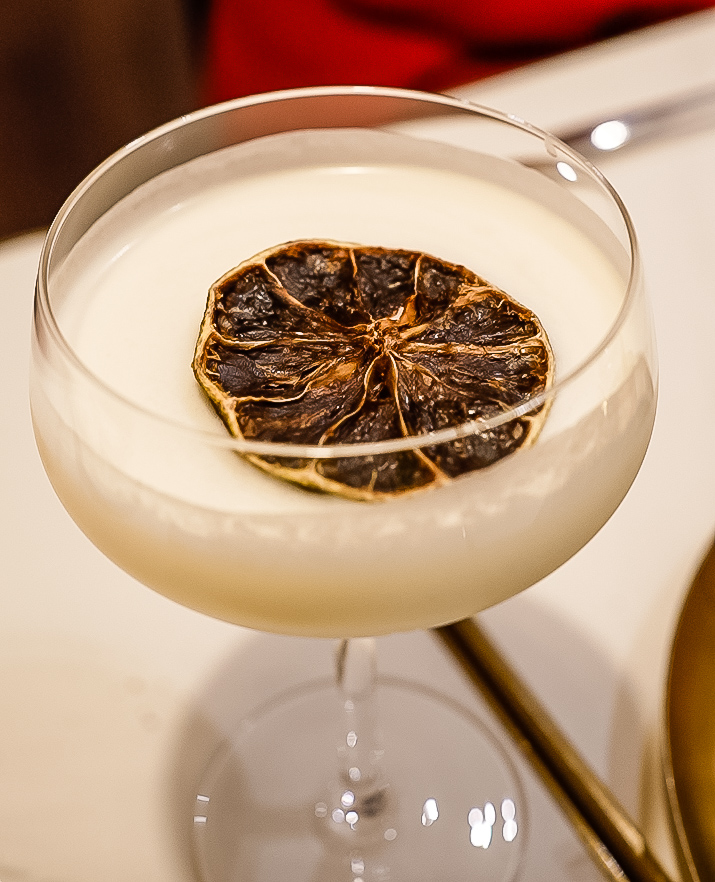
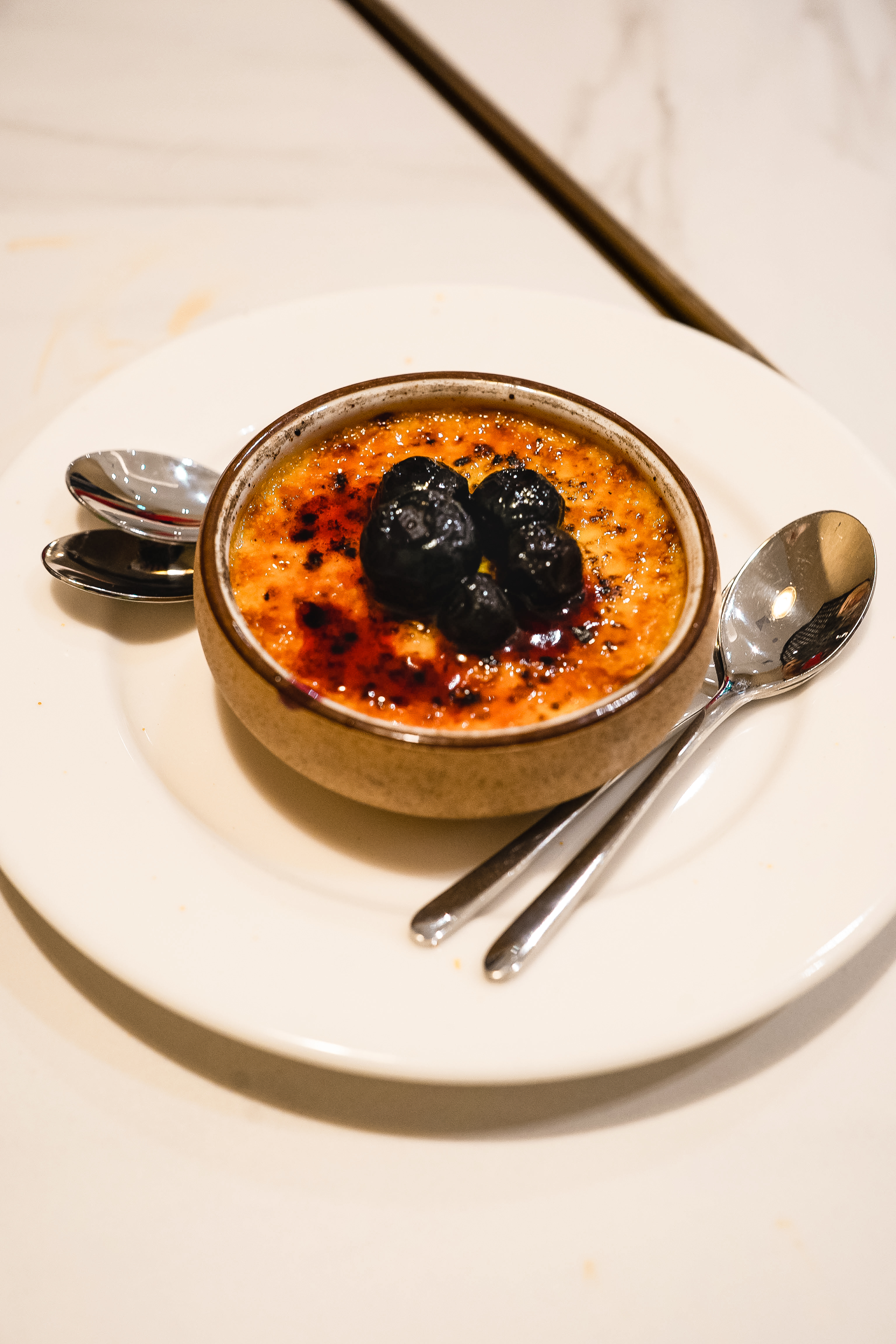
“Indian restaurants aren’t just your takeaway friendly restaurants, sometimes they can also be upscale restaurants… This is exactly how our home used to look like. We’ve just basically done an extension of how we grew up.”
abhi
DAM: We agree because there are places like this in India. Maybe the idea is so foreign to people who haven’t travelled much or been exposed to this part of India, but the more places like this that pop up, the more people will know about it. When we first walked in we were like ‘this is beautiful’.
T: I remember when we were first presenting our, you know, mood board to our designer, She’s like, this is India, but this looks like Britain and I was like, ‘Mate, where do you think they got it from? Where do you think I learned it all from?’.
A: We actually had to educate our designers as well. We actually had to tell them a lot about how Indian architecture was because we were trying to influence it from Indian architecture. The elements that we’ve tried to use in this space, the colours, the shapes that we’ve used, a lot of them have big Indian architectural significance.
T: I would laugh about it for days because the architect was like, ‘It’s like 18th century Britain but I’m like – ‘it’s 14th century India!’
A: To give our architect credit though, she actually then booked a trip to India and then she actually stayed for a few weeks where she actually explored and then she sent photos and she was like, ‘Oh yeah, I started to notice what you guys were trying to talk about.’

DAM: What we like about this place is that it’s not just a restaurant but it’s a statement of what India is really like. We don’t need all these stereotypes, like when you walk into a Chinese restaurant you don’t need lanterns and dragons everywhere. And coming back to the name, ‘Verandah’, tell us about the meaning behind it?
T: Back in the day, a lot of Indian families lived under one roof, so my childhood memories of visiting my maternal grandparents was that we would go to the village and they had this big house with a courtyard in the middle. Especially when we had big functions, like weddings, everyone would travel from where the families settled down, especially the daughters of the families who would come back with their husbands. But the families were so big that no single room could hold the entire family, so the natural way of sitting down or doing things was that you just gathered in the veranda. Imagine you’re cooking for like 30, 40 people in one go, no kitchen was big enough so everything happened in the veranda.
A: That courtyard area in India, we call it a ‘veranda’. I know other cultures, verandas are almost like balconies. But for Indian Indians it is called a veranda, that courtyard. Any common place that is open and surrounded by rooms.
“Back in the day, a lot of Indian families lived under one roof, so my childhood memories of visiting my grandparents was that we would go to the village and they had this big house with a courtyard in the middle…. That courtyard area in India, we call it a ‘veranda’… The families were so big that no single room could hold the entire family, so the natural way of sitting or doing things was that you gathered in the veranda.”
tavishi & abhi
T: Yeah so any courtyard or porch. So back in the day, obviously, you know, you didn’t really have electricity to be honest. And my grandparents’ village, even now it’s like, electricity is not there all the time. When you’re making chutney, all of this was done out in the open. As kids we would all be given tasks, for example, when we were making papadams, one nani (grandma) would roll the dough and then the next nani would be flattening it out, then there’s like a chain happening. Like you did all of these things in the Veranda and it was only when the final heat related cooking had to happen, someone would go and do it in the kitchen.
A: The whole idea was that this commonplace is where things were passed on to the next generation, you were living those shared experiences which is what makes memories. The reason why we wanted to choose this name for this space was purely because we wanted to present a third place that is neither your home nor your workplace, but a third place where you can meet and form meaningful connections and have memories with either your friends or families, or your work colleagues. It also gives an opportunity to your parents, who again, have settled here and they’ve got your first generation kids over here, but they haven’t really been exposed to the India that we knew of. Over here they’ll be able to try one of those regional dishes, which is hopefully from their region and they’ll be able to tell their kids that ‘this is what we used to actually eat when we were your age’, this is how we used to do it, these are our memories attached to this food. They can share their childhood memories to them at technically, a Veranda outside of your home, where you are able to connect with your loved ones.

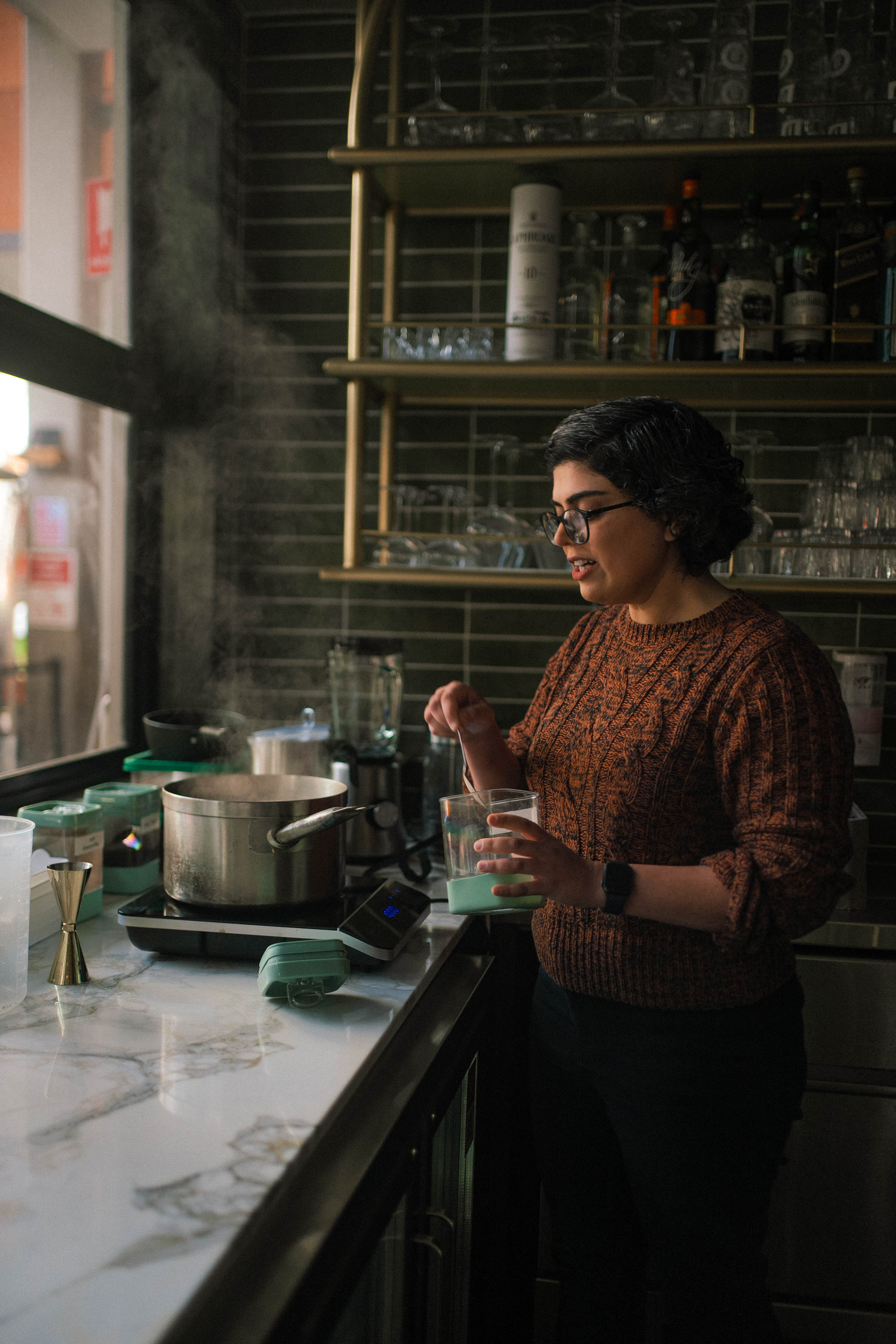
“We wanted to present a place that is neither your home nor your workplace, but a third place where you can meet and form meaningful connections and have memories with either your friends or families, or your work colleagues.”
abhi
DAM: That is amazing symbolism, and having such a strong name related to community for a restaurant makes such a difference, especially in this context, it’s not just an ‘Indian restaurant’.
T: I think a part of the naming also came from our place within the centre. We feel that with the Hills District, especially the newer areas which is like Rouse hill, Box hill, and all of the new areas coming up – Gables and such, it’s a growing community and the Town centre is kind of at the heart of the community. With our location we felt that it could also potentially one day extend to be a Veranda, for not just Indian folks, but just anyone who wants to have that third space to just chill. They will know they’ll always be warmly welcomed. I think that’s something that we’ve tried to really invite from day one. We’ve got our team and our team does it quite well, we’ve got very hospitable team members where they’ll always make you feel welcome when you walk in the door and you instantly feel at home. We’re the heart of a community and we one day want to be that space where you kind of seek refuge and you’re like, you know what? I’m having a not so good day, I’m going to go there because I can leave my troubles elsewhere and just go there and chill for a bit.
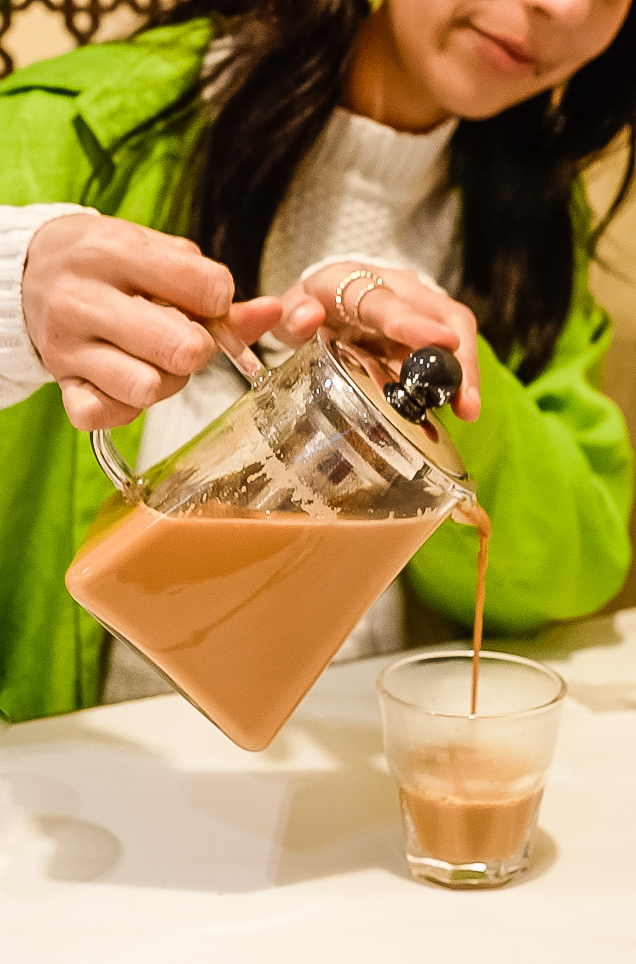
“We’re the heart of a community and we one day want to be that space where you kind of seek refuge and you’re like, ‘You know what? I’m having a not so good day, I’m going to go there because I can leave my troubles elsewhere and just go and chill for a bit’. “
tavishi
DAM: That’s so important and that’s something we’ve sadly found in Sydney lately, that there can be a lack of good service. Even if the place is really nice but the service is bad then you just don’t want to go back. We definitely feel the homely, comfortable feeling here. Do you both have a favourite ‘Verandah’ dish at the moment?
T: My favourite dish at the moment from our menu is the Lucknow Shami Kebab Slider. So I’m a bit biased but it’s from Lucknow, which is where my ancestors are from, so my grandparents are all from that region. It’s a lamb based dish. In India, you would traditionally do it with goat because in India you get better quality goat. In Australia, you get better quality lamb, so we do it with lamb. It’s beautiful. Let me tell you the legend behind the dish first actually… There was this noble person, who was a big glutton, loved food, you know, patronised the chefs and put a lot of money into culinary arts, loved, loved, loved food. As he got old, he lost all his teeth and couldn’t enjoy what he used to love eating before. So then he tells his Khansama, which is the head chef, to make him something that, ‘I don’t need these wretched teeth for’, and that’s how this dish came to be. You basically slow cook the meat and then after you’ve removed it from bone, you almost knead it like you’re needing dough. By doing that, you’re breaking down the meat to the extent that all the fibres are just completely broken down. So the Khansama, the chefs, have actually done all the work for you so when you take it in your mouth you don’t even have to chew because it just melts away. And I absolutely love the dish, it’s something I grew up eating but it requires a lot of patience, as a lot of nice things do. That’s the one I recommend the most when people ask.

“ There was this noble person, who loved, loved, loved food. As he got old, he lost all his teeth and couldn’t enjoy what he used to love eating before. So he tells his Khansama, [head chef], to make him something that, ‘I don’t need these wretched teeth for!’. I absolutely love the dish [Shami Kebab], it’s something I grew up eating but it requires a lot of patience, as a lot of nice things do.”
tavishi
A: Again, I suppose it’s the same thing, I am choosing a dish which is from my region. I’m from Rajasthan. Rajasthan is based Northwest, famous for its castles, its royalty and the deserts and the warrior class that used to be there back in the day. So this dish is called Dal Baati Churma. It’s a dish that I’ve grown up eating as well, and it’s a very different kind of a dish, but there’s two aspects to it which I really like about it. One is the resourcefulness, because again, when you are in the desert you don’t really have a lot of resources. And you have to make do with what you’ve got. Back in the day, there used to be these dough balls that they used to make. They used to put it under the sand and then just from the heat, the natural heat, they used to get cooked. So they used to put it on there, and then go to war, then come back and by that time, those things will be sunbaked effectively. Then you just dust it off, put it in a bit of fat so that it’s soluble and a bit softer and then you just consume it. So the resourcefulness aspect of it brings out the uniqueness as well and it’s because of the region I’m from. So for me, it is definitely that. Having said that, I don’t recommend that dish too often to people.
DAM: Why’s that?
A: Because it is a very acquired taste. Like my dad doesn’t like it purely because, unlike your spreads, traditional breads, it’s not soft. You have to take a bite out of it, which, obviously people don’t expect from bread. That gets a bit confusing and some people think that, oh, it’s undercooked.
DAM: So your favourite dishes are opposite. One you have to bite and the other you don’t even need teeth!
A: Well, to be fair though, that dish, the way we’re making it, the daal aspect of it you could have because we’re doing it vegan. The bread aspect gets a lot of gee in it, but the daal aspect is all vegan.
DAM: That’s great to know. Abhi you said traditionally they put it in the sand, do you guys also do that?
T: Oh, no, we cook it! We don’t want to close down the restaurant!

DAM: [laughs] We love hearing stories like this though. It’s like – food is history. That’s the thing that I’ve taken from what you’ve said.
A: For us, it definitely is. Food is definitely a carrier of culture and history and its people and its surroundings, and then obviously over the years, over the centuries, over other external influences, it gets changed and passed on to different generations. That’s what food is everywhere and always will be.
T: And related to what you said, my favourite as I mentioned, our Shami Kabab, the word ‘shami’ comes from shams, which is in Syria. It actually came from Syria. A country’s history can be told by the food that the regions prepare and because we were at one point colonised by people from Persia, it shows in the food.
A: And that’s the beauty of culture, is that when you actually start understanding and start reading about it, you start understanding these interesting connections that happened in the history. Food is telling that story. It’s just that no one’s listening to it. That’s why we are also big on storytelling. For us, it’s always been this thing that we wanted to always incorporate storytelling into our experience, because we thought that not a lot of people are paying attention to that aspect, but if you’re able to give those stories out, then others are able to think about their dishes, whatever cultures they’re from or even wonder where this dish came from. Every food, regardless of which part of the world you’re from, will have its own unique stories and it will have its own unique path that it has taken. It will be influenced by the people and what’s grown in those areas, and over the centuries, it evolves and develops into whatever develops. And that’s what food is.

“We wanted to incorporate storytelling into our experience… Every food, regardless of which part of the world you’re from, will have its own unique stories and path that it has taken. It will be influenced by the people and what’s grown in those areas, and over the centuries, it evolves and develops into whatever develops. And that’s what food is.”
abhi
DAM: I think that’s one thing we’ve taken from today that your restaurant and each dish has such a great story behind it. Is there something you specifically learned through the experience of opening Verandah that you would share with someone else?
T: That’s a tough one, right? Because there’s always the fluffy advice and the real advice. To be very honest, the point where we’re at in our journey right now, I would tell people not to do it at the scale that we did. [laughs] We should have probably started tiny, tiny, tiny, where we had no overheads. Obviously, some people say when you have large overheads, you’re driven that much harder and you work harder, but you know, sometimes you just have to be smarter about it. If you want to do something like this, definitely don’t do it at as big a scale as we did, even if you think it will reach more people because it takes a lot of time to reach those people.
A: I’ll put an optimistic spin to it, I suppose, because I guess I am an optimist.
T: He is the optimist in the relationship!
DAM: [laughs] That’s a great balance!
A: So for me, it’s always been about chasing a dream. To give a bit of context, I was in corporate before this. So for me, I’ve always been a science student, analytical, very numbers driven or logic driven. I actually used to fail history, by the way, but it’s interesting that over the years, I’ve actually gotten so much in it that I’ve spent countless hours and days researching. I started off as a very different logical person, but there came a time when I was like, there needs to be something bigger than me that I’m able to give back. And it was basically a dream and I wanted to chase a dream. So I’m trying to chase my dream. Yes, obviously, because we are doing something vastly different and because we are also one of the early adopters, we are going to feel resistance. That’s how the world is. But if there are enough people who do these things and try to break those stereotypes and try to do things differently, when enough people are doing it, then it becomes the norm. When it becomes a norm, it becomes acceptable and then it’s okay, so the more people do it, the easier it becomes.

“We are doing something vastly different and because we are one of the early adopters, we are going to feel resistance. That’s how the world is. But if there are enough people who do these things and try to break those stereotypes and try to do things differently, then it becomes the norm. When it becomes a norm, it becomes acceptable and then it’s okay, so the more people do it, the easier it becomes.”
abhi
DAM: That’s absolutely it. It’s never easy to be the trailblazers, or the first to do something. But the doors you open for the ones who come after you, as well as the minds you can open to new things, are always worth it. We love what you both have started here at Verandah and thank you for taking the time.
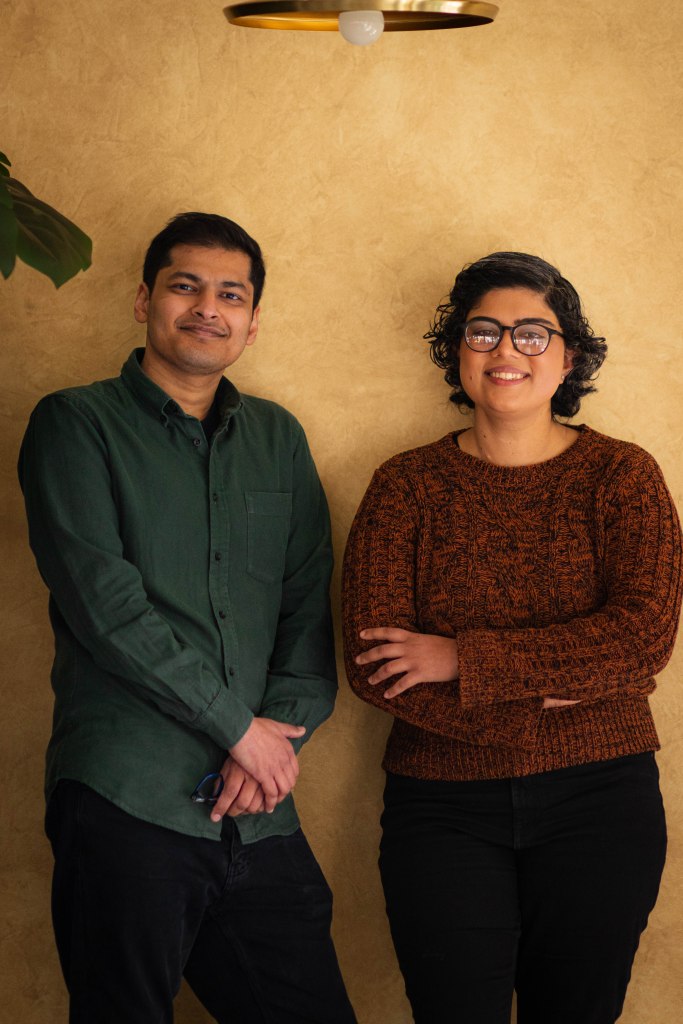
Find out more on Verandah Indian Kitchen & Bar here:
Website: https://verandaindian.com.au/
Instagram: https://www.instagram.com/verandaindian/
Facebook: https://www.facebook.com/verandaindianrousehill/
Linktree: https://linktr.ee/verandaindian
.
.
.
Published Marshall-Weishuai Yuan & Sangeetha Gowda ~
Written by Sangeetha Gowda ~
Article Photography by: HeadshotsbyNOAH
 Diversity Australia Magazine